Nappi Rossella E, Martini Ellis, Cucinella Laura, Martella Silvia, Tiranini Lara, Inzoli Alessandra, Brambilla Emanuela, Bosoni David, Cassani Chiara, Gardella Barbara
Research Center for Reproductive Medicine, Gynecological Endocrinology and Menopause, University of Pavia, Pavia, Italy.
Department of Clinical, Surgical, Diagnostic and Pediatric Sciences, University of Pavia, Pavia, Italy.
Front Endocrinol (Lausanne). 2019 Aug 21;10:561. doi: 10.3389/fendo.2019.00561. eCollection 2019.
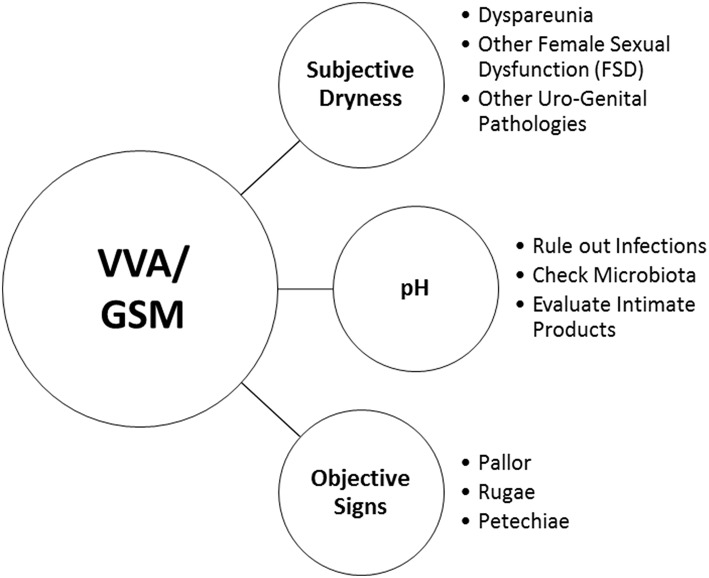
Vaginal health is an essential component of active and healthy aging in women at midlife and beyond. As a consequence of hormonal deprivation and senescence, the anatomy and function of urogenital tissues are significantly affected and vulvovaginal atrophy (VVA) may occur. In a high proportion of postmenopausal women, progressive and chronic VVA symptoms have a strong impact on sexual function and quality of life. The new definition of genitourinary syndrome of menopause (GSM) comprises genital symptoms (dryness, burning, itching, irritation, bleeding), sexual symptoms (dyspareunia and other sexual dysfunctions) and urinary symptoms (dysuria, frequency, urgency, recurrent urinary infections). Many variables (age, sexual activity and partnership status) influence the clinical impact VVA/GSM symptoms and attitudes of elderly women to consult for receiving effective treatments. Psychosocial factors play a critical role in sexual functioning, but the integrity of the urogenital system is as well important affecting many domains of postmenopausal women's health, including sexual function. Several international surveys have extensively documented the need to improve VVA/GSM management because of the strong impact on women's daily life and on couple's intimacy. Health care providers (HCPs) need to be proactive in the early recognition of VVA/GSM in order to preserve urogenital and sexual longevity, by using hormonal and non-hormonal strategies. The clinical diagnosis is based on genital examination to identify objective signs and on the use of subjective scales to rate most bothersome symptoms (MBS), especially vaginal dryness. Recent studies point to the importance of addressing VVA/GSM as a potential early marker of poor general health in analogy with vasomotor symptoms. Therefore, a standard of VVA/GSM care in elderly women is desirable to enhance physical, emotional and mental well-being.
阴道健康是中年及老年女性积极健康老龄化的重要组成部分。由于激素缺乏和衰老,泌尿生殖组织的解剖结构和功能受到显著影响,可能会发生外阴阴道萎缩(VVA)。在很大比例的绝经后女性中,进行性和慢性VVA症状对性功能和生活质量有很大影响。绝经后泌尿生殖综合征(GSM)的新定义包括生殖器症状(干燥、灼烧、瘙痒、刺激、出血)、性症状(性交困难和其他性功能障碍)以及泌尿系统症状(排尿困难、尿频、尿急、复发性尿路感染)。许多因素(年龄、性活动和伴侣状况)会影响老年女性VVA/GSM症状的临床影响以及她们寻求有效治疗的态度。心理社会因素在性功能中起着关键作用,但泌尿生殖系统的完整性对于影响绝经后女性健康的许多方面(包括性功能)同样重要。多项国际调查广泛记录了改善VVA/GSM管理的必要性,因为它对女性日常生活和夫妻亲密关系有很大影响。医疗保健提供者(HCPs)需要积极主动地早期识别VVA/GSM,以便通过使用激素和非激素策略来维持泌尿生殖和性健康。临床诊断基于生殖器检查以识别客观体征,并使用主观量表对最困扰的症状(MBS)进行评分,尤其是阴道干燥。最近的研究指出,与血管舒缩症状类似,将VVA/GSM作为整体健康不佳的潜在早期标志物来处理具有重要意义。因此,需要制定老年女性VVA/GSM护理标准,以提高身体、情感和心理健康水平。