Apaydin Dogukan H, Portenkirchner Engelbert, Jintanalert Pichayada, Strauss Matthias, Luangchaiyaporn Jirapong, Sariciftci Niyazi Serdar, Thamyongkit Patchanita
Linz Institute for Organic Solar Cells (LIOS) , Institute of Physical Chemistry , Johannes Kepler University Linz , 4040 Linz , Austria . Email:
Institute of Physical Chemistry , University of Innsbruck , 6020 Innsbruck , Austria.
Sustain Energy Fuels. 2018 Dec 1;2(12):2747-2753. doi: 10.1039/c8se00422f. Epub 2018 Oct 16.
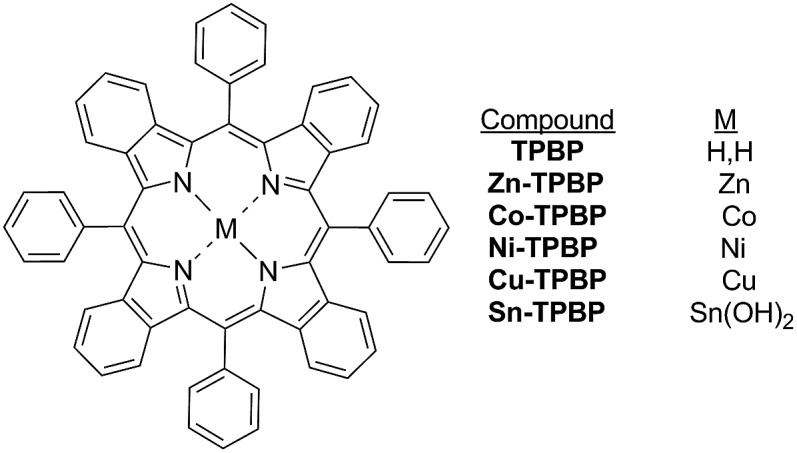
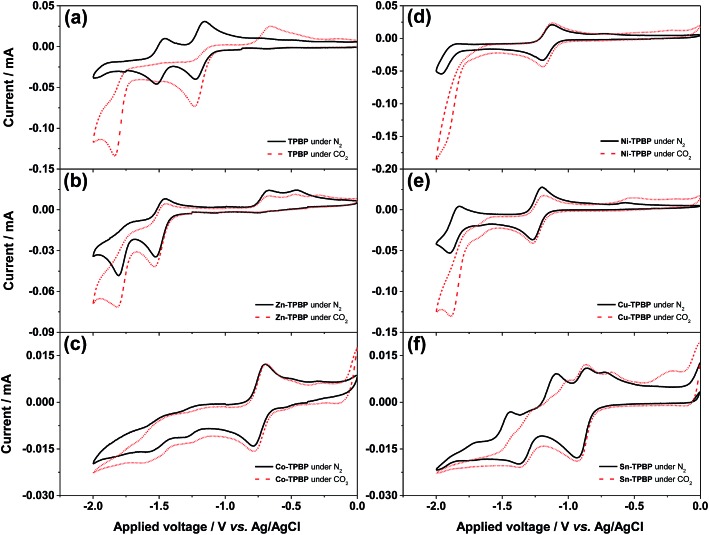
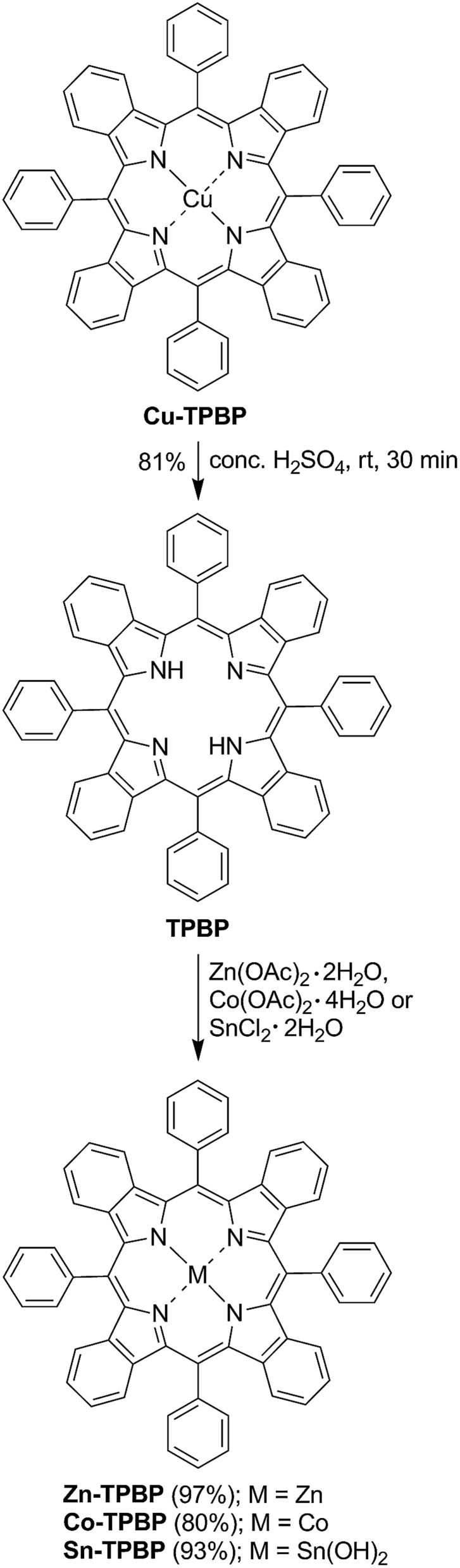
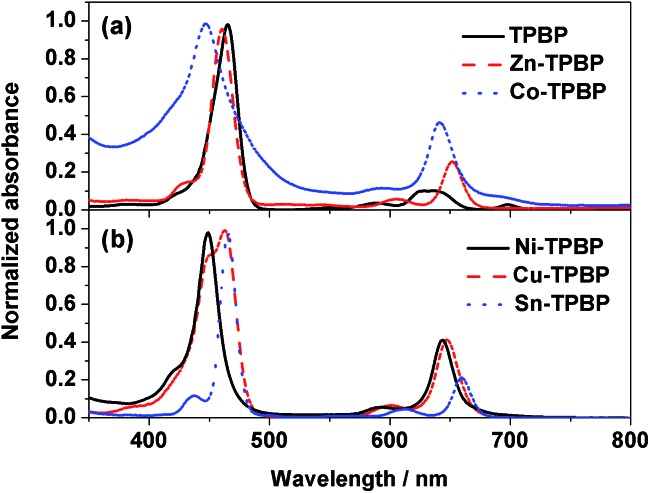
We report the synthesis and electrochemical properties of freebase tetraphenyltetrabenzoporphyrin and its complexes of Zn(ii), Co(ii), Ni(ii), Cu(ii) and Sn(iv) towards electrochemical reduction of carbon dioxide (CO). Based on cyclic voltammetry, it is shown that central metals significantly affect the electrocatalytic performance in the reduction of CO in terms of reduction potential and catalytic current enhancement. At an applied potential of -1.90 V an Ag/AgCl quasi reference electrode for 20 h, the electrocatalytic reduction of CO realized by Zn(ii)- and Cu(ii)-tetraphenyltetrabenzoporphyrins to carbon monoxide resulted in faradaic efficiencies of around 48% and 33%, respectively.
我们报道了游离碱四苯基四苯并卟啉及其锌(II)、钴(II)、镍(II)、铜(II)和锡(IV)配合物对二氧化碳(CO₂)电化学还原的合成及电化学性质。基于循环伏安法表明,中心金属在还原电位和催化电流增强方面对CO₂还原的电催化性能有显著影响。在相对于Ag/AgCl准参比电极施加-1.90 V电位20小时的条件下,锌(II)-和铜(II)-四苯基四苯并卟啉实现的CO₂电催化还原为一氧化碳,其法拉第效率分别约为48%和33%。