Département d'Ophtalmologie, Centre Hospitalier Universitaire d'Angers, Angers, France.
Unité Mixte de Recherche MITOVASC, CNRS 6015/INSERM 1083, Université d'Angers, Angers, France.
Orphanet J Rare Dis. 2019 Sep 10;14(1):214. doi: 10.1186/s13023-019-1187-1.
The dysfunction of OPA1, a dynamin GTPase involved in mitochondrial fusion, is responsible for a large spectrum of neurological disorders, each of which includes optic neuropathy. The database dedicated to OPA1 ( https://www.lovd.nl/OPA1 ), created in 2005, has now evolved towards a centralized and more reliable database using the Global Variome shared Leiden Open-source Variation Database (LOVD) installation.
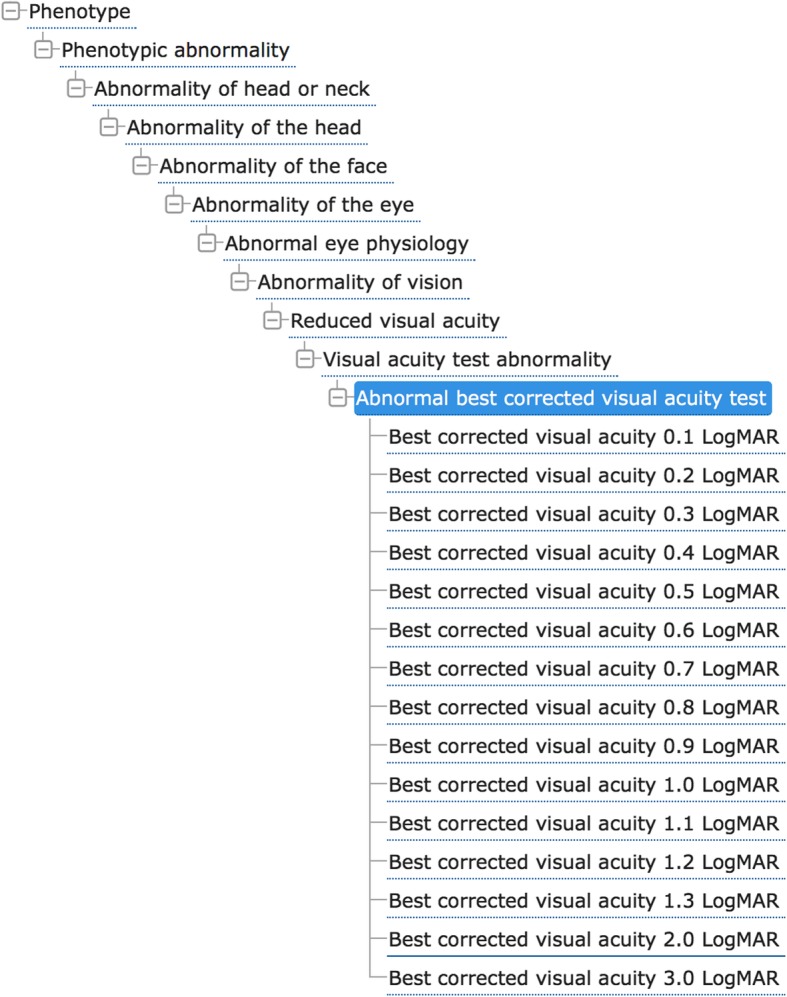
The updated OPA1 database, which registers all the patients from our center as well as those reported in the literature, now covers a total of 831 patients: 697 with isolated dominant optic atrophy (DOA), 47 with DOA "plus", and 83 with asymptomatic or unclassified DOA. It comprises 516 unique OPA1 variants, of which more than 80% (414) are considered pathogenic. Full clinical data for 118 patients are documented using the Human Phenotype Ontology, a standard vocabulary for referencing phenotypic abnormalities. Contributors may now make online submissions of phenotypes related to OPA1 mutations, giving clinical and molecular descriptions together with detailed ophthalmological and neurological data, according to an international thesaurus.
The evolution of the OPA1 database towards the LOVD, using unified nomenclature, should ensure its interoperability with other databases and prove useful for molecular diagnoses based on gene-panel sequencing, large-scale mutation statistics, and genotype-phenotype correlations.
OPA1 是一种参与线粒体融合的动力蛋白 GTP 酶,其功能障碍与多种神经病变有关,每种神经病变都包括视神经病变。2005 年创建的 OPA1 数据库(https://www.lovd.nl/OPA1)现在已经发展成为一个集中式的、更可靠的数据库,使用的是全球变异数据库(Global Variome)共享的莱顿开源变异数据库(LOVD)安装。
更新后的 OPA1 数据库,不仅包括我们中心的所有患者,还包括文献中报道的患者,现在共涵盖了 831 名患者:697 名孤立性显性视神经萎缩(DOA)患者,47 名 DOA“plus”患者,83 名无症状或未分类的 DOA 患者。该数据库共登记了 516 个独特的 OPA1 变异,其中超过 80%(414 个)被认为是致病性的。使用人类表型本体(Human Phenotype Ontology),对 118 名患者的全临床数据进行了记录,该本体是一种用于参考表型异常的标准词汇。现在,贡献者可以在线提交与 OPA1 突变相关的表型,根据国际同义词库,同时提供临床和分子描述以及详细的眼科和神经学数据。
OPA1 数据库朝着 LOVD 的发展,使用统一的命名法,应该确保其与其他数据库的互操作性,并为基于基因组合测序、大规模突变统计和基因型-表型相关性的分子诊断提供帮助。