Synthetic and Systems Biology Unit, Institute of Biochemistry, BRC-HAS, Temesvari krt 62, 6726, Szeged, Hungary.
University of Szeged, Faculty of Science and Informatics, Aradi vertanuk tere 1., 6720, Szeged, Hungary.
Nat Commun. 2019 Sep 9;10(1):4080. doi: 10.1038/s41467-019-12085-w.
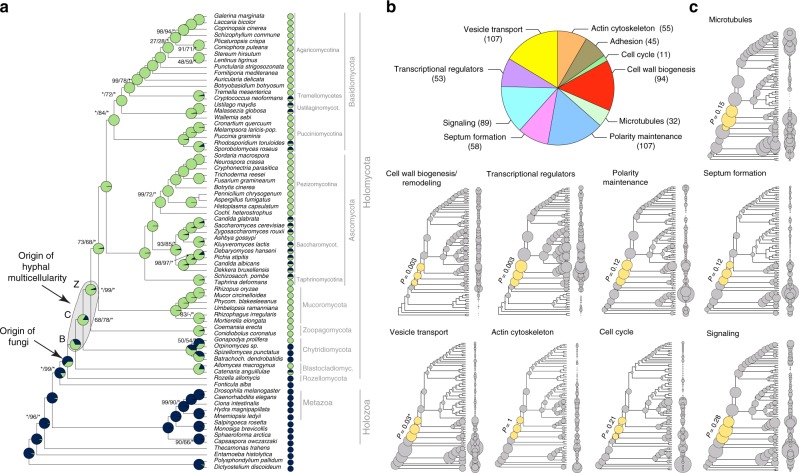
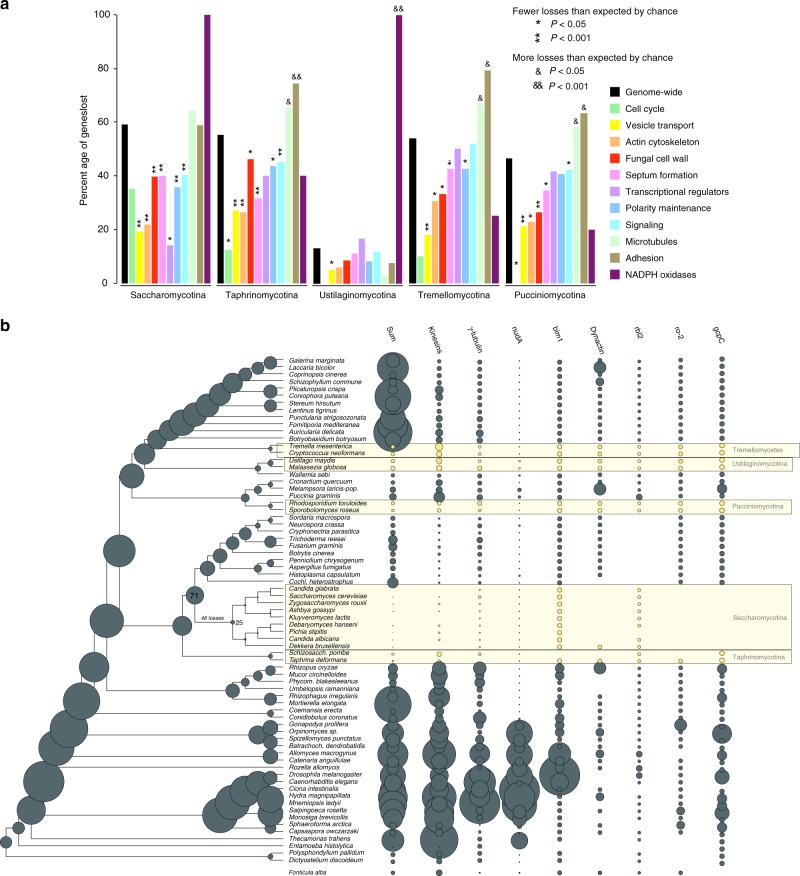
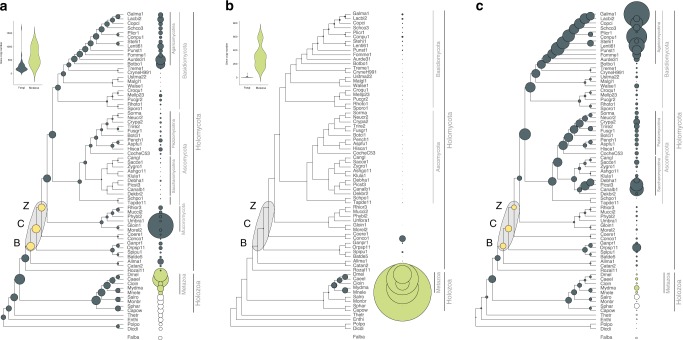
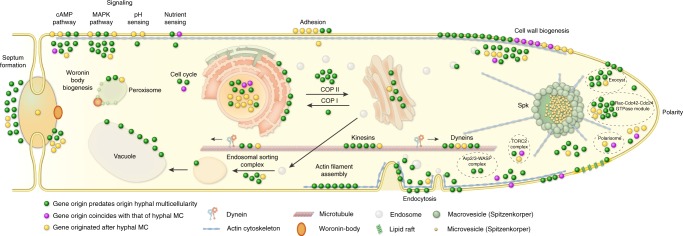
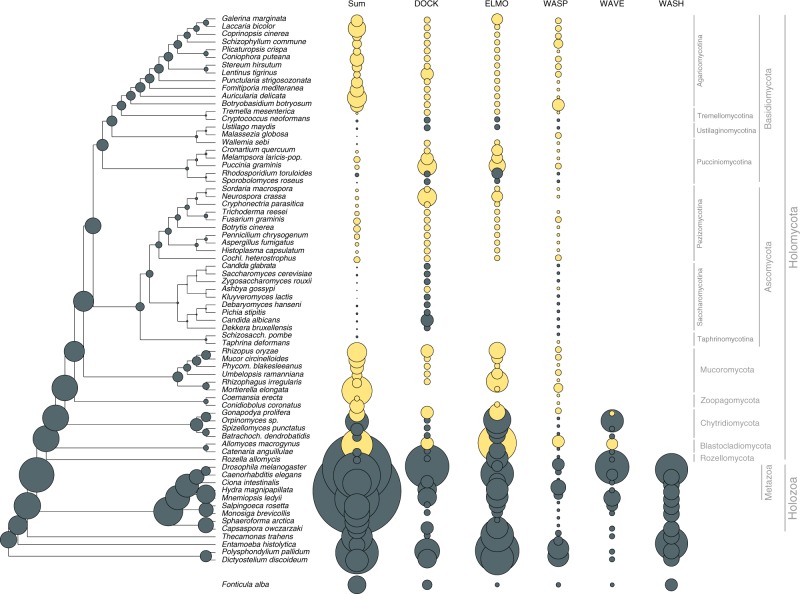
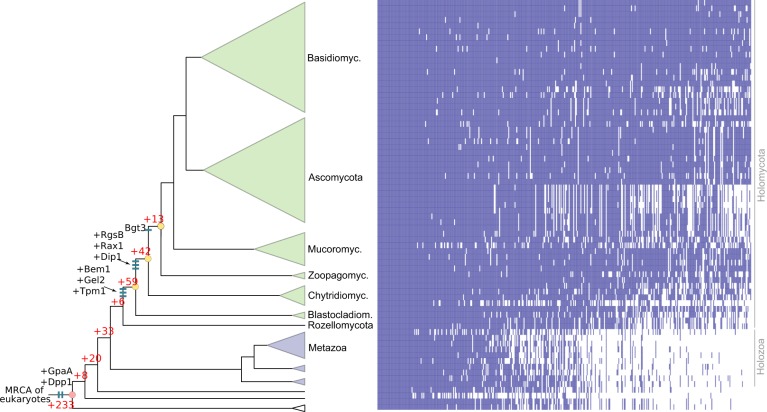
Hyphae represent a hallmark structure of multicellular fungi. The evolutionary origins of hyphae and of the underlying genes are, however, hardly known. By systematically analyzing 72 complete genomes, we here show that hyphae evolved early in fungal evolution probably via diverse genetic changes, including co-option and exaptation of ancient eukaryotic (e.g. phagocytosis-related) genes, the origin of new gene families, gene duplications and alterations of gene structure, among others. Contrary to most multicellular lineages, the origin of filamentous fungi did not correlate with expansions of kinases, receptors or adhesive proteins. Co-option was probably the dominant mechanism for recruiting genes for hypha morphogenesis, while gene duplication was apparently less prevalent, except in transcriptional regulators and cell wall - related genes. We identified 414 novel gene families that show correlated evolution with hyphae and that may have contributed to its evolution. Our results suggest that hyphae represent a unique multicellular organization that evolved by limited fungal-specific innovations and gene duplication but pervasive co-option and modification of ancient eukaryotic functions.
菌丝体是多细胞真菌的标志性结构。然而,菌丝体和潜在基因的进化起源却鲜为人知。通过系统分析 72 个完整基因组,我们在这里表明,菌丝体可能是通过多种遗传变化在真菌进化的早期进化而来的,包括古老真核生物(如吞噬相关)基因的共选择和适应、新基因家族的起源、基因复制和基因结构的改变等。与大多数多细胞谱系不同,丝状真菌的起源与激酶、受体或黏附蛋白的扩张无关。共选择可能是招募用于菌丝体形态发生的基因的主要机制,而基因复制则不那么普遍,除了在转录调节因子和细胞壁相关基因中。我们鉴定了 414 个新的基因家族,它们与菌丝体的进化相关,可能对其进化做出了贡献。我们的研究结果表明,菌丝体代表了一种独特的多细胞组织,它是通过有限的真菌特异性创新和基因复制,但普遍的共选择和古老真核生物功能的修饰而进化而来的。