Tytgat Insitute for Liver & Intestinal Research, Amsterdam UMC, Amsterdam, The Netherlands
Tytgat Insitute for Liver & Intestinal Research, Amsterdam UMC, Amsterdam, The Netherlands.
Gut. 2020 Jun;69(6):1053-1063. doi: 10.1136/gutjnl-2019-318264. Epub 2019 Sep 10.
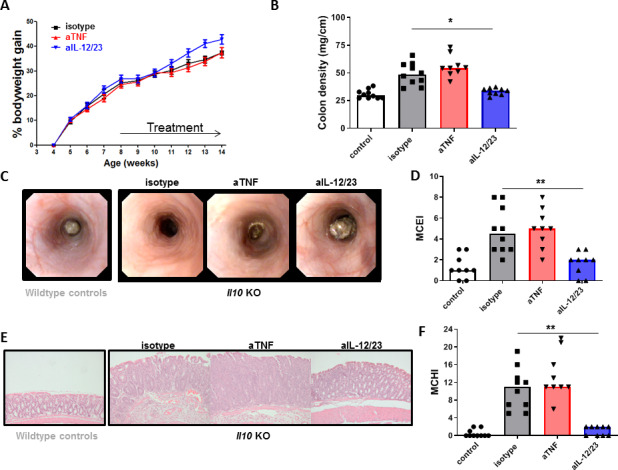
Macrophage interleukin (IL)-10 signalling plays a critical role in the maintenance of a regulatory phenotype that prevents the development of IBD. We have previously found that anti-tumour necrosis factor (TNF) monoclonal antibodies act through Fcγ-receptor (FcγR) signalling to promote repolarisation of proinflammatory intestinal macrophages to a CD206+ regulatory phenotype. The role of IL-10 in anti-TNF-induced macrophage repolarisation has not been examined.
We used human peripheral blood monocytes and mouse bone marrow-derived macrophages to study IL-10 production and CD206+ regulatory macrophage differentiation. To determine whether the efficacy of anti-TNF was dependent on IL-10 signalling in vivo and in which cell type, we used the CD4+CD45Rb T-cell transfer model in combination with several genetic mouse models.
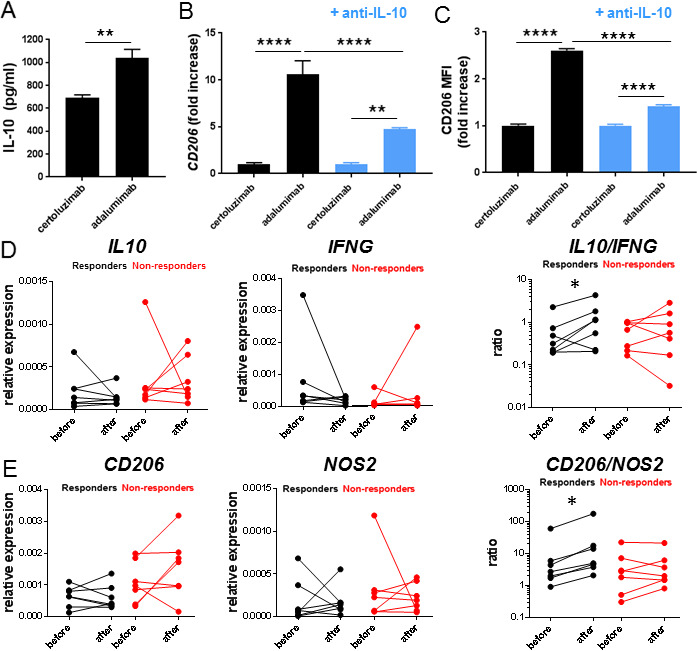
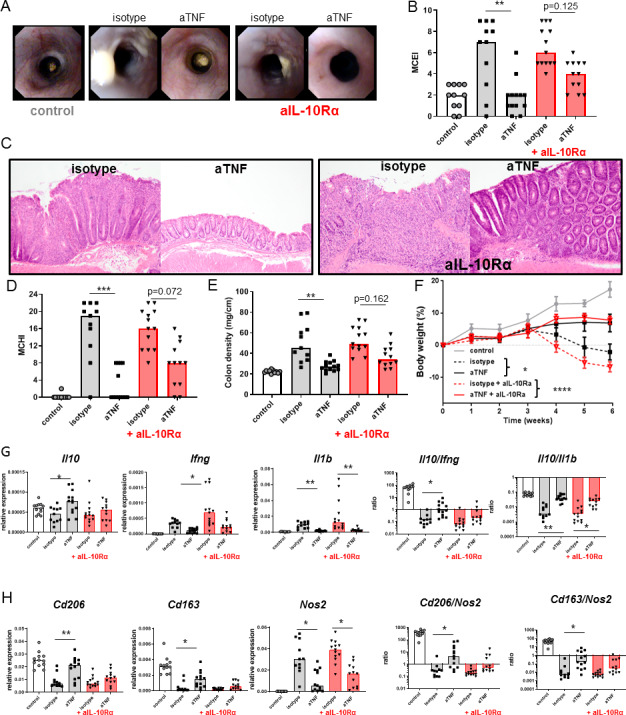
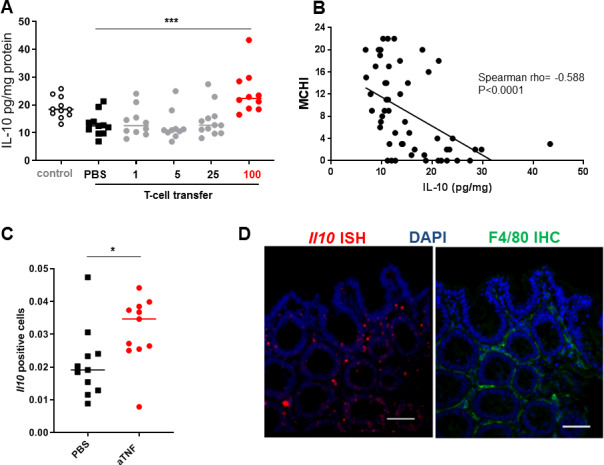
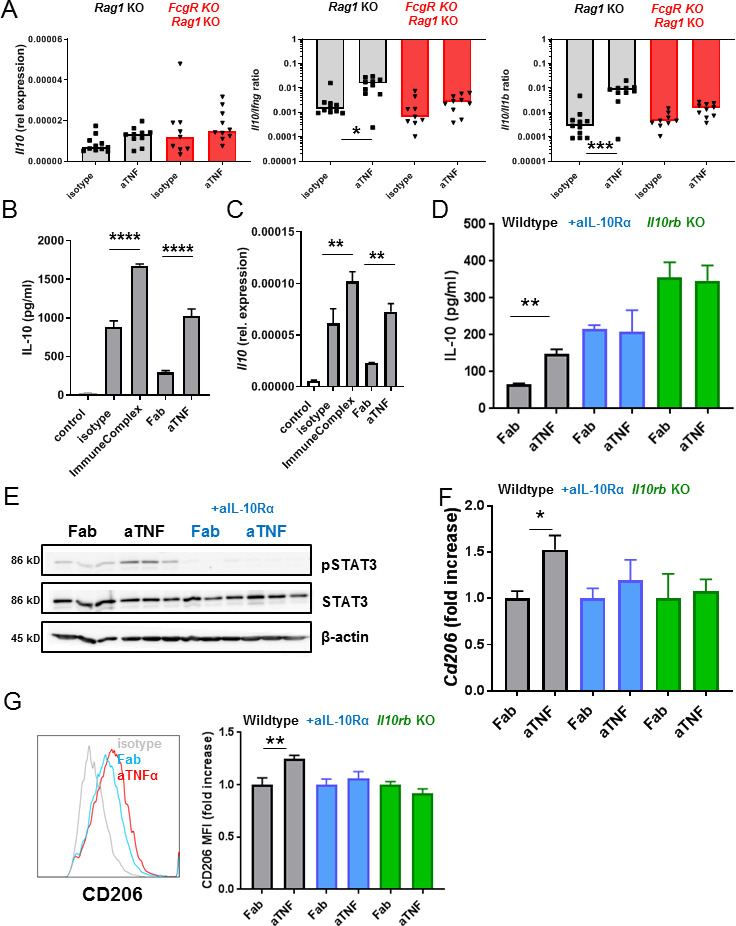
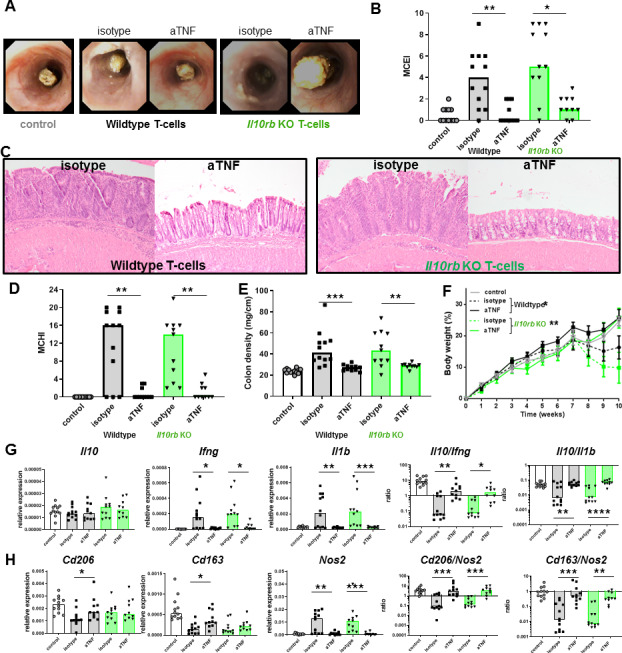
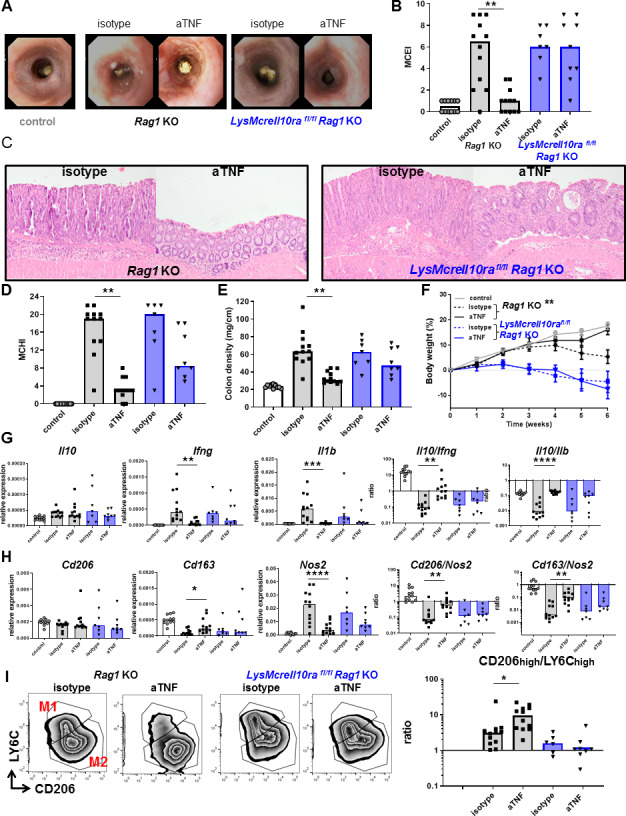
Anti-TNF therapy increased macrophage IL-10 production in an FcγR-dependent manner, which caused differentiation of macrophages to a more regulatory CD206+ phenotype in vitro. Pharmacological blockade of IL-10 signalling prevented the induction of these CD206+ regulatory macrophages and diminished the therapeutic efficacy of anti-TNF therapy in the CD4+CD45Rb T-cell transfer model of IBD. Using cell type-specific IL-10 receptor mutant mice, we found that IL-10 signalling in macrophages but not T cells was critical for the induction of CD206+ regulatory macrophages and therapeutic response to anti-TNF.
The therapeutic efficacy of anti-TNF in resolving intestinal inflammation is critically dependent on IL-10 signalling in macrophages.
巨噬细胞白细胞介素(IL)-10 信号在维持调节表型中起着关键作用,可防止炎症性肠病(IBD)的发生。我们之前发现,抗肿瘤坏死因子(TNF)单克隆抗体通过 Fcγ 受体(FcγR)信号作用,促进促炎肠道巨噬细胞向 CD206+调节表型的极化。IL-10 在抗 TNF 诱导的巨噬细胞极化中的作用尚未被研究。
我们使用人外周血单核细胞和小鼠骨髓来源的巨噬细胞来研究 IL-10 产生和 CD206+调节性巨噬细胞分化。为了确定抗 TNF 的疗效是否依赖于体内和细胞类型中的 IL-10 信号,我们使用 CD4+CD45Rb T 细胞转移模型结合几种遗传小鼠模型。
抗 TNF 治疗以 FcγR 依赖的方式增加巨噬细胞 IL-10 的产生,这导致体外巨噬细胞向更具调节性 CD206+表型分化。IL-10 信号的药理学阻断可防止这些 CD206+调节性巨噬细胞的诱导,并降低抗 TNF 治疗在 CD4+CD45Rb T 细胞转移 IBD 模型中的疗效。使用细胞类型特异性 IL-10 受体突变小鼠,我们发现巨噬细胞而非 T 细胞中的 IL-10 信号对于 CD206+调节性巨噬细胞的诱导和对抗 TNF 的治疗反应至关重要。
抗 TNF 缓解肠道炎症的疗效严重依赖于巨噬细胞中 IL-10 信号。