Katus Laura, Hayes Nathan J, Mason Luke, Blasi Anna, McCann Samantha, Darboe Momodou K, de Haan Michelle, Moore Sophie E, Lloyd-Fox Sarah, Elwell Clare E
Great Ormond Street Institute of Child Health, University College London, London, London, WC1N 1EH, UK.
GKT School of Medical Education, King's College London, London, UK.
Gates Open Res. 2019 Aug 27;3:1113. doi: 10.12688/gatesopenres.12951.2. eCollection 2019.
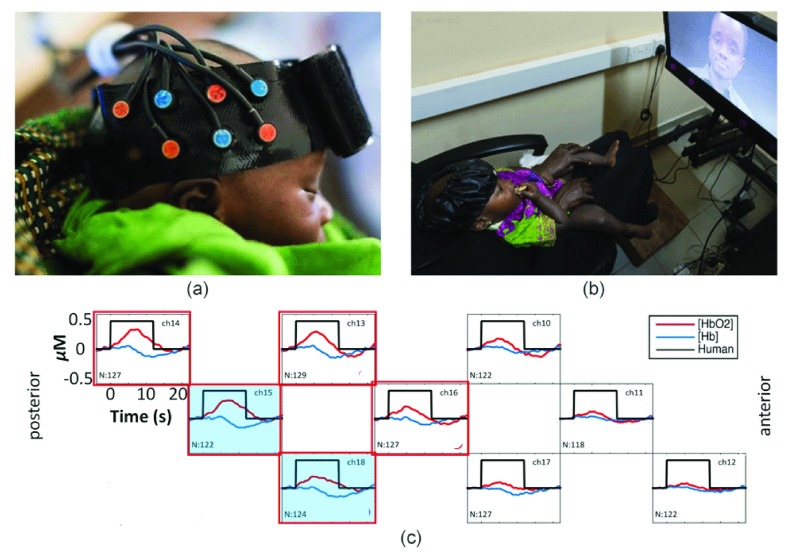
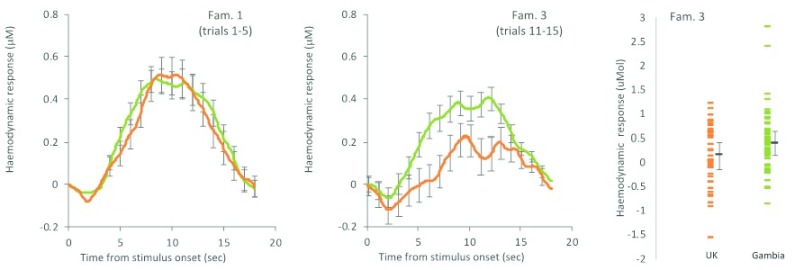
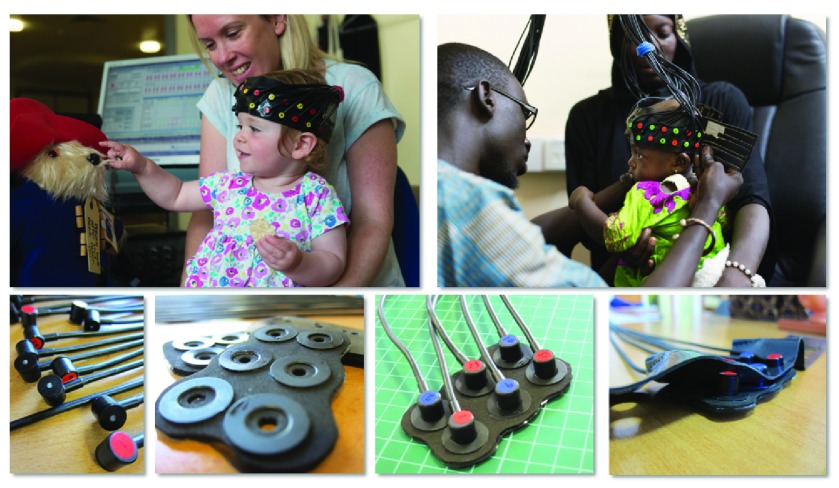
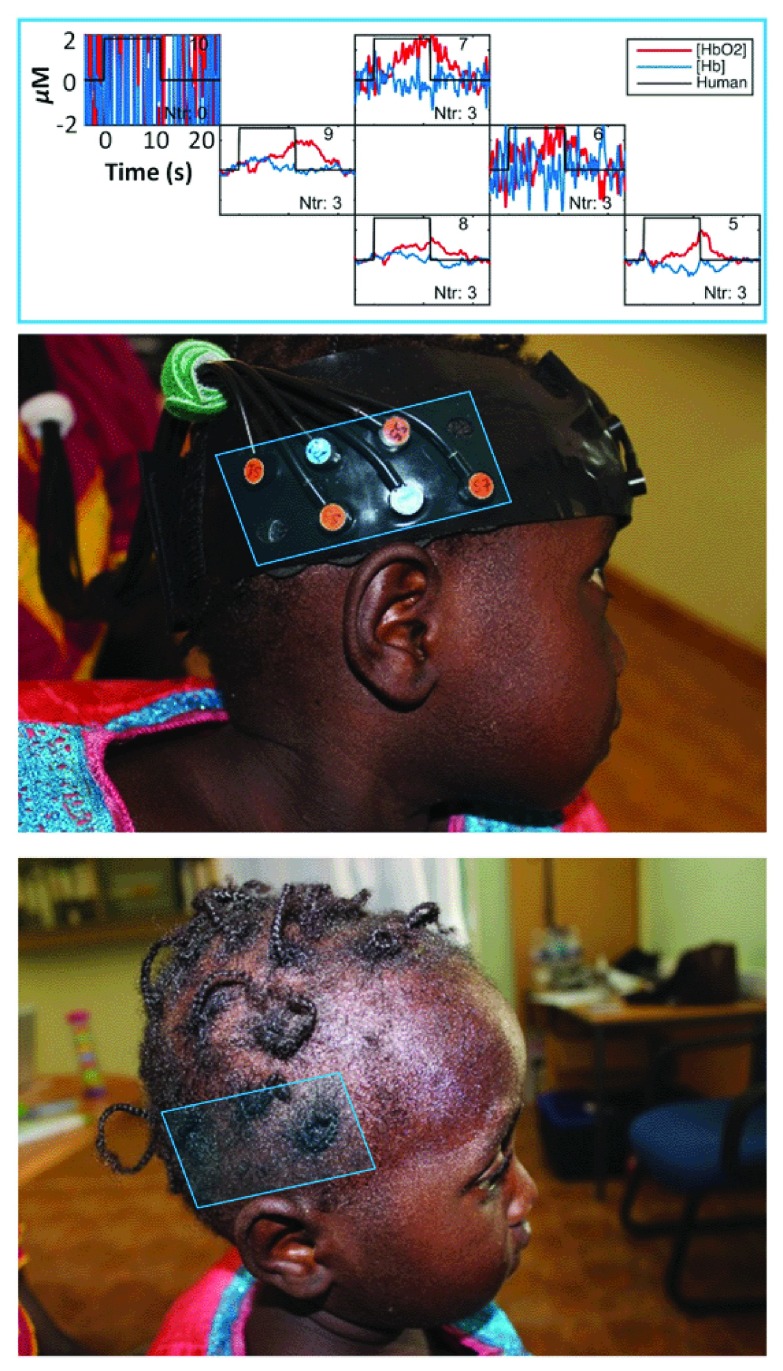
Infants and children in low- and middle-income countries (LMICs) are frequently exposed to a range of environmental risk factors which may negatively affect their neurocognitive development. The mechanisms by which factors such as undernutrition and poverty impact development and cognitive outcomes in early childhood are poorly understood. This lack of knowledge is due in part to a paucity of objective assessment tools which can be implemented across different cultural settings and in very young infants. Over the last decade, technological advances, particularly in neuroimaging, have opened new avenues for research into the developing human brain, allowing us to investigate novel biological associations. This paper presents functional near-infrared spectroscopy (fNIRS), electroencephalography (EEG) and eye tracking (ET) as objective, cross-cultural methods for studying infant neurocognitive development in LMICs, and specifically their implementation in rural Gambia, West Africa. These measures are currently included, as part of a broader battery of assessments, in the Brain Imaging for Global Health (BRIGHT) project, which is developing brain function for age curves in Gambian and UK infants from birth to 24 months of age. The BRIGHT project combines fNIRS, EEG and ET with behavioural, growth, health and sociodemographic measures. The implementation of these measures in rural Gambia are discussed, including methodological and technical challenges that needed to be addressed to ensure successful data acquisition. The aim is to provide guidance to other groups seeking to implement similar methods in their research in other LMICs to better understand associations between environmental risk and early neurocognitive development.
低收入和中等收入国家(LMICs)的婴幼儿经常暴露于一系列环境风险因素中,这些因素可能会对他们的神经认知发育产生负面影响。营养不良和贫困等因素影响幼儿发育和认知结果的机制目前还知之甚少。这种知识的匮乏部分归因于缺乏客观评估工具,这些工具能够在不同文化背景下以及对非常年幼的婴儿实施。在过去十年中,技术进步,特别是神经成像技术的进步,为研究发育中的人类大脑开辟了新途径,使我们能够研究新的生物学关联。本文介绍了功能近红外光谱(fNIRS)、脑电图(EEG)和眼动追踪(ET),这些都是研究低收入和中等收入国家婴儿神经认知发育的客观、跨文化方法,特别是它们在西非冈比亚农村地区的应用。作为更广泛评估的一部分,这些测量方法目前已被纳入全球健康脑成像(BRIGHT)项目,该项目正在绘制冈比亚和英国婴儿从出生到24个月大的脑功能随年龄变化的曲线。BRIGHT项目将fNIRS、EEG和ET与行为、生长、健康和社会人口统计学测量方法结合起来。文中讨论了这些测量方法在冈比亚农村地区的实施情况,包括为确保成功采集数据而需要解决的方法和技术挑战。目的是为其他寻求在其他低收入和中等收入国家的研究中实施类似方法的团体提供指导,以便更好地理解环境风险与早期神经认知发育之间的关联。