Yokokawa Tetsuro, Sugimoto Koichi, Kimishima Yusuke, Misaka Tomofumi, Yoshihisa Akiomi, Morisaki Hiroko, Yamada Osamu, Nakazato Kazuhiko, Ishida Takafumi, Takeishi Yasuchika
Department of Cardiovascular Medicine, Fukushima Medical University, Japan.
Department of Pulmonary Hypertension, Fukushima Medical University, Japan.
Intern Med. 2020 Jan 15;59(2):221-227. doi: 10.2169/internalmedicine.3625-19. Epub 2019 Sep 11.
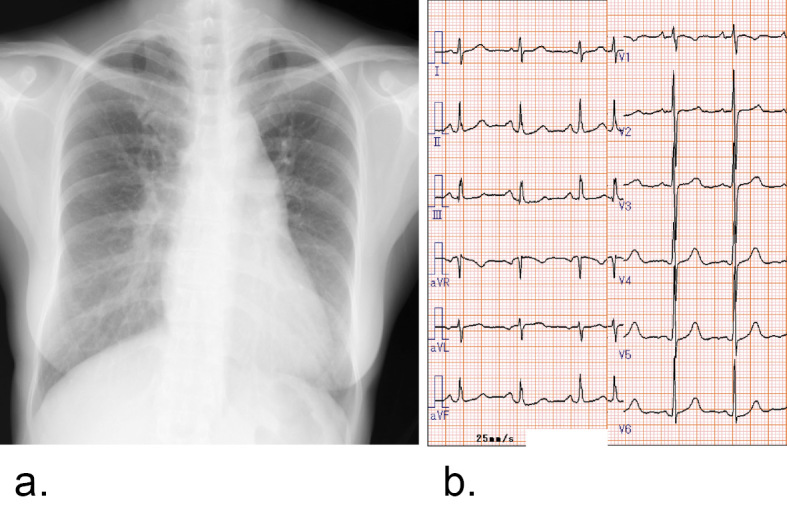
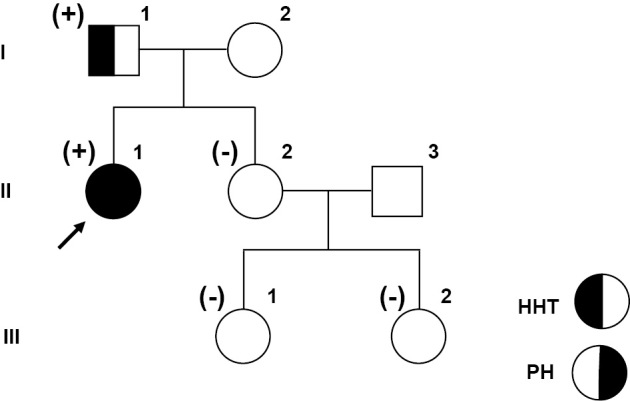
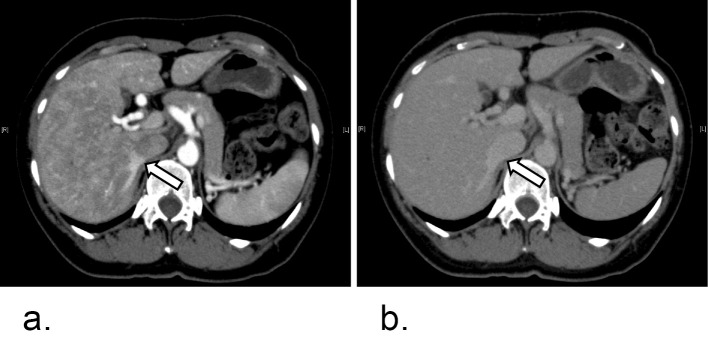
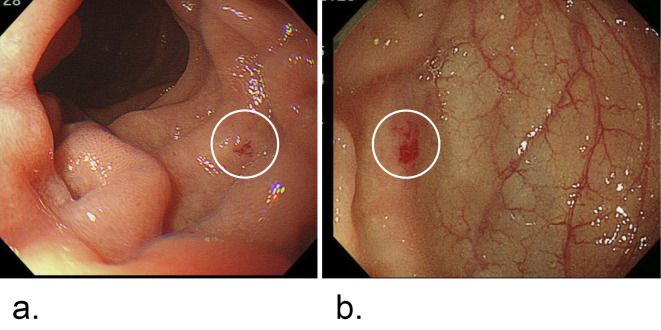
Pulmonary hypertension and hereditary hemorrhagic telangiectasia (HHT) have an association mediated by activin A receptor type II-like 1 (ACVRL1) gene pathogenic variants. A 30-year-old woman was previously admitted to a hospital due to lung hemorrhage, and was diagnosed with pulmonary hypertension, but stopped follow-up visits. At 48 years of age, she was admitted to our hospital and was diagnosed with HHT. Genetic testing revealed an ACVRL1 pathogenic variant. After the initiation of pulmonary vasodilator treatment, the patient's mean pulmonary artery pressure started to decrease from 43 mmHg, declining to 37 mmHg when she was 58 years of age. This is the first report describing the 28-year follow-up of an HHT and pulmonary hypertension patient with an ACVRL1 mutation.
肺动脉高压与遗传性出血性毛细血管扩张症(HHT)存在由激活素A受体II型样1(ACVRL1)基因致病性变异介导的关联。一名30岁女性曾因肺出血入院,被诊断为肺动脉高压,但随后停止了随访。48岁时,她入住我院,被诊断为HHT。基因检测发现ACVRL1致病性变异。开始使用肺血管扩张剂治疗后,患者的平均肺动脉压从43 mmHg开始下降,58岁时降至37 mmHg。这是首篇描述一名携带ACVRL1突变的HHT和肺动脉高压患者长达28年随访情况的报告。