Department of Medical Laboratory Sciences, School of Biomedical & Allied Health Sciences, College of Health Sciences, University of Ghana, Ghana.
Biomolecular Science Research Centre, Sheffield Hallam University, Sheffield, England, United Kingdom.
PLoS One. 2019 Sep 12;14(9):e0222168. doi: 10.1371/journal.pone.0222168. eCollection 2019.
Enterobacterial repetitive intergenic consensus (ERIC) sequence analysis is a powerful tool for epidemiological analysis of bacterial species. This study aimed to determine the genetic relatedness or variability in carbapenem-resistant isolates by species using this technique.
A total of 111 non-duplicated carbapenem-resistant (CR) Gram-negative bacilli isolates from a three-year collection period (2012-2014) were investigated by enterobacterial repetitive intergenic consensus-polymerase chain reaction (ERIC-PCR) in four selected hospital laboratories in Ghana. The isolates were also screened for carbapenemase and extended spectrum β-lactamase genes by PCR.
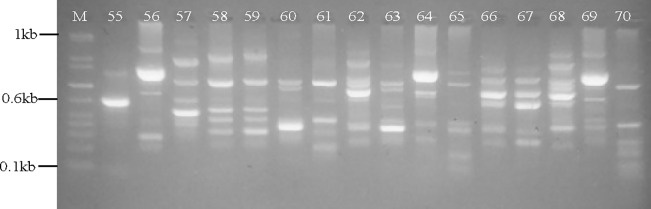
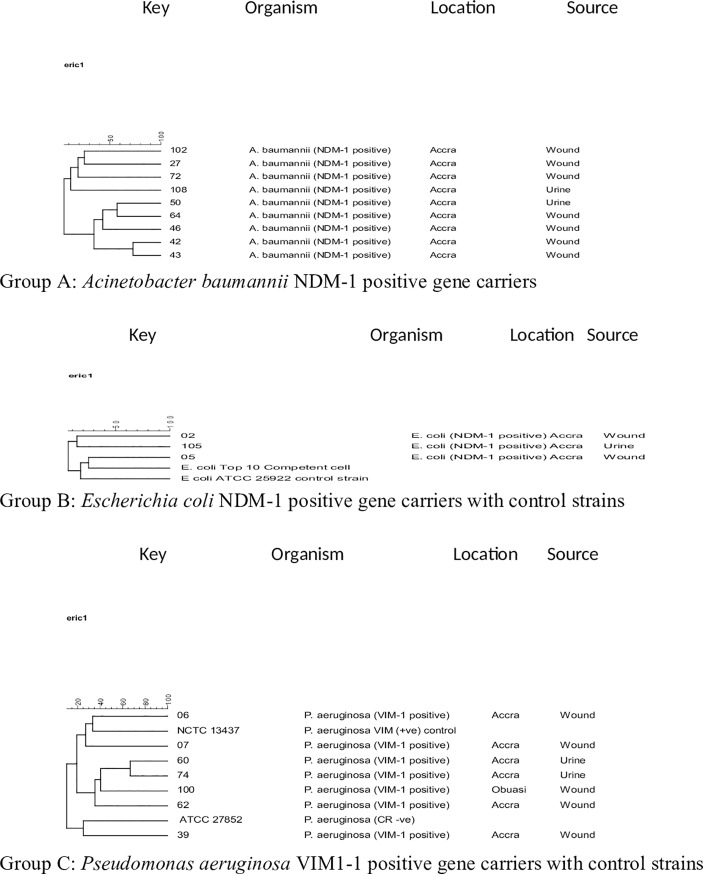
A proportion of 23.4% (26/111) of the genomic DNA extracts were carriers of PCR-positive carbapenemase genes, including 14.4% blaNDM-1, 7.2% blaVIM-1 and 1.8% blaOXA-48. The highest prevalence of carbapenemase genes was from non-fermenters, Acinetobacter baumannii and Pseudomonas aeruginosa. For the ESBL genes tested, 96.4% (107/111) of the CR isolates co-harboured both TEM-1 and SHV-1 genes. The ERIC-PCR gel analysis exhibited 1 to 8 bands ranging from 50 to 800 bp. Band patterns of 93 complex dissimilarities were visually distinguished from the 111 CR isolates studied, while the remaining 18 showed band similarities in pairs.
Overall, ERIC-PCR fingerprints have shown a high level of diversity among the species of Gram-negative bacterial pathogens and specimen collection sites in this study. ERIC-PCR optimisation assays may serve as a suitable genotyping tool for the assessment of genetic diversity or close relatedness of isolates that are found in clinical settings.
肠杆菌基因间重复一致序列(ERIC)分析是一种用于细菌种系流行病学分析的强大工具。本研究旨在通过该技术确定不同种属的碳青霉烯类耐药分离株的遗传相关性或变异性。
在加纳的四个选定医院实验室中,对来自三年收集期(2012-2014 年)的 111 株非重复的碳青霉烯类耐药(CR)革兰氏阴性杆菌分离株进行肠杆菌基因间重复一致序列-聚合酶链反应(ERIC-PCR)分析。还通过 PCR 对这些分离株进行碳青霉烯酶和扩展谱β-内酰胺酶基因的筛查。
23.4%(26/111)的基因组 DNA 提取物为 PCR 阳性碳青霉烯酶基因的携带者,其中包括 14.4%blaNDM-1、7.2%blaVIM-1 和 1.8%blaOXA-48。碳青霉烯酶基因的最高流行率来自非发酵菌、鲍曼不动杆菌和铜绿假单胞菌。在所测试的 ESBL 基因中,96.4%(107/111)的 CR 分离株共同携带 TEM-1 和 SHV-1 基因。ERIC-PCR 凝胶分析显示,从 50 到 800 bp 之间有 1 到 8 个带。从研究的 111 株 CR 分离株中,肉眼区分了 93 种复杂的不相似的条带模式,而其余 18 种则显示出成对的条带相似性。
总体而言,ERIC-PCR 指纹图谱显示了本研究中革兰氏阴性细菌病原体和标本采集地点的种间具有高度的多样性。ERIC-PCR 优化试验可作为一种合适的基因分型工具,用于评估临床环境中发现的分离株的遗传多样性或密切相关性。