Srikantha Umesh, Lokanath Yadhu Kasetti, Hari Akshay, Nirmala S, Varma Ravi Gopal
Department of Neurosurgery, Centre of Excellence: Brain and Spine, Aster CMI, Bengaluru, Karnataka, India.
Surg Neurol Int. 2019 Aug 2;10:153. doi: 10.25259/SNI_292_2019. eCollection 2019.
Here, we present our experience with the minimally invasive (MI) transpsoas approach for lumbar corpectomy and stabilization. Transpsoas approach accesses the lumbar spine and includes both the direct lateral interbody fusion and extreme lateral interbody fusion techniques. Both procedures utilize a tubular retractor system which facilitates adequate retraction and direct visualization of the target, while supposedly reducing soft tissue trauma.
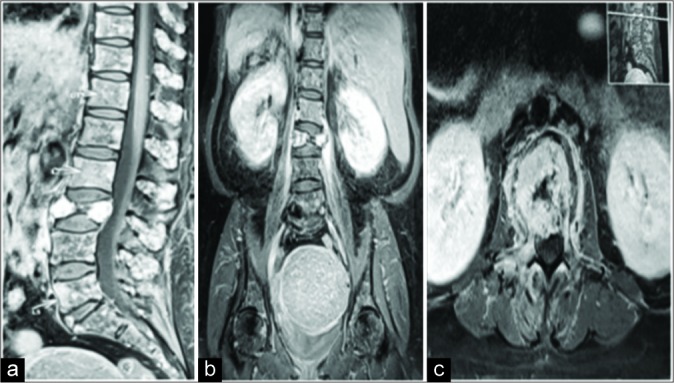
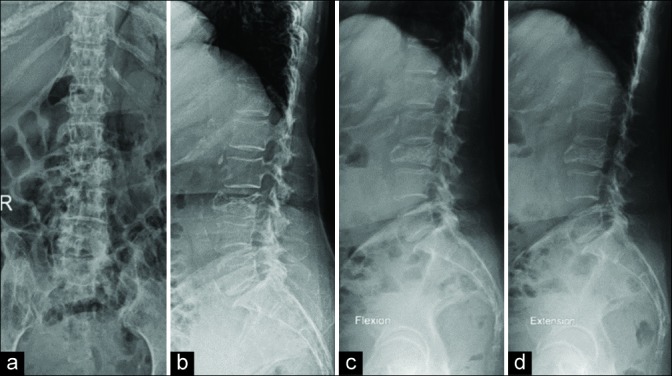
We evaluated two patients, one with a traumatic L2 wedge compression fracture and the other with an L3 pathological compression fracture due to multiple myeloma. Both patients underwent MI transpsoas lumbar corpectomy, anterior column reconstruction with an expandable cage, and posterior pedicle screw instrumentation to correct a kyphotic deformity. Both patients were mobilized on the 1 postoperative day and experienced significant postoperative pain relief.
In two cases involving L2 and L3 compression fractures, MI transpsoas lumbar corpectomy was safely performed, with reduced perioperative and postoperative morbidity. Here, the transpsoas approach also allowed for early mobilization, adequate postoperative biomechanical stability, and resulted in immediate good outcomes.
在此,我们介绍我们采用微创经腰大肌入路行腰椎椎体切除及固定的经验。经腰大肌入路用于腰椎,包括直接外侧椎间融合术和极外侧椎间融合术。这两种手术均使用管状牵开器系统,该系统有助于充分牵开并直接观察目标,同时据称可减少软组织创伤。
我们评估了两名患者,一名患有创伤性L2楔形压缩骨折,另一名因多发性骨髓瘤患有L3病理性压缩骨折。两名患者均接受了微创经腰大肌腰椎椎体切除术、使用可扩张椎间融合器进行前柱重建以及后路椎弓根螺钉内固定以纠正后凸畸形。两名患者均在术后第1天即可活动,术后疼痛明显缓解。
在两例涉及L2和L3压缩骨折的病例中,微创经腰大肌腰椎椎体切除术安全实施,围手术期和术后发病率降低。在此,经腰大肌入路还允许早期活动、术后获得足够的生物力学稳定性,并立即取得良好效果。