Ghasemi Maryam, Vahedi Larijani Laleh, Emadian Omid, Yazdani Jamshid, Sajadianfar Amad, Abediankenari Saeid
Associate Professor, Dept. of Pathology, Immunogenetics Research Center, Mazandaran University of Medical Sciences, Sari, Iran.
Assistant Professor, Mazandaran University of Medical Sciences, Sari, Iran.
Iran J Pathol. 2019 Winter;14(1):8-16. doi: 10.30699/IJP.14.1.8. Epub 2019 Dec 27.
BACKGROUND & OBJECTIVE: This study was designed for the first time for the detec- tion of mutant BRAF V600E and its correlation with clinicophathologic features in a sample of Iranian patients with pathologically proved pigmented skin neoplasms.
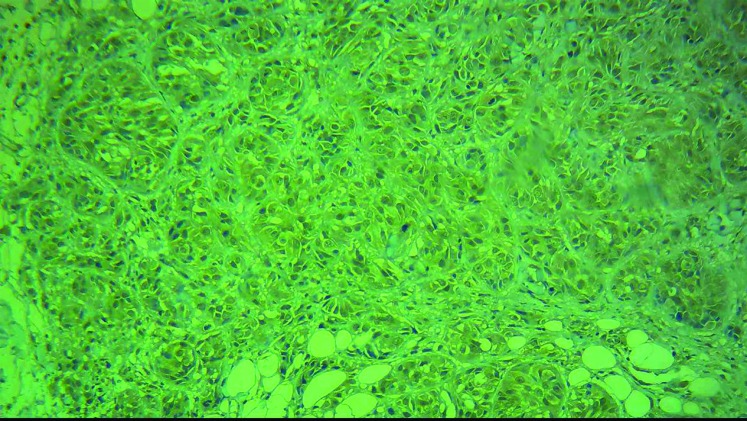
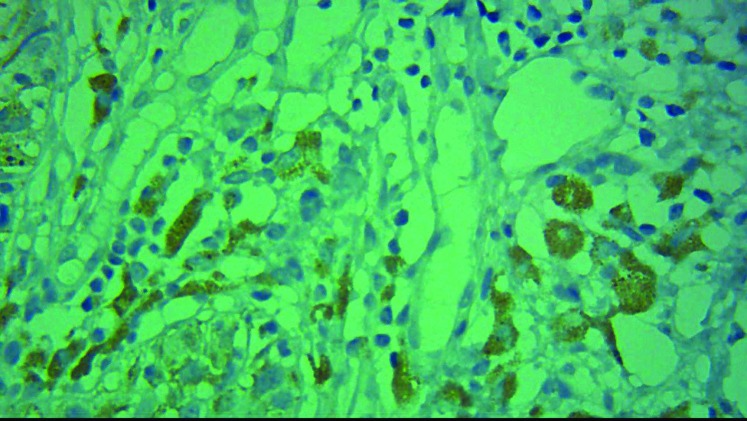
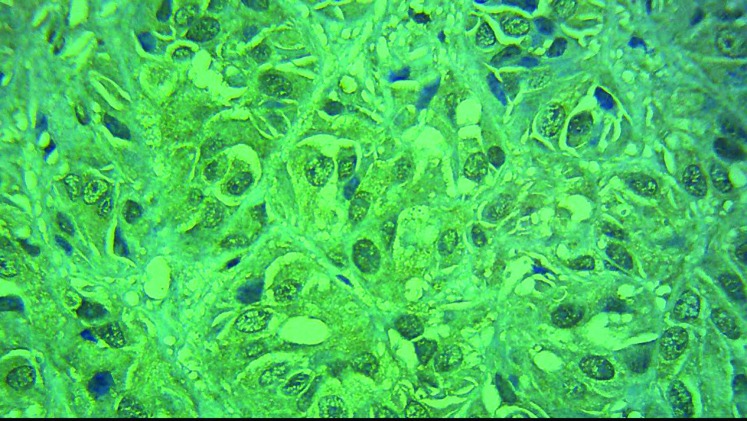
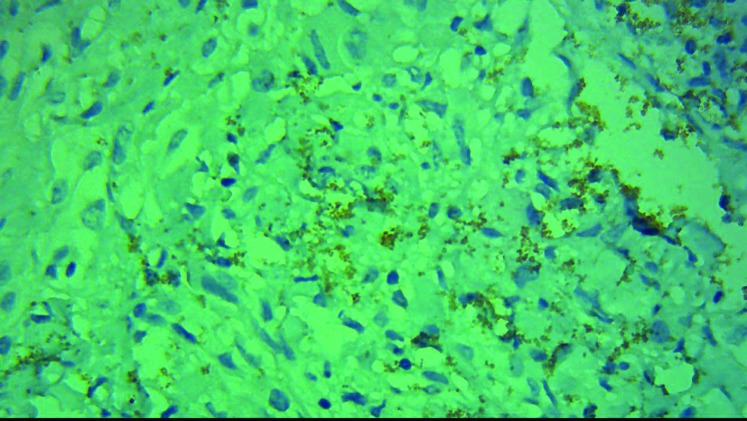
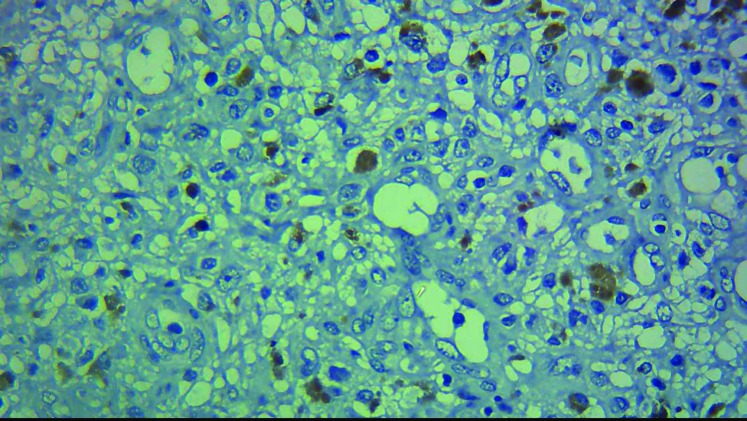
82 paraffin-embedded blocks, including melanocytic nevi, malignant melanoma, Basel cell carcinoma, and squamous cell carcinoma were evaluated for BRAF V600E expression by immunohistochemistry in the patients admitted to Ibn Sina Hospital, in the city of Sari, Mazandaran province, North of Iran. The evaluation of immunohistochemical staining was performed by two of the authoring pathologists, and staining intensity was graded from negative (0), weak (1+), moderate (2+) to strong (3+). If twenty percent (or greater) of the tumor cells showed modest to strong cytoplasmic immunoreactivity (score 3+), the neoplasm was considered positive for this tumor marker.
Among 82 studied patients, 12 cases (60%) of the malignant melanoma group revealed a high intensity of immunostaining for BRAF V600E, while a signifi- cant expression of this marker did not occur in the other investigated skin neoplasm. A great relation between BRAF (V600E) expression and the histologic type of skin cancer was noted. No significant relationship with other parameters such as gender, age, and the grade differentiation of the non-melanoma skin cancer was found. BRAF V600E was weakly correlated with the Clark level of cutaneous malignant melanoma.
This data provided further evidence for the strong role of the BRAF V600E mutation in the development of cutaneous malignant melanoma, compared to non-melanoma skin cancers in the North of Iran. We advised future studies to evaluate the beneficial effects of anti-BRAF V600E target therapy on the Iranian melanoma patient who harbors this marker by way of immunostaining tumor tissue.
本研究首次针对伊朗经病理证实的色素性皮肤肿瘤患者样本,检测突变型BRAF V600E及其与临床病理特征的相关性。
对伊朗北部马赞德兰省萨里市伊本·西那医院收治的患者,采用免疫组织化学方法评估82个石蜡包埋组织块(包括黑素细胞痣、恶性黑色素瘤、基底细胞癌和鳞状细胞癌)中BRAF V600E的表达情况。免疫组织化学染色评估由两位作者病理学家进行,染色强度分为阴性(0)、弱阳性(1+)、中度阳性(2+)至强阳性(3+)。如果20%(或更多)的肿瘤细胞显示出中度至强的细胞质免疫反应性(评分3+),则该肿瘤被认为该肿瘤标志物呈阳性。
在82例研究患者中,恶性黑色素瘤组有12例(60%)显示BRAF V600E免疫染色强度高,而在其他研究的皮肤肿瘤中未发现该标志物的显著表达。注意到BRAF(V600E)表达与皮肤癌组织学类型之间有很大关系。未发现与其他参数如性别、年龄和非黑色素瘤皮肤癌的分级分化有显著关系。BRAF V600E与皮肤恶性黑色素瘤的克拉克分级呈弱相关。
与伊朗北部的非黑色素瘤皮肤癌相比,这些数据进一步证明了BRAF V600E突变在皮肤恶性黑色素瘤发生中的重要作用。我们建议未来的研究通过免疫染色肿瘤组织来评估抗BRAF V600E靶向治疗对携带该标志物的伊朗黑色素瘤患者的有益效果。