Department of Biology, Institute of Molecular Plant Biology, ETH Zurich, Universitätstrasse 2, 8092, Zurich, Switzerland.
Functional Genomics Center Zurich, Winterthurerstrasse 190, 8057, Zurich, Switzerland.
BMC Biol. 2019 Sep 18;17(1):75. doi: 10.1186/s12915-019-0697-6.
Cassava is an important food crop in tropical and sub-tropical regions worldwide. In Africa, cassava production is widely affected by cassava mosaic disease (CMD), which is caused by the African cassava mosaic geminivirus that is transmitted by whiteflies. Cassava breeders often use a single locus, CMD2, for introducing CMD resistance into susceptible cultivars. The CMD2 locus has been genetically mapped to a 10-Mbp region, but its organization and genes as well as their functions are unknown.
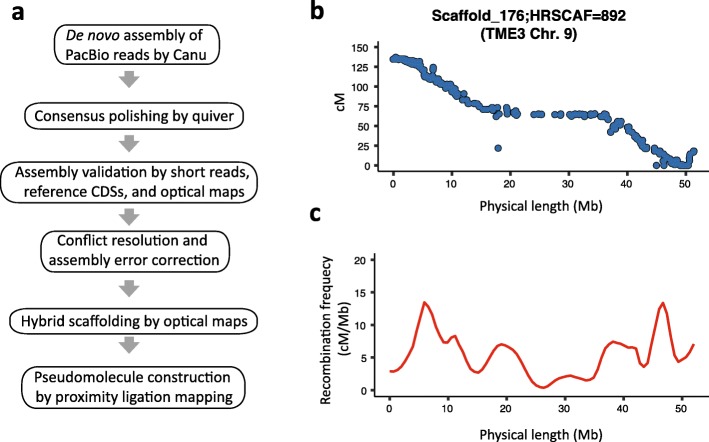
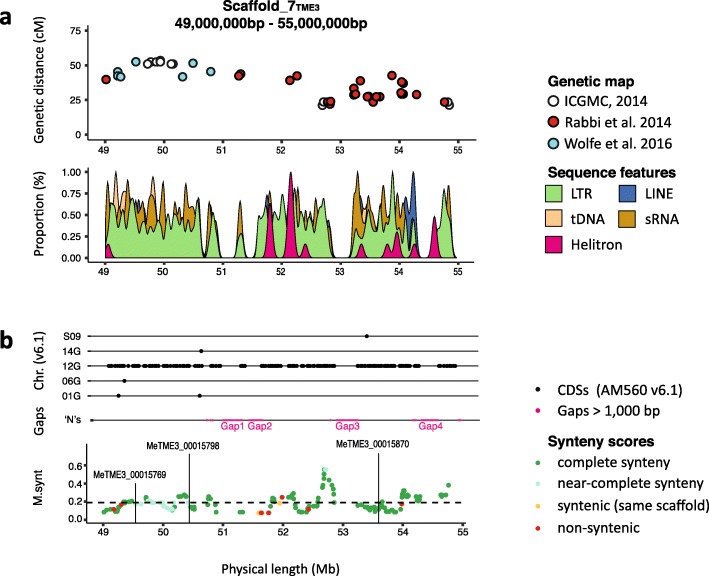
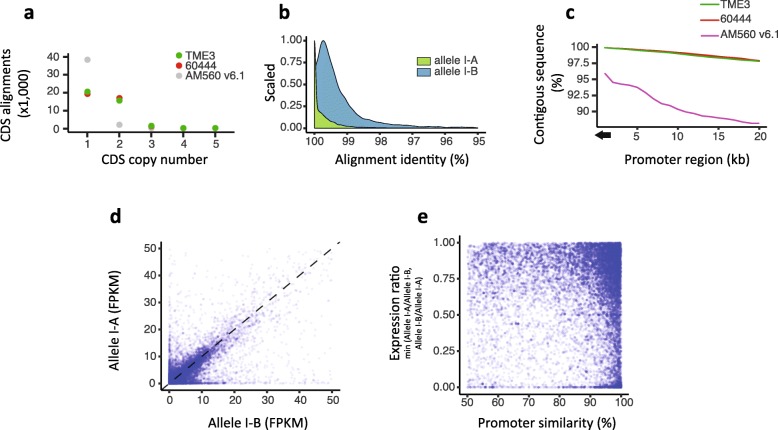
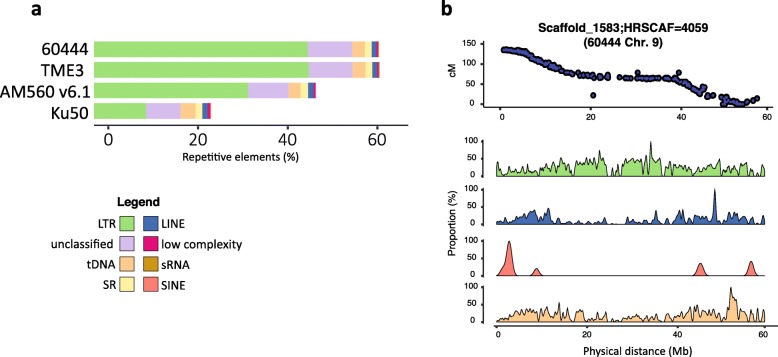
We report haplotype-resolved de novo assemblies and annotations of the genomes for the African cassava cultivar TME (tropical Manihot esculenta), which is the origin of CMD2, and the CMD-susceptible cultivar 60444. The assemblies provide phased haplotype information for over 80% of the genomes. Haplotype comparison identified novel features previously hidden in collapsed and fragmented cassava genomes, including thousands of allelic variants, inter-haplotype diversity in coding regions, and patterns of diversification through allele-specific expression. Reconstruction of the CMD2 locus revealed a highly complex region with nearly identical gene sets but limited microsynteny between the two cultivars.
The genome maps of the CMD2 locus in both 60444 and TME3, together with the newly annotated genes, will help the identification of the causal genetic basis of CMD2 resistance to geminiviruses. Our de novo cassava genome assemblies will also facilitate genetic mapping approaches to narrow the large CMD2 region to a few candidate genes for better informed strategies to develop robust geminivirus resistance in susceptible cassava cultivars.
木薯是世界热带和亚热带地区的重要粮食作物。在非洲,木薯生产受到木薯花叶病(CMD)的广泛影响,该病由非洲木薯花叶双生病毒通过粉虱传播。木薯育种者通常使用单个基因座 CMD2 将 CMD 抗性引入易感品种。CMD2 基因座已被遗传定位到 10-Mbp 区域,但它的组织、基因及其功能尚不清楚。
我们报告了非洲木薯品种 TME(热带 Manihot esculenta)和 CMD 易感品种 60444 的从头组装和注释的单倍型分辨率。TME 是 CMD2 的起源地,组装提供了基因组超过 80%的相位单倍型信息。单倍型比较确定了以前隐藏在木薯基因组中折叠和碎片化的新特征,包括数千个等位变体、编码区的种间多样性以及通过等位基因特异性表达多样化的模式。CMD2 基因座的重建揭示了一个高度复杂的区域,两个品种的基因集几乎相同,但微同线性有限。
60444 和 TME3 中 CMD2 基因座的基因组图谱,以及新注释的基因,将有助于鉴定 CMD2 对双生病毒抗性的遗传基础。我们的木薯从头组装基因组也将有助于遗传图谱方法将较大的 CMD2 区域缩小到少数几个候选基因,以便更好地制定策略,在易感木薯品种中开发稳健的双生病毒抗性。