Frank Laboratory, National Institutes of Health Clinical Center, Bethesda, MD 20892.
Department of Radiology, Howard University College of Medicine, Washington, DC 20059.
Theranostics. 2019 Jul 28;9(19):5517-5531. doi: 10.7150/thno.33876. eCollection 2019.
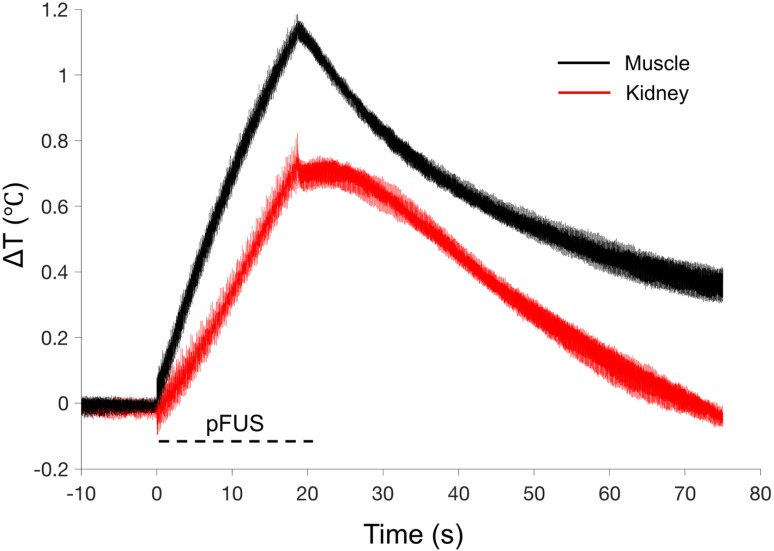
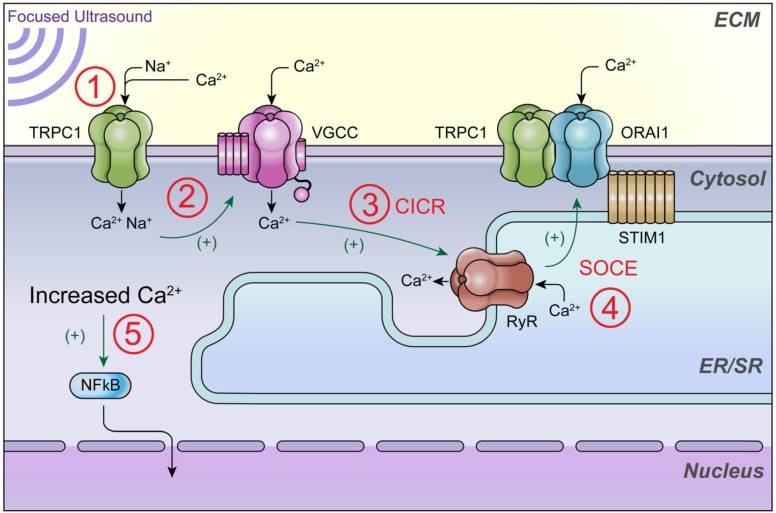
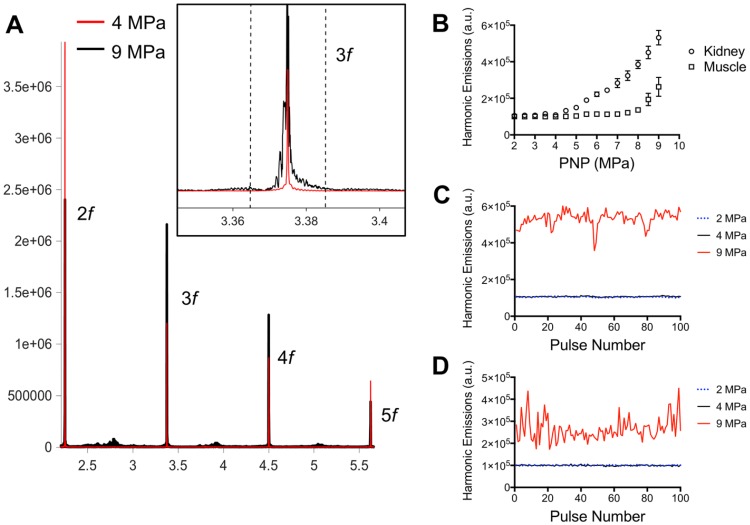
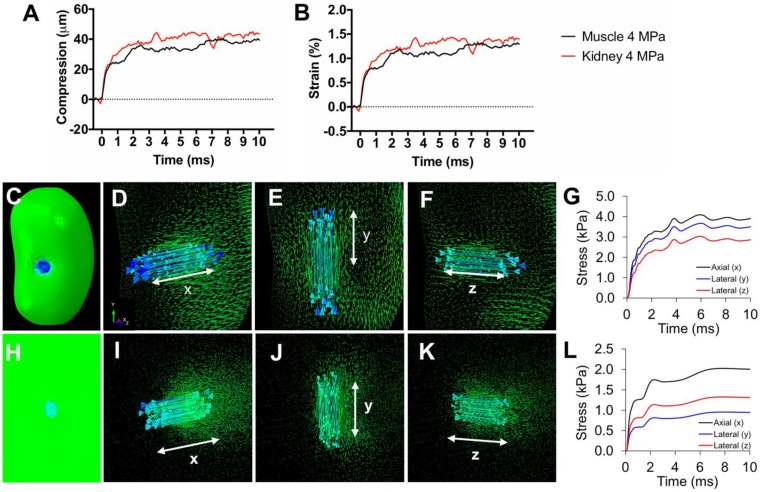
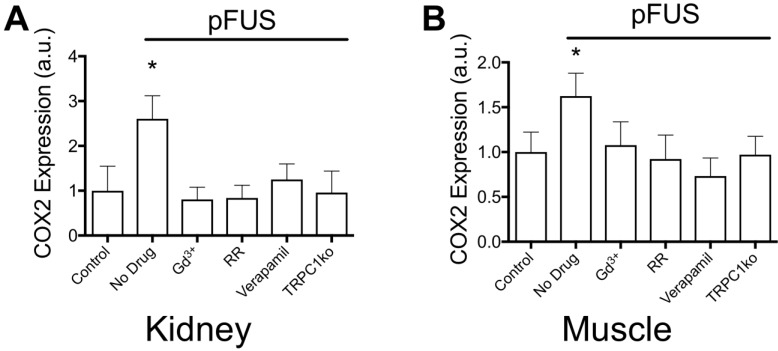
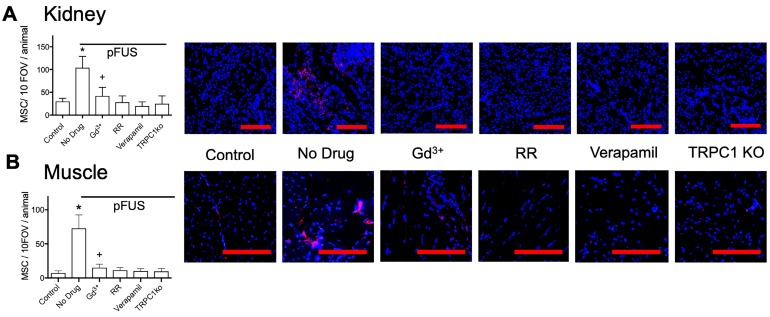
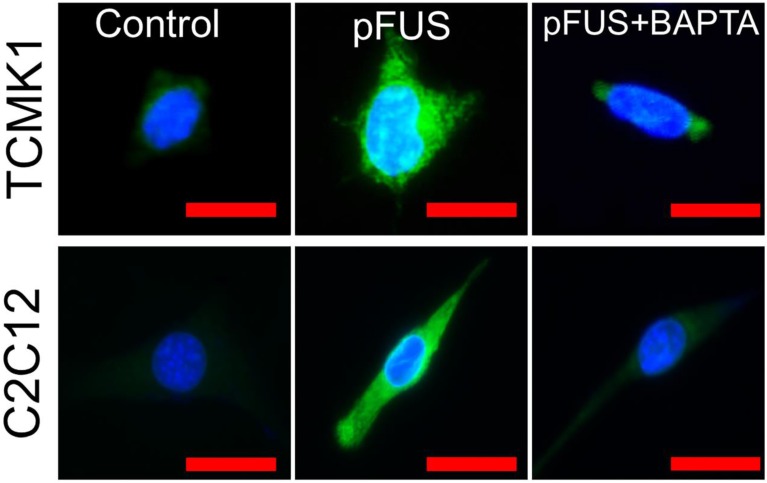
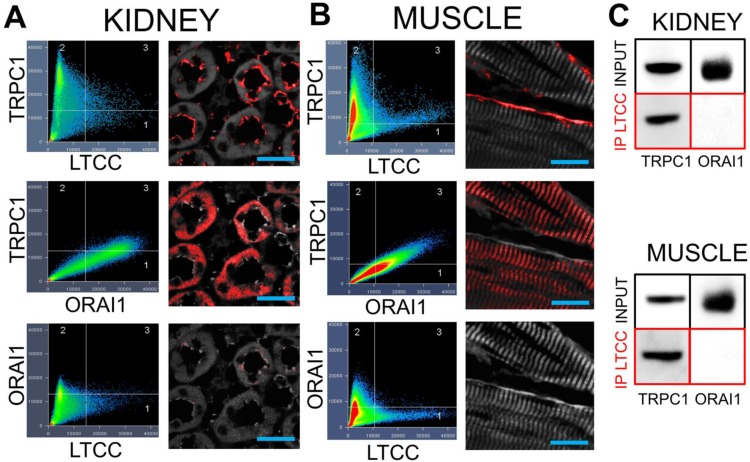
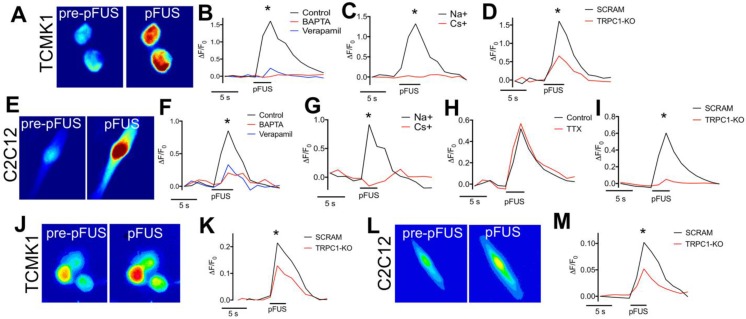
Pulsed focused ultrasound (pFUS) technology is being developed for clinical neuro/immune modulation and regenerative medicine. Biological signal transduction of pFUS forces can require mechanosensitive or voltage-gated plasma membrane ion channels. Previous studies suggested pFUS is capable of activating either channel type, but their mechanistic relationship remains ambiguous. We demonstrated pFUS bioeffects increased mesenchymal stem cell tropism (MSC) by altering molecular microenvironments through cyclooxygenase-2 (COX2)-dependent pathways. This study explored specific relationships between mechanosensitive and voltage-gated Ca channels (VGCC) to initiate pFUS bioeffects that increase stem cell tropism. Murine kidneys and hamstring were given pFUS (1.15 or 1.125 MHz; 4MPa peak rarefactional pressure) under ultrasound or magnetic resonance imaging guidance. Cavitation and tissue displacement were measure by hydrophone and ultrasound radiofrequency data, respectively. Elastic modeling was performed from displacement measurements. COX2 expression and MSC tropism were evaluated in the presence of pharmacological ion channel inhibitors or in transient-receptor-potential-channel-1 (TRPC1)-deficient mice. Immunohistochemistry and co-immunoprecipitation examined physical channel relationships. Fluorescent ionophore imaging of cultured C2C12 muscle cells or TCMK1 kidney cells probed physiological interactions. pFUS induced tissue deformations resulting in kPa-scale forces suggesting mechanical activation of pFUS-induced bioeffects. Inhibiting VGCC or TRPC1 blocked pFUS-induced COX2 upregulation and MSC tropism to kidneys and muscle. A TRPC1/VGCC complex was observed in plasma membranes. VGCC or TRPC1 suppression blocked pFUS-induced Ca transients in TCMK1 and C2C12 cells. Additionally, Ca transients were blocked by reducing transmembrane Na potentials and observed Na transients were diminished by genetic TRPC1 suppression. This study suggests that pFUS acoustic radiation forces mechanically activate a Na-containing TRPC1 current upstream of VGCC rather than directly opening VGCC. The electrogenic function of TRPC1 provides potential mechanistic insight into other pFUS techniques for physiological modulation and optimization strategies for clinical implementation.
脉冲聚焦超声(pFUS)技术正被开发用于临床神经/免疫调节和再生医学。pFUS 力的生物信号转导可能需要机械敏感或电压门控等离子膜离子通道。先前的研究表明,pFUS 能够激活任一种通道类型,但它们的机制关系仍不清楚。我们通过环氧化酶-2(COX2)依赖性途径改变分子微环境,证明 pFUS 生物效应通过改变分子微环境增加间充质干细胞(MSC)的趋向性。本研究通过超声或磁共振成像引导下的 pFUS(1.15 或 1.125MHz;4MPa 峰值稀疏压力),探索了机械敏感和电压门控钙通道(VGCC)之间的特定关系,以启动增加干细胞趋向性的 pFUS 生物效应。在药理学离子通道抑制剂或瞬时受体电位通道-1(TRPC1)缺陷小鼠存在的情况下,通过水听器和超声射频数据分别测量空化和组织位移,进行弹性建模。评估 COX2 表达和 MSC 趋向性。免疫组织化学和共免疫沉淀检查物理通道关系。用荧光离子载体成像培养的 C2C12 肌肉细胞或 TCMK1 肾细胞探测生理相互作用。pFUS 诱导组织变形,导致 kPa 级力,表明机械激活 pFUS 诱导的生物效应。抑制 VGCC 或 TRPC1 阻断 pFUS 诱导的 COX2 上调和 MSC 向肾脏和肌肉的趋向性。在质膜中观察到 TRPC1/VGCC 复合物。在 TCMK1 和 C2C12 细胞中,VGCC 或 TRPC1 抑制阻断了 pFUS 诱导的 Ca 瞬变。此外,通过降低跨膜 Na 势来阻断 Ca 瞬变,并观察到通过遗传 TRPC1 抑制来减少 Na 瞬变。本研究表明,pFUS 声辐射力通过机械激活 VGCC 上游的含有 Na 的 TRPC1 电流而不是直接打开 VGCC 来激活 pFUS 诱导的生物效应。TRPC1 的电生成功能为其他 pFUS 技术的生理调节提供了潜在的机制见解,并为临床实施的优化策略提供了依据。