Department of Neurology, The Six Affiliated Hospital of Sun Yat-Sen University, Guangzhou, Guangdong, 510655, People's Republic of China.
Department of Endocrinology, The Six Affiliated Hospital of Sun Yat-Sen University, Guangzhou, Guangdong, 510655, People's Republic of China.
Biol Res. 2019 Sep 21;52(1):53. doi: 10.1186/s40659-019-0258-z.
Oxidative stress is the hallmark of diabetic encephalopathy, which may be caused by hyperglycaemic toxicity. We aimed to discover pharmacologic targets to restore redox homeostasis. We identified the transcription factor Nrf2 as such a target.
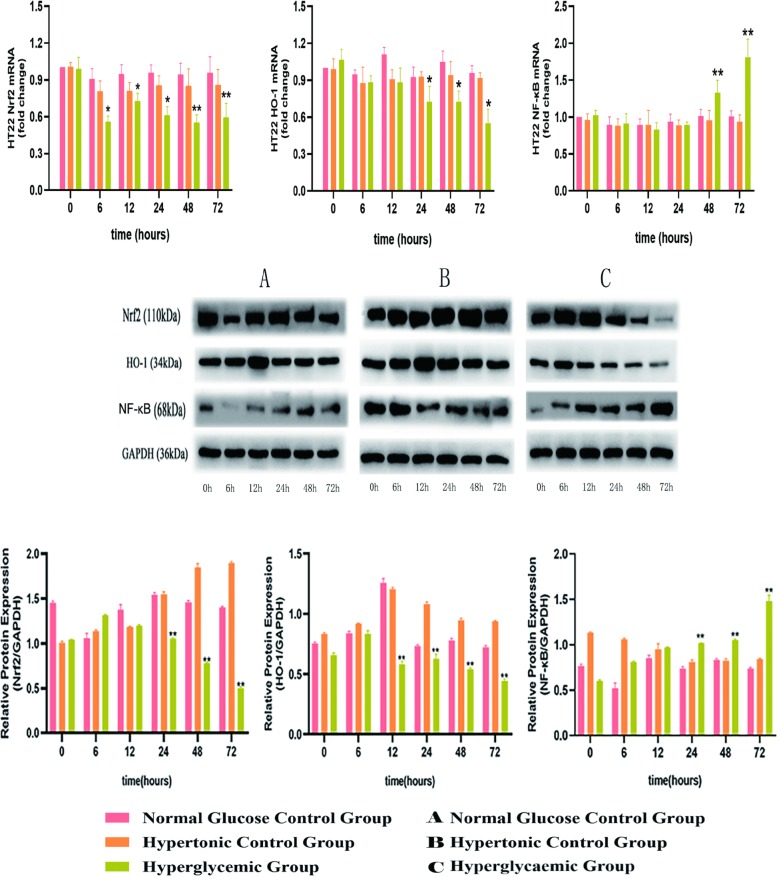
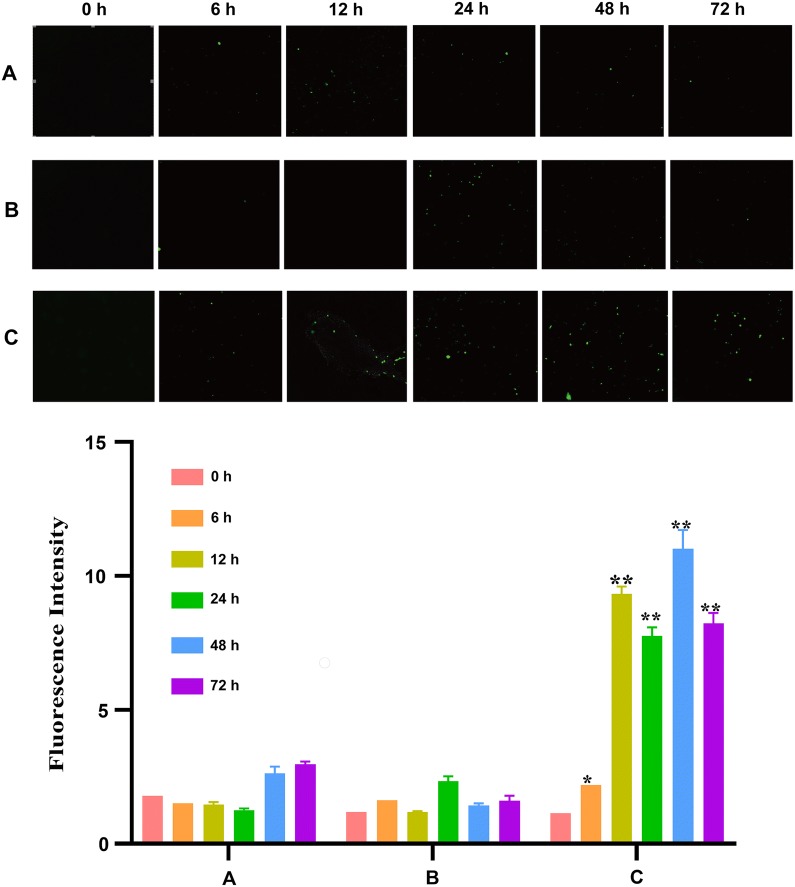
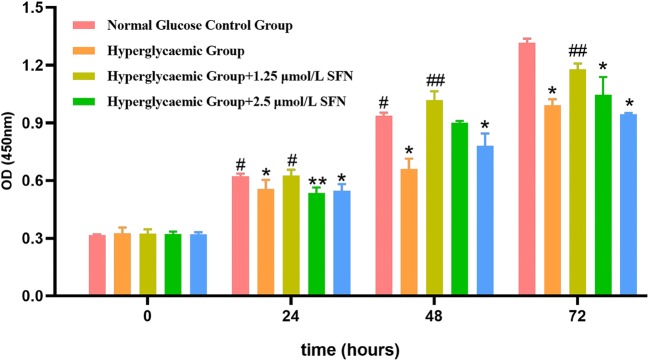
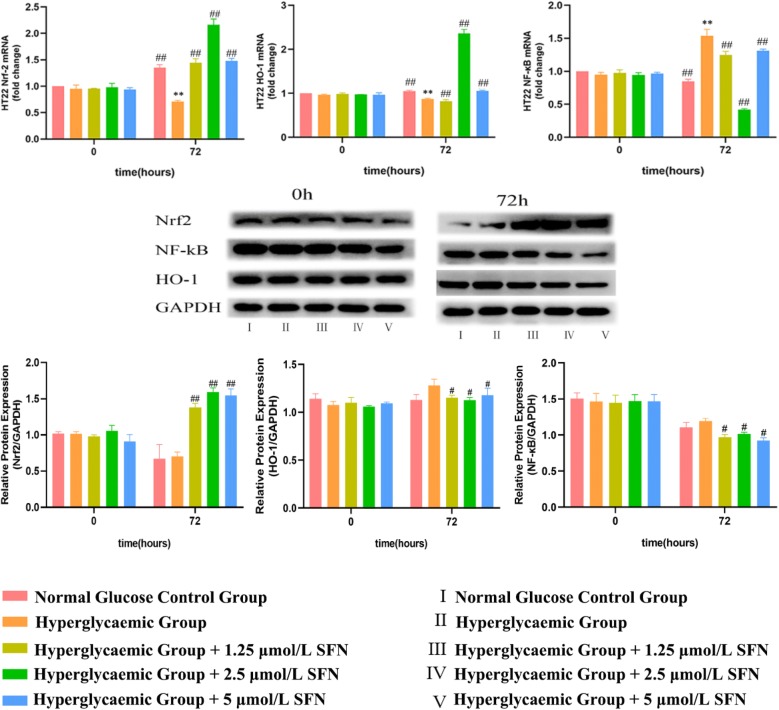
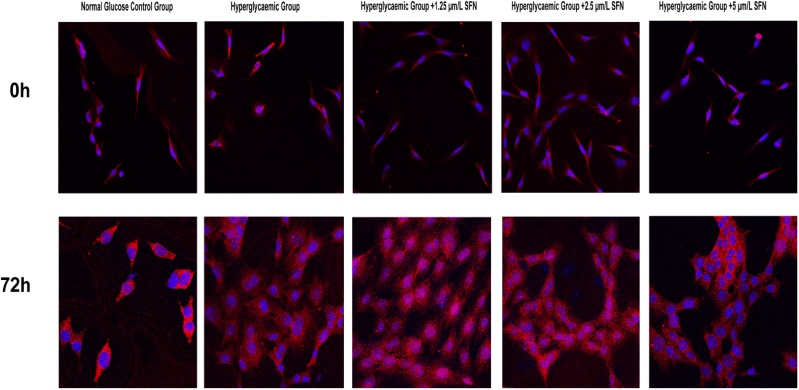
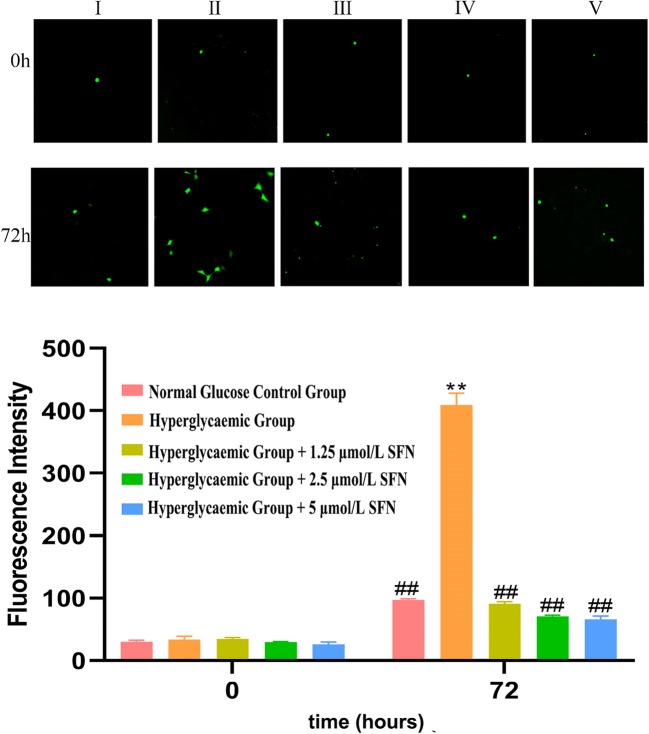
HT22 cells were cultured in 25 or 50 mM D-glucose with various concentrations of sulforaphane (SFN) (from 1.25 to 5.0 μM). Cell viability was tested with the Cell Counting Kit-8 assay. Reactive oxygen species (ROS) production was detected with an inverted fluorescence microscope using the dichlorodihydrofluorescein-diacetate fluorescent probe. The expression of NF-E2-related factor 2 (Nrf2), haem oxygenase-1 (HO-1) and nuclear factor-κB (NF-κB) at the mRNA and protein levels was detected by reverse transcription quantitative polymerase chain reaction and western blotting.
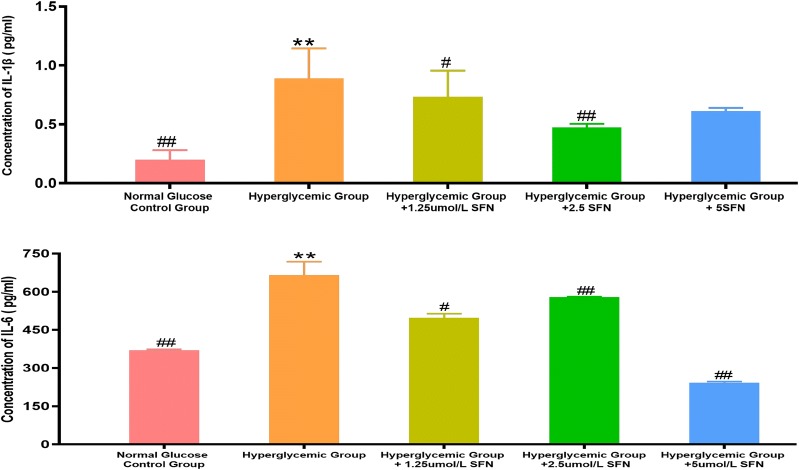
We found that a high glucose concentration (50 mM) increased the generation of ROS, downregulated the expression of Nrf2/HO-1 and upregulated the expression of NF-κB. Moreover, HT22 cell viability significantly decreased after culture in high-glucose medium for 24, 48 and 72 h, whereas the activation of the Nrf2/HO-1 pathway using a pharmacological Nrf2 activator abrogated this high-glucose-induced toxicity.
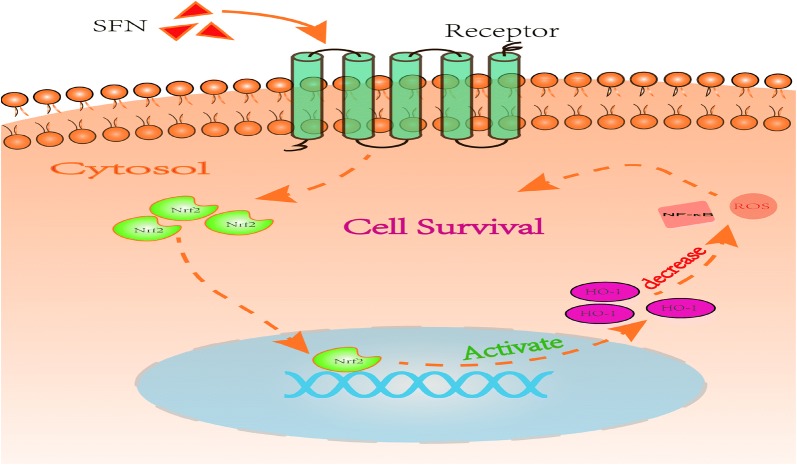
This study suggests that the activation of the Nrf2-ARE signalling pathway might be a therapeutic target for the treatment of diabetic encephalopathy.
氧化应激是糖尿病性脑病的标志,其可能由高血糖毒性引起。我们旨在寻找恢复氧化还原平衡的药物靶点。我们发现转录因子 Nrf2 就是这样的一个靶点。
在 25 或 50mM D-葡萄糖中培养 HT22 细胞,并加入不同浓度的萝卜硫素(SFN)(从 1.25 至 5.0μM)。用 Cell Counting Kit-8 测定细胞活力。用倒置荧光显微镜和二氯二氢荧光素二乙酸酯荧光探针检测活性氧(ROS)的产生。通过反转录定量聚合酶链反应和蛋白质印迹法检测 NF-E2 相关因子 2(Nrf2)、血红素加氧酶-1(HO-1)和核因子-κB(NF-κB)的 mRNA 和蛋白水平的表达。
我们发现高葡萄糖浓度(50mM)增加了 ROS 的产生,下调了 Nrf2/HO-1 的表达,上调了 NF-κB 的表达。此外,在高葡萄糖培养基中培养 24、48 和 72 小时后,HT22 细胞活力显著降低,而使用药理学 Nrf2 激活剂激活 Nrf2/HO-1 通路则可以消除高葡萄糖诱导的毒性。
本研究表明,激活 Nrf2-ARE 信号通路可能是治疗糖尿病性脑病的一种治疗靶点。