Jan and Dan Duncan Neurological Research Institute at Texas Children's Hospital, Houston, TX 77030, USA; Department of Molecular and Human Genetics, Baylor College of Medicine, Houston, TX 77030, USA.
Jan and Dan Duncan Neurological Research Institute at Texas Children's Hospital, Houston, TX 77030, USA; Department of Molecular and Human Genetics, Baylor College of Medicine, Houston, TX 77030, USA; Program in Developmental Biology, Baylor College of Medicine, Houston, TX 77030, USA; Department of Pediatrics, Baylor College of Medicine, Houston, TX 77030, USA; Department of Neuroscience, Baylor College of Medicine, Houston, TX 77030, USA; Howard Hughes Medical Institute, Baylor College of Medicine, Houston, TX 77030, USA.
Curr Opin Neurobiol. 2019 Dec;59:180-188. doi: 10.1016/j.conb.2019.08.001. Epub 2019 Sep 19.
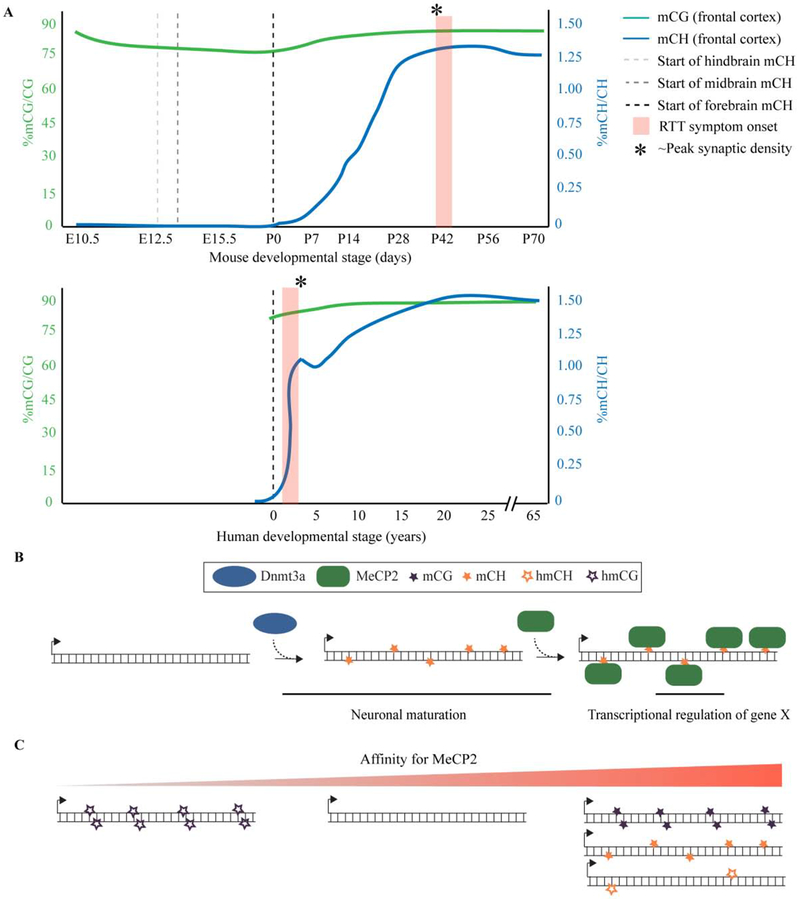
Rett syndrome (RTT) is one of the most common causes of intellectual and developmental disabilities in girls, and is caused by mutations in the gene encoding methyl-CpG binding protein 2 (MECP2). Here we will review our current understanding of RTT, the landscape of pathogenic mutations and function of MeCP2, and culminate with recent advances elucidating the distinct DNA methylation landscape in the brain that may explain why disease symptoms are delayed and selective to the nervous system.
雷特综合征(RTT)是导致女性智力和发育障碍的最常见原因之一,是由编码甲基化CpG 结合蛋白 2(MECP2)的基因突变引起的。在这里,我们将回顾我们目前对 RTT 的认识、致病性突变的全景以及 MeCP2 的功能,并最终介绍最近在阐明大脑中独特的 DNA 甲基化图谱方面的进展,这可能解释了为什么疾病症状会延迟且只针对神经系统。