Nuamah Joseph K, Mantooth Whitney, Karthikeyan Rohith, Mehta Ranjana K, Ryu Seok Chang
NeuroErgonomics Laboratory, Department of Industrial & Systems Engineering, Texas A&M University, College Station, TX, United States.
Department of Environmental and Occupational Health, Texas A&M University, College Station, TX, United States.
Front Hum Neurosci. 2019 Aug 30;13:287. doi: 10.3389/fnhum.2019.00287. eCollection 2019.
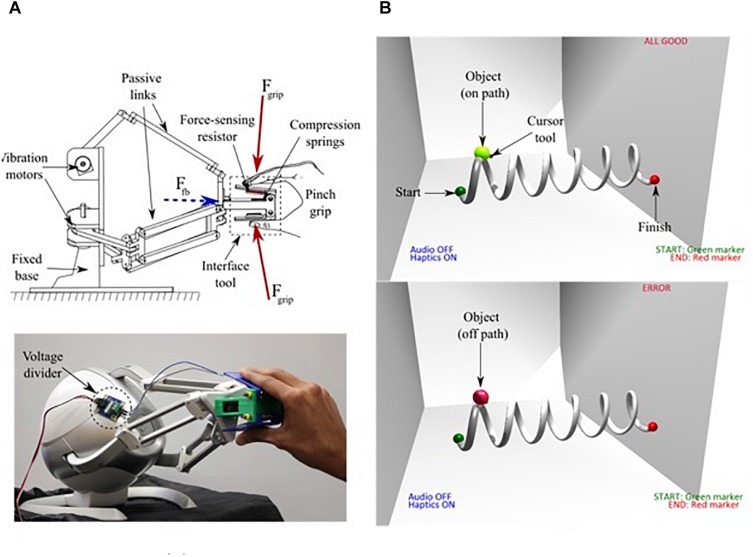
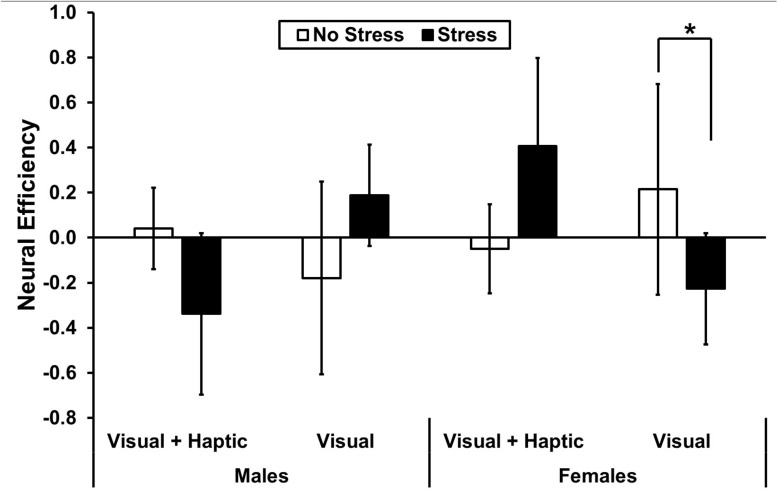
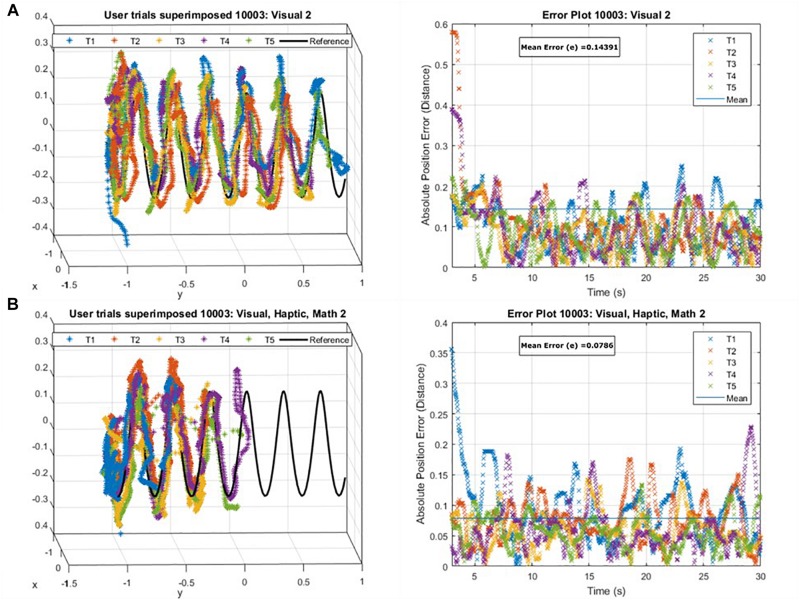
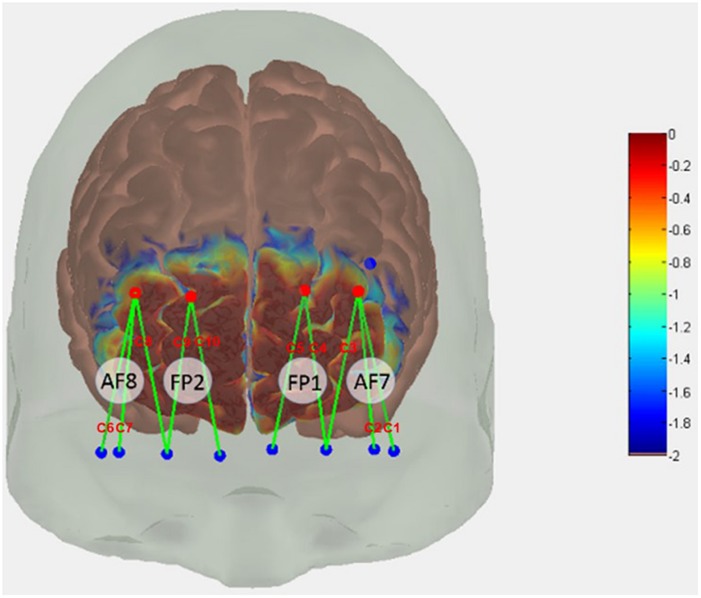
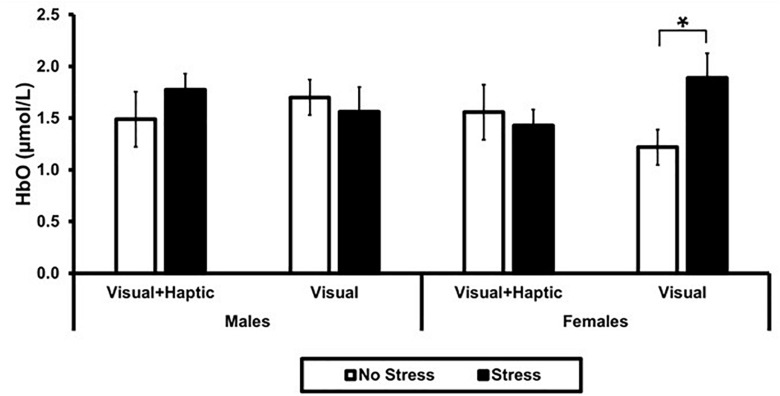
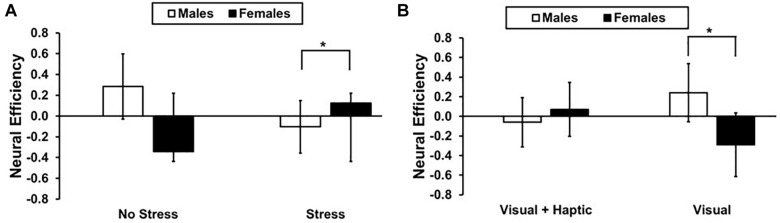
Sensory feedback, which can be presented in different modalities - single and combined, aids task performance in human-robotic interaction (HRI). However, combining feedback modalities does not always lead to optimal performance. Indeed, it is not known how feedback modalities affect operator performance under stress. Furthermore, there is limited information on how feedback affects neural processes differently for males and females and under stress. This is a critical gap in the literature, particularly in the domain of surgical robotics, where surgeons are under challenging socio-technical environments that burden them physiologically. In the present study, we posited operator performance as the summation of task performance and neurophysiological cost of maintaining that performance. In a within-subject design, we used functional near-infrared spectroscopy to assess cerebral activations of 12 participants who underwent a 3D manipulation task within a virtual environment with concurrent feedback (visual and visual + haptic) in the presence and absence of a cognitive stressor. Cognitive stress was induced with the serial-7 subtraction test. We found that while task performance was higher with visual than visual + haptic feedback, it degraded under stress. The two feedback modalities were found to be associated with varying neural activities and neural efficiencies, and these were stress- and gender-dependent. Our findings engender further investigation into effectiveness of feedback modalities on males and females under stressful conditions in HRI.
感觉反馈可以以不同的形式呈现——单一形式和组合形式,有助于人机交互(HRI)中的任务执行。然而,组合反馈形式并不总是能带来最佳性能。事实上,尚不清楚反馈形式在压力下如何影响操作员的表现。此外,关于反馈如何在压力下对男性和女性的神经过程产生不同影响的信息有限。这是文献中的一个关键空白,尤其是在手术机器人领域,外科医生处于具有挑战性的社会技术环境中,生理上承受着负担。在本研究中,我们将操作员的表现设定为任务表现与维持该表现的神经生理成本之和。在一项受试者内设计中,我们使用功能近红外光谱来评估12名参与者的大脑激活情况,这些参与者在虚拟环境中执行3D操作任务,并在有和没有认知应激源的情况下同时接受反馈(视觉反馈和视觉+触觉反馈)。通过连续减7测试诱导认知应激。我们发现,虽然视觉反馈下的任务表现高于视觉+触觉反馈,但在压力下会下降。发现这两种反馈形式与不同的神经活动和神经效率相关,并且这些与压力和性别有关。我们的研究结果促使人们进一步研究在人机交互的压力条件下反馈形式对男性和女性的有效性。