Faculty of Medicine, University of Belgrade, Belgrade, Serbia.
School of Clinical Sciences, University of Bristol, Bristol, United Kingdom.
Curr Neuropharmacol. 2020;18(1):14-33. doi: 10.2174/1570159X17666190717150501.
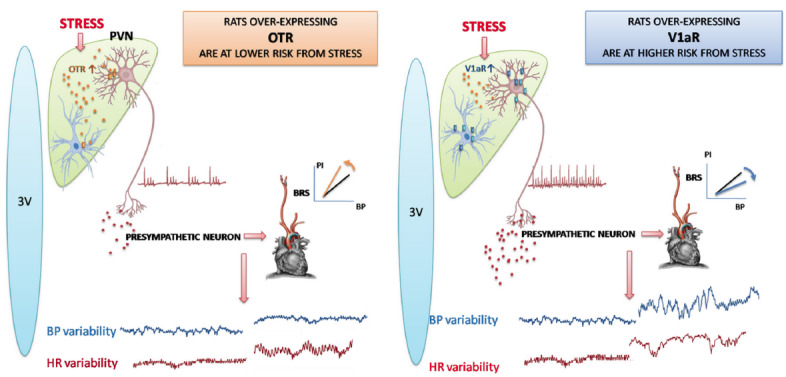
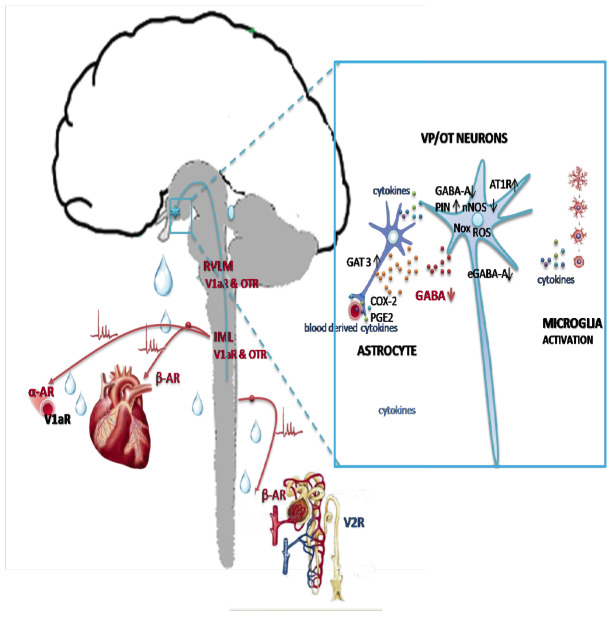
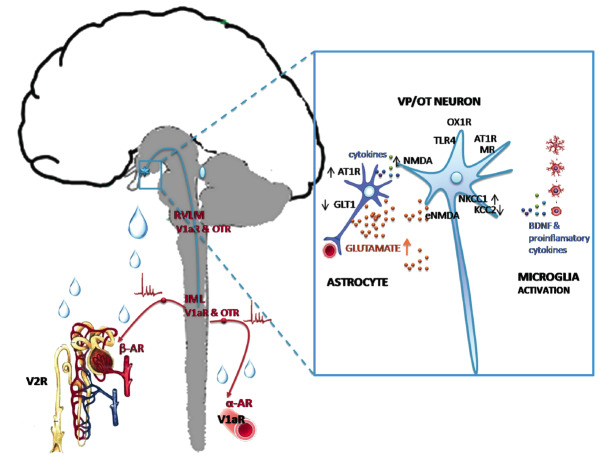
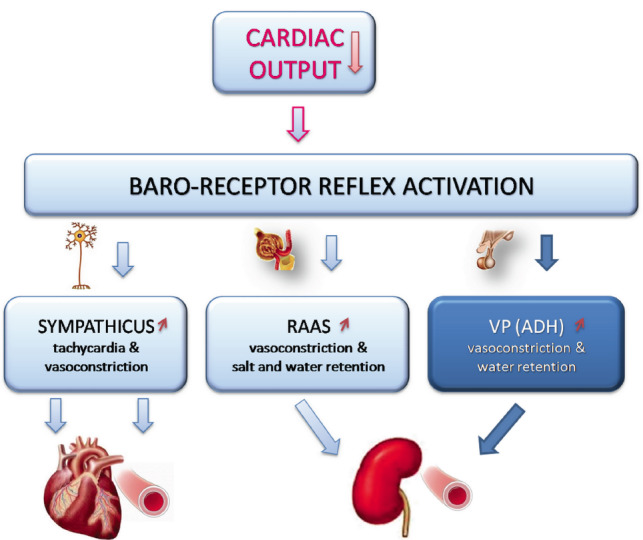
Since the discovery of vasopressin (VP) and oxytocin (OT) in 1953, considerable knowledge has been gathered about their roles in cardiovascular homeostasis. Unraveling VP vasoconstrictor properties and V1a receptors in blood vessels generated powerful hemostatic drugs and drugs effective in the treatment of certain forms of circulatory collapse (shock). Recognition of the key role of VP in water balance via renal V2 receptors gave birth to aquaretic drugs found to be useful in advanced stages of congestive heart failure. There are still unexplored actions of VP and OT on the cardiovascular system, both at the periphery and in the brain that may open new venues in treatment of cardiovascular diseases. After a brief overview on VP, OT and their peripheral action on the cardiovascular system, this review focuses on newly discovered hypothalamic mechanisms involved in neurogenic control of the circulation in stress and disease.
自 1953 年发现血管加压素(VP)和催产素(OT)以来,人们对它们在心血管稳态中的作用有了相当多的了解。揭示血管加压素的血管收缩特性和血管中的 V1a 受体产生了强大的止血药物和治疗某些类型循环衰竭(休克)的有效药物。通过肾脏 V2 受体认识到 VP 在水平衡中的关键作用,产生了发现对充血性心力衰竭晚期有用的利尿药。VP 和 OT 在心血管系统中的外周和大脑中的作用仍有待探索,这可能为心血管疾病的治疗开辟新途径。在简要概述 VP、OT 及其对心血管系统的外周作用后,本综述重点介绍了新发现的涉及应激和疾病中循环的神经源性控制的下丘脑机制。