Department of Rheumatology, Beijing Hospital, National Center of Gerontology, Beijing 100730, P.R. China.
Department of Neurology, Beijing Hospital, National Center of Gerontology, Beijing 100730, P.R. China.
Int J Mol Med. 2019 Nov;44(5):1753-1770. doi: 10.3892/ijmm.2019.4332. Epub 2019 Sep 5.
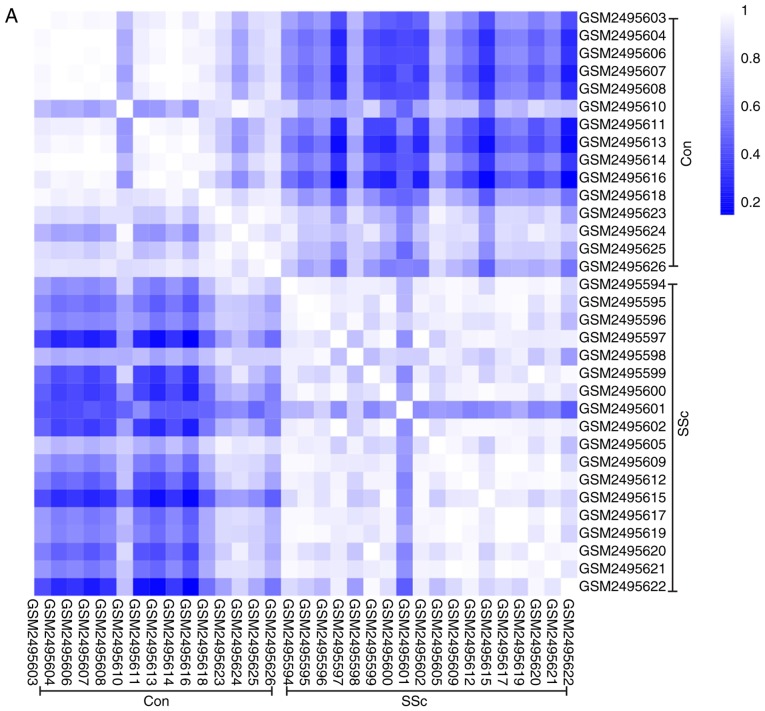
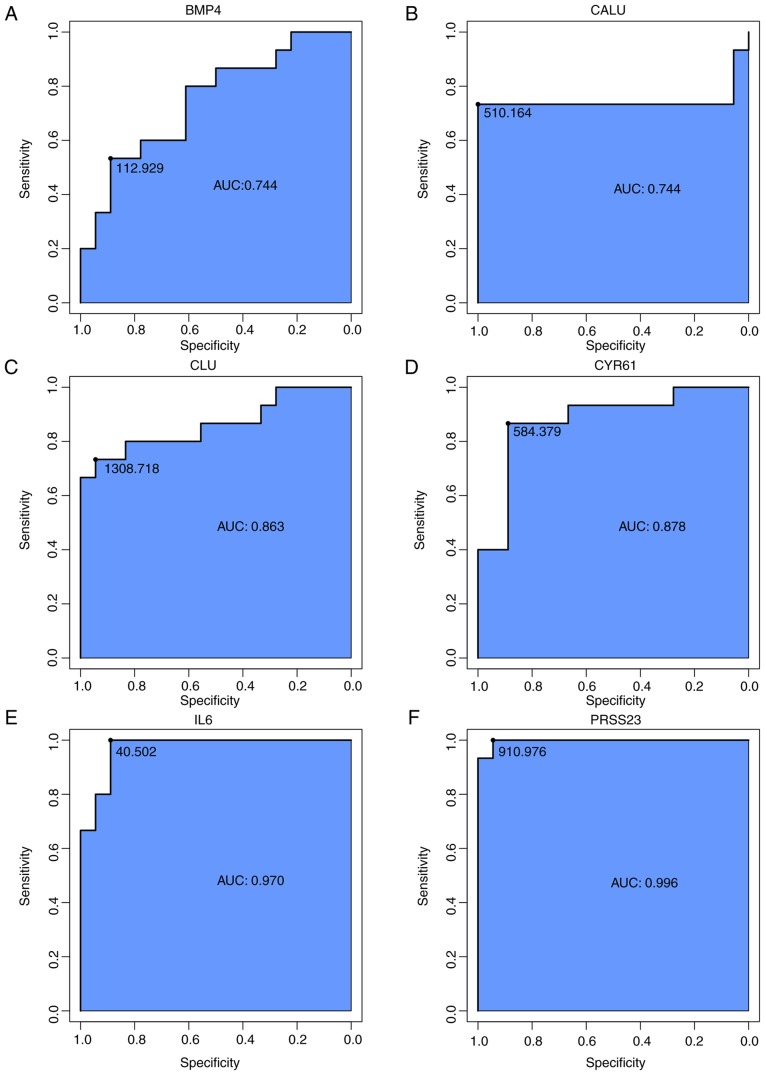
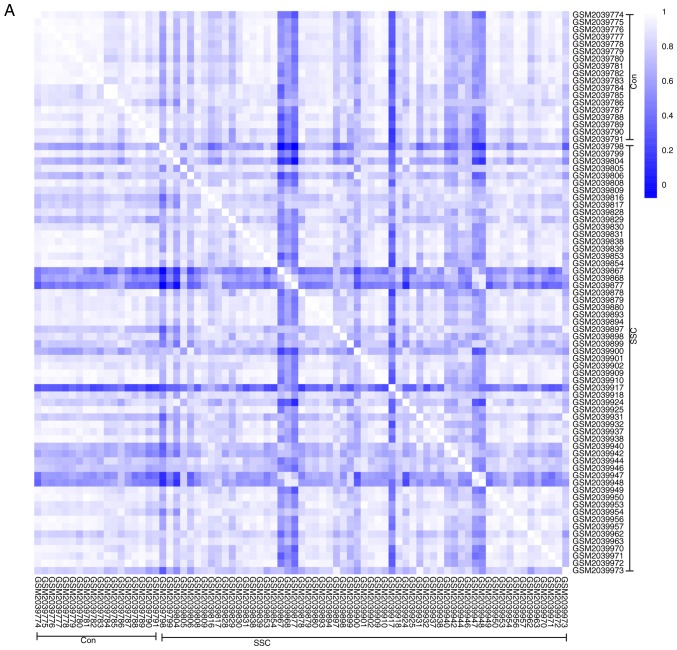
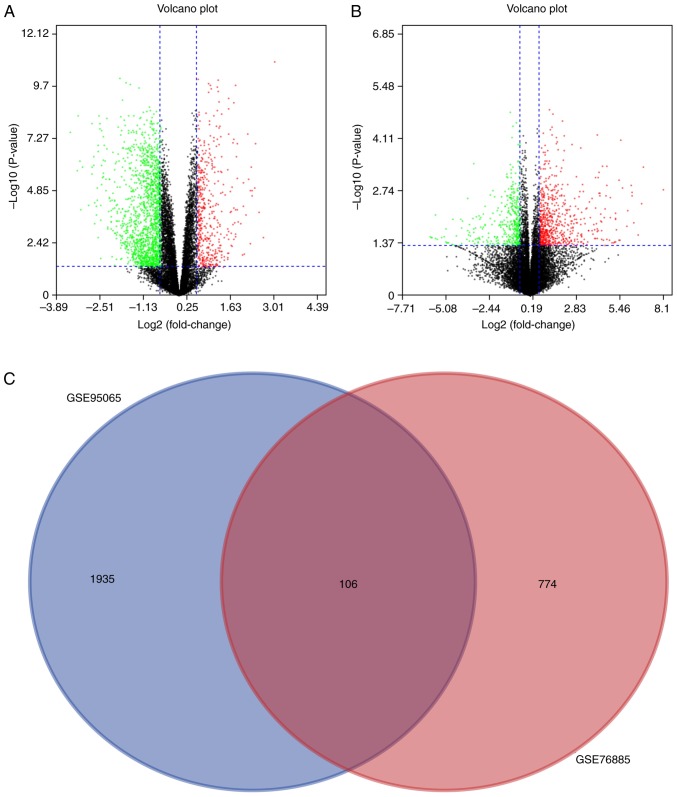
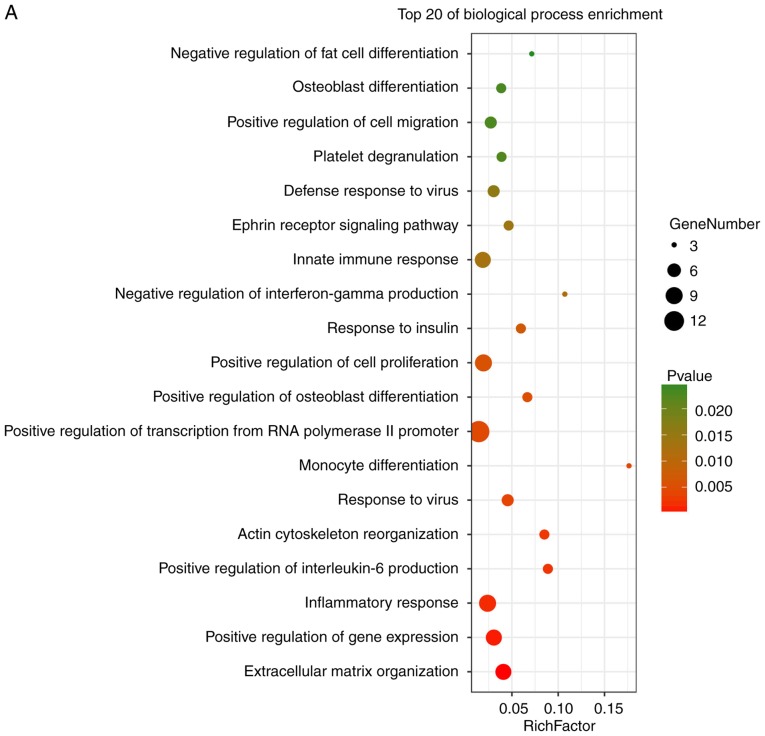
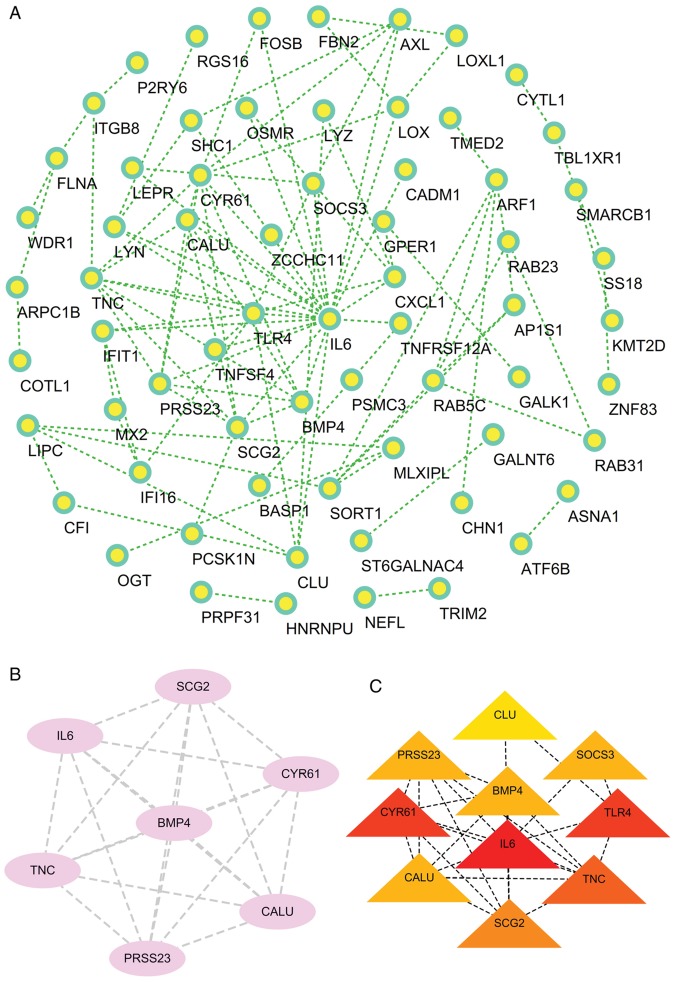
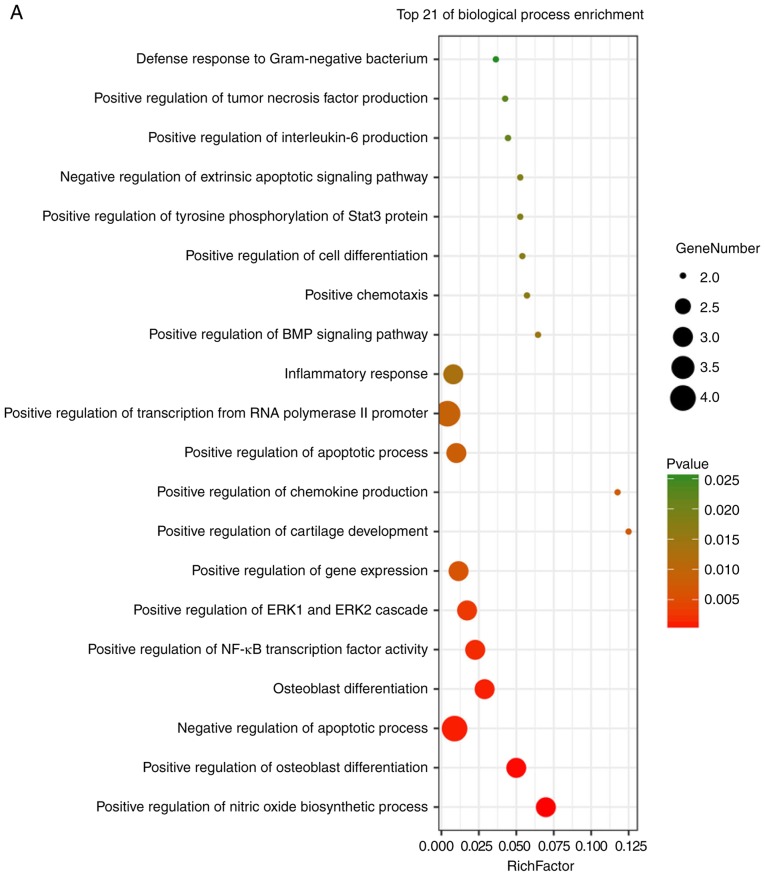
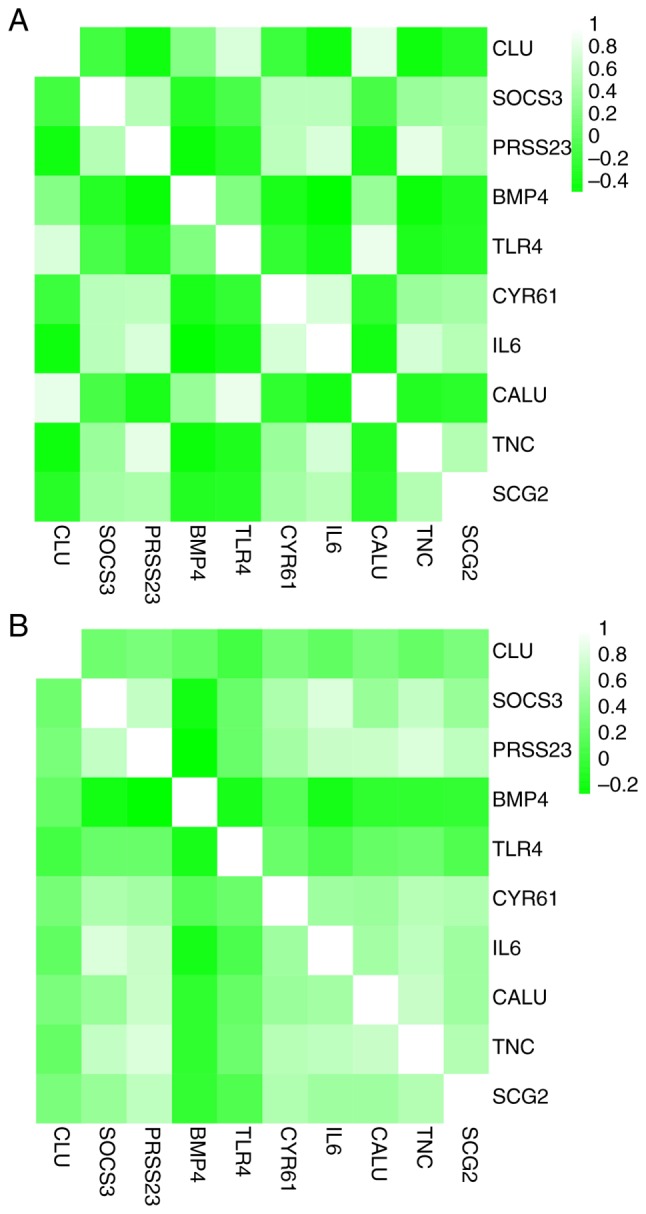
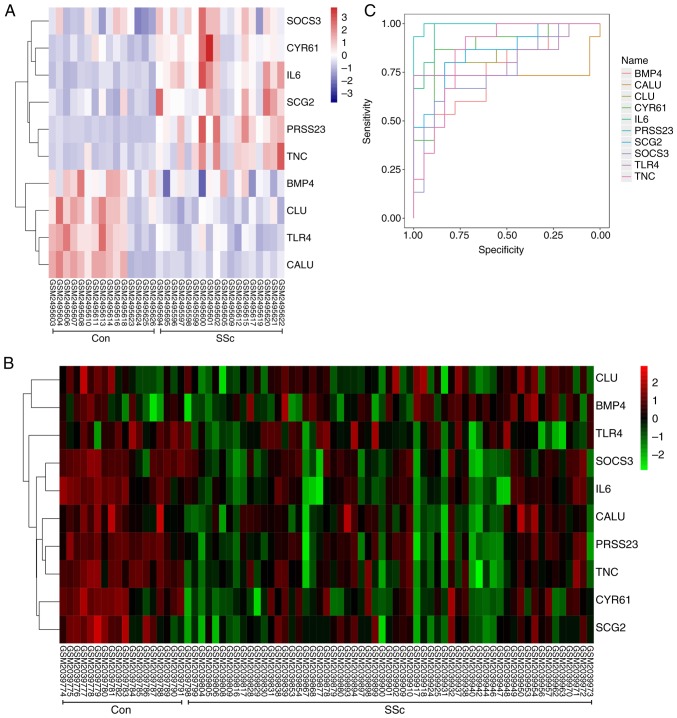
Systemic sclerosis (SSc) is a complex autoimmune disease. The pathogenesis of SSc is currently unclear, although like other rheumatic diseases its pathogenesis is complicated. However, the ongoing development of bioinformatics technology has enabled new approaches to research this disease using microarray technology to screen and identify differentially expressed genes (DEGs) in the skin of patients with SSc compared with individuals with healthy skin. Publicly available data were downloaded from the Gene Expression Omnibus (GEO) database and intra‑group data repeatability tests were conducted using Pearson's correlation test and principal component analysis. DEGs were identified using an online tool, GEO2R. Functional annotation of DEGs was performed using Gene Ontology (GO) and the Kyoto Encyclopedia of Genes and Genomes (KEGG) analysis. Finally, the construction and analysis of the protein‑protein interaction (PPI) network and identification and analysis of hub genes was carried out. A total of 106 DEGs were detected by the screening of SSc and healthy skin samples. A total of 10 genes [interleukin‑6, bone morphogenetic protein 4, calumenin (CALU), clusterin, cysteine rich angiogenic inducer 61, serine protease 23, secretogranin II, suppressor of cytokine signaling 3, Toll‑like receptor 4 (TLR4), tenascin C] were identified as hub genes with degrees ≥10, and which could sensitively and specifically predict SSc based on receiver operator characteristic curve analysis. GO and KEGG analysis showed that variations in hub genes were mainly enriched in positive regulation of nitric oxide biosynthetic processes, negative regulation of apoptotic processes, extracellular regions, extracellular spaces, cytokine activity, chemo‑attractant activity, and the phosphoinositide 3 kinase‑protein kinase B signaling pathway. In summary, bioinformatics techniques proved useful for the screening and identification of biomarkers of disease. A total of 106 DEGs and 10 hub genes were linked to SSc, in particular the TLR4 and CALU genes.
系统性硬化症(SSc)是一种复杂的自身免疫性疾病。尽管与其他风湿性疾病一样,其发病机制较为复杂,但 SSc 的发病机制目前仍不明确。然而,生物信息学技术的不断发展,使得人们可以采用微阵列技术,利用该技术筛选和鉴定 SSc 患者皮肤与健康皮肤相比差异表达的基因(DEGs),从而为研究该病提供新的方法。从基因表达综合数据库(GEO)中下载公共可用的数据,并使用 Pearson 相关性检验和主成分分析进行组内数据重复性检验。使用在线工具 GEO2R 识别 DEGs。使用基因本体论(GO)和京都基因与基因组百科全书(KEGG)分析对 DEGs 进行功能注释。最后,构建和分析蛋白质-蛋白质相互作用(PPI)网络,并识别和分析枢纽基因。通过对 SSc 和健康皮肤样本的筛选,共检测到 106 个 DEGs。共有 10 个基因[白细胞介素 6、骨形态发生蛋白 4、钙结合蛋白(CALU)、簇蛋白、富含半胱氨酸的血管生成诱导因子 61、丝氨酸蛋白酶 23、分泌颗粒 II、细胞因子信号转导抑制因子 3、Toll 样受体 4(TLR4)、腱蛋白 C]被鉴定为枢纽基因,其度数≥10,且可通过受试者工作特征曲线分析敏感且特异性地预测 SSc。GO 和 KEGG 分析表明,枢纽基因的变化主要富集于一氧化氮生物合成过程的正调控、凋亡过程的负调控、细胞外区、细胞外间隙、细胞因子活性、趋化活性和磷酸肌醇 3 激酶-蛋白激酶 B 信号通路。综上所述,生物信息学技术可用于疾病生物标志物的筛选和鉴定。共筛选到与 SSc 相关的 106 个 DEGs 和 10 个枢纽基因,特别是 TLR4 和 CALU 基因。