Animal and Imaging Core Facility, Dasman Diabetes Institute, Dasman 15462, Kuwait,
Microbiolgy and Immunology, Dasman Diabetes Institute, Dasman 15462, Kuwait,
Int J Mol Sci. 2019 Sep 19;20(18):4658. doi: 10.3390/ijms20184658.
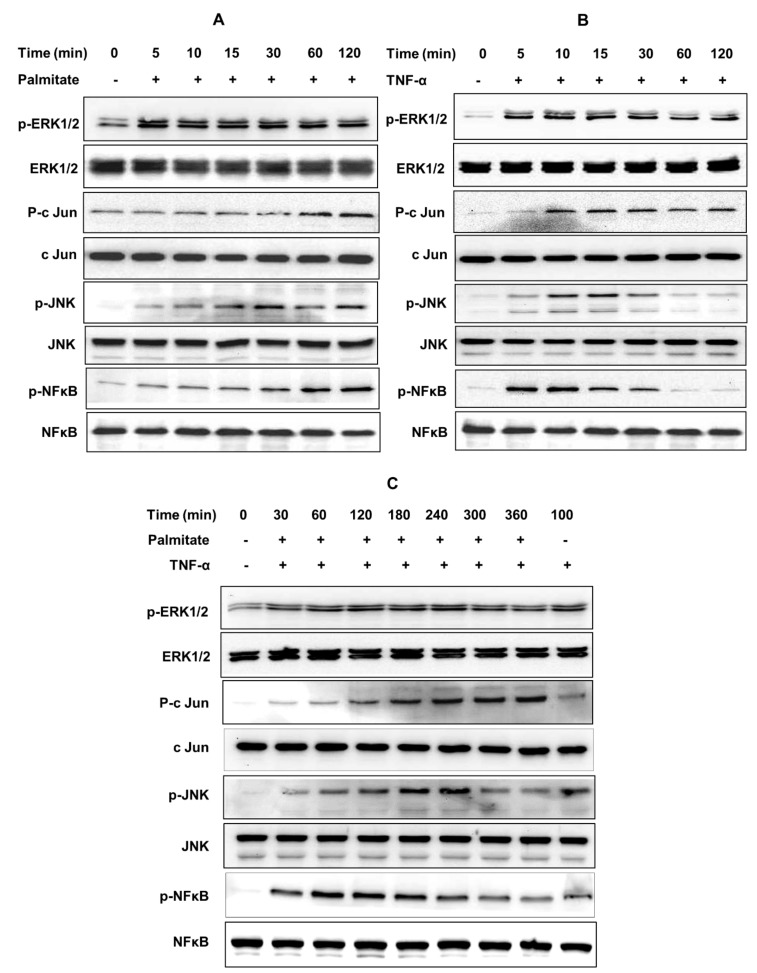
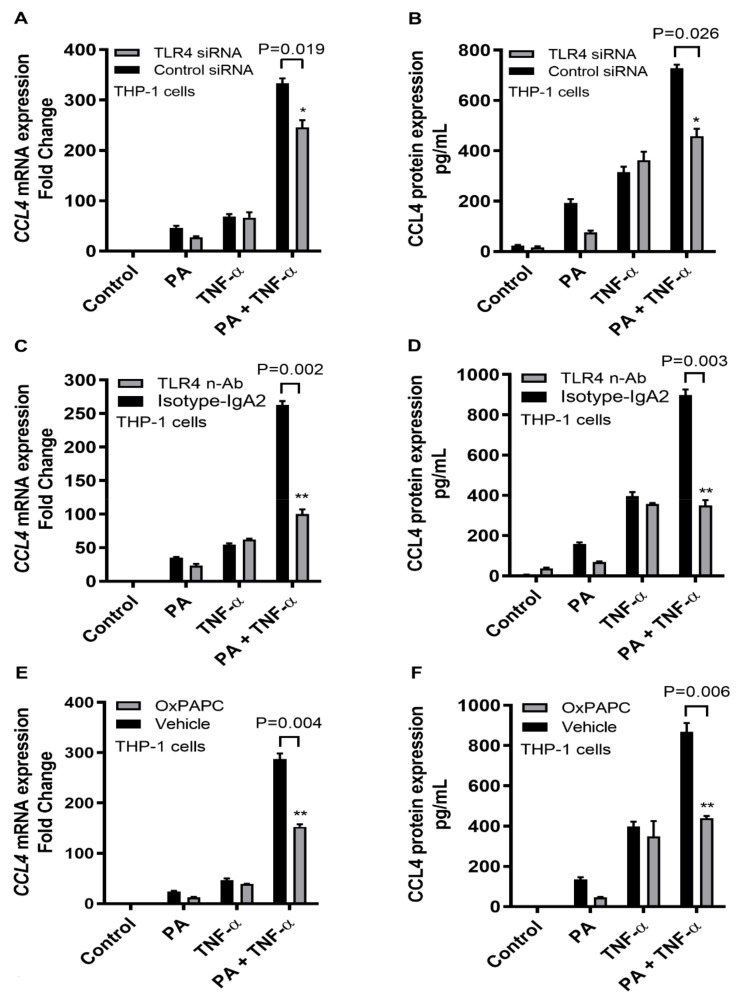
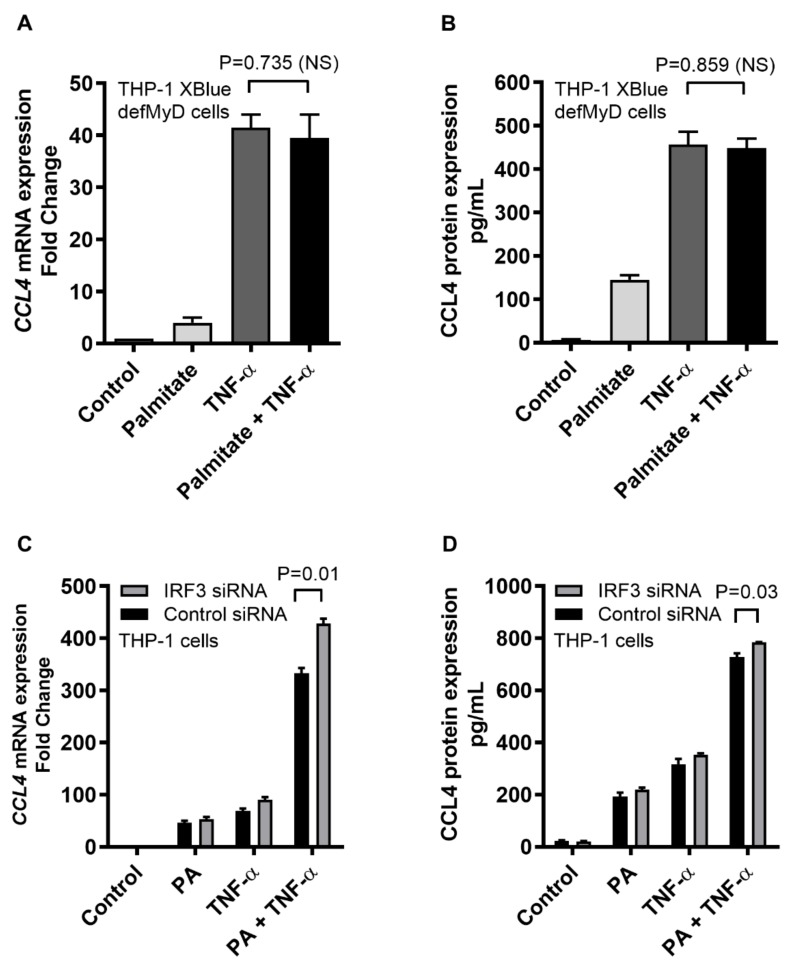
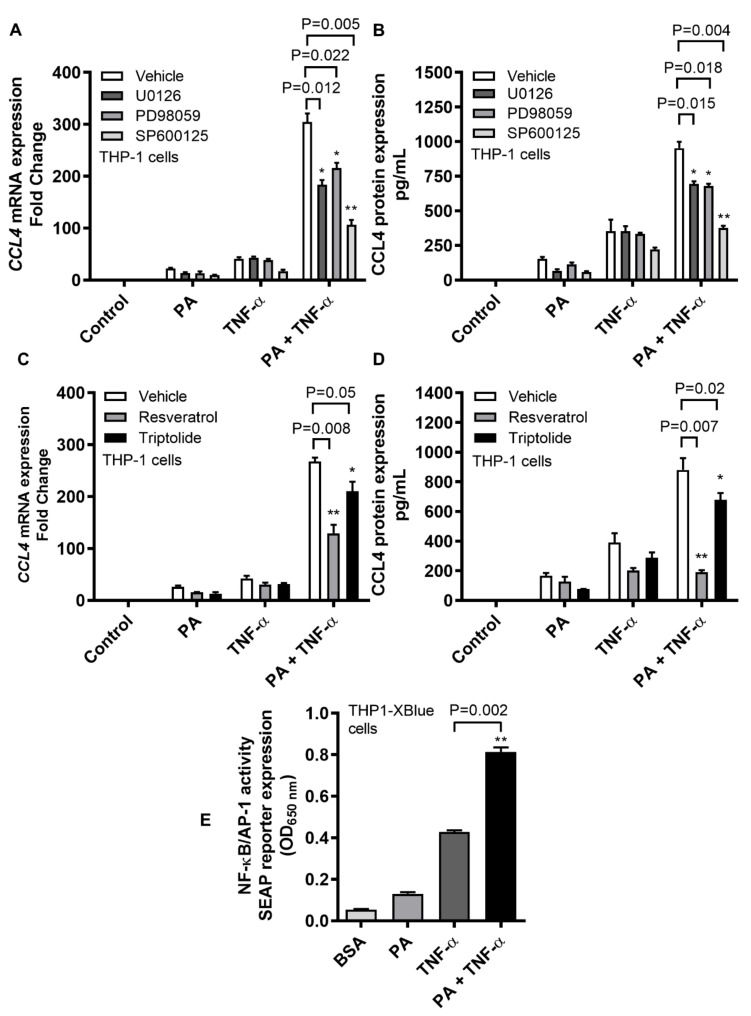
Chronic low-grade inflammation, also known as metabolic inflammation, is a hallmark of obesity and parallels with the presence of elevated circulatory levels of free fatty acids and inflammatory cytokines/chemokines. CCL4/MIP-1β chemokine plays a key role in the adipose tissue monocyte recruitment. Increased circulatory levels of TNF-α, palmitate and CCL4 are co-expressed in obesity. We asked if the TNF-α/palmitate could interact cooperatively to augment the CCL4 production in human monocytic cells and macrophages. THP-1 cells/primary macrophages were co-treated with TNF-α/palmitate and CCL4 mRNA/protein expression was assessed using qRT-PCR/ELISA. TLR4 siRNA, a TLR4 receptor-blocking antibody, XBlue™-defMyD cells and pathway inhibitors were used to decipher the signaling mechanisms. We found that TNF-α/palmitate co-stimulation augmented the CCL4 expression in monocytic cells and macrophages compared to controls ( < 0.05). TLR4 suppression or neutralization abrogated the CCL4 expression in monocytic cells. Notably, CCL4 cooperative induction in monocytic cells was: (1) Markedly less in MyD88-deficient cells, (2) IRF3 independent, (3) clathrin dependent and (4) associated with the signaling mechanism involving ERK1/2, c-Jun, JNK and NF-κB. In conclusion, TNF-α/palmitate co-stimulation promotes the CCL4 expression in human monocytic cells through the mechanism involving a TLR4-MyD88 axis and MAPK/NF-κB pathways. These findings unravel a novel mechanism of the cooperative induction of CCL4 by TNF-α and palmitate which could be relevant to metabolic inflammation.
慢性低度炎症,也称为代谢性炎症,是肥胖的一个标志,与循环中游离脂肪酸和炎症细胞因子/趋化因子水平升高相平行。CCL4/MIP-1β趋化因子在脂肪组织单核细胞募集中起关键作用。肥胖患者循环中 TNF-α、棕榈酸和 CCL4 的水平升高并共同表达。我们想知道 TNF-α/棕榈酸是否可以协同作用,增加人单核细胞和巨噬细胞中 CCL4 的产生。用 TNF-α/棕榈酸共处理 THP-1 细胞/原代巨噬细胞,并用 qRT-PCR/ELISA 评估 CCL4 mRNA/蛋白表达。用 TLR4 siRNA、TLR4 受体阻断抗体、XBlueTM-defMyD 细胞和通路抑制剂来解析信号通路机制。我们发现,与对照组相比,TNF-α/棕榈酸共刺激可增强单核细胞和巨噬细胞中 CCL4 的表达(<0.05)。TLR4 抑制或中和可消除单核细胞中 CCL4 的表达。值得注意的是,单核细胞中 CCL4 的协同诱导作用:(1)在 MyD88 缺陷细胞中显著降低,(2)IRF3 非依赖性,(3)网格蛋白依赖性,(4)与涉及 ERK1/2、c-Jun、JNK 和 NF-κB 的信号通路机制相关。总之,TNF-α/棕榈酸共刺激通过涉及 TLR4-MyD88 轴和 MAPK/NF-κB 通路的机制促进人单核细胞中 CCL4 的表达。这些发现揭示了 TNF-α 和棕榈酸协同诱导 CCL4 的新机制,这可能与代谢性炎症有关。