Trinh Lily N, Fortier Michelle A, Kain Zeev N
1Center on Stress & Health, University of California School of Medicine, Irvine, USA.
2Sue & Bill Gross School of Nursing, University of California, Irvine, USA.
Perioper Med (Lond). 2019 Sep 19;8:11. doi: 10.1186/s13741-019-0122-2. eCollection 2019.
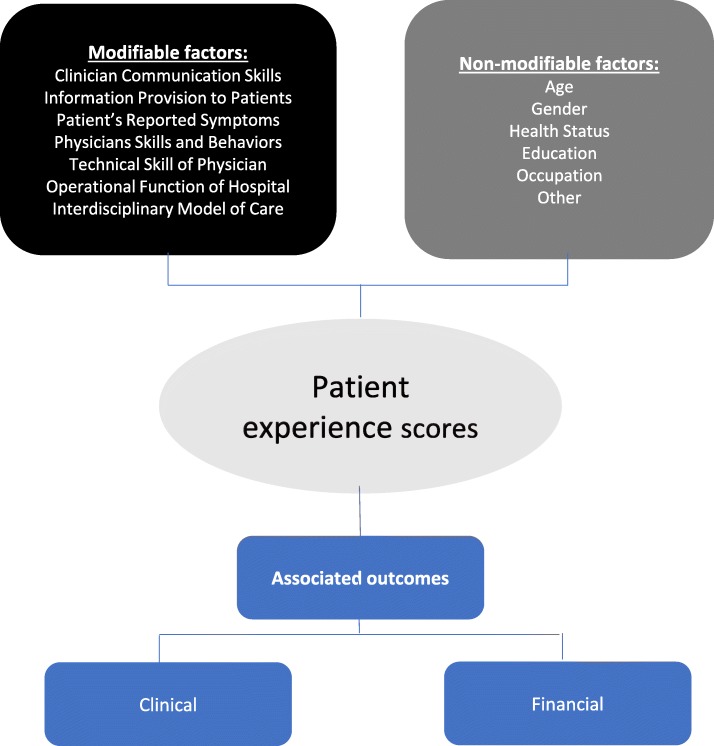
The topic of patient satisfaction has gained increasing importance over the past decade. Due to the impact of patient satisfaction on health care quality, understanding factors that predict satisfaction is vital. The purpose of this review is to examine the literature and identify factors related to patient perioperative satisfaction as well as predictive variables that, if modified, can enhance satisfaction scores of patients undergoing surgery. Our review reports that patient satisfaction scores are affected by modifiable factors such as clinician-patient communication, information provision to patients, and operational function of a hospital. Non-modifiable factors affecting patient satisfaction scores include patient demographics such as gender, age, and education. In order to enhance patient perioperative satisfaction, we suggest that anesthesiologists and surgeons focus their efforts on enhancing their communication skills and providing information that is appropriately tailored to the understanding of their patients.
在过去十年中,患者满意度这一话题变得越来越重要。由于患者满意度对医疗质量有影响,了解预测满意度的因素至关重要。本综述的目的是审视文献,并确定与患者围手术期满意度相关的因素以及预测变量,若对这些变量加以调整,可提高接受手术患者的满意度得分。我们的综述报告称,患者满意度得分受到可改变因素的影响,如医患沟通、向患者提供信息以及医院的运营功能。影响患者满意度得分的不可改变因素包括患者的人口统计学特征,如性别、年龄和教育程度。为了提高患者围手术期的满意度,我们建议麻醉医生和外科医生将精力集中在提高他们的沟通技巧上,并提供适合患者理解的信息。