Wang Shengnan, Chen Yingli, Wang Dongmei, Wu Yongming, Zhao Deqiang, Zhang Jianzhao, Xie Huifang, Gong Yanping, Sun Ruixue, Nie Xifang, Jiang Haishan, Zhang Jian, Li Wei, Liu Guanghui, Li Xuan, Huang Kaibin, Huang Yingwei, Li Yongjun, Guan Hongzhi, Pan Suyue, Hu Yafang
Department of Neurology, Nanfang Hospital, Southern Medical University, Guangzhou, China.
Department of Neurology, Beijing Children's Hospital, Capital Medical University, Beijing, China.
Front Microbiol. 2019 Sep 3;10:1993. doi: 10.3389/fmicb.2019.01993. eCollection 2019.
The application of metagenomic next-generation sequencing (mNGS) in the diagnosis of tuberculous meningitis (TBM) remains poorly characterized. Here, we retrospectively analyzed data from patients with TBM who had taken both mNGS and conventional tests including culture of (MTB), polymerase chain reaction (PCR) and acid-fast bacillus (AFB) stain, and the sensitivity and specificity of these methods were compared.
We retrospectively recruited TBM patients admitted to the hospital between December 2015 and October 2018. The first collection of cerebrospinal fluid (CSF) samples underwent both mNGS and conventional tests. In addition, patients with bacterial/cryptococcal meningitis or viral meningoencephalitis were mNGS positive controls, and a patient with auto-immune encephalitis was an mNGS negative control.
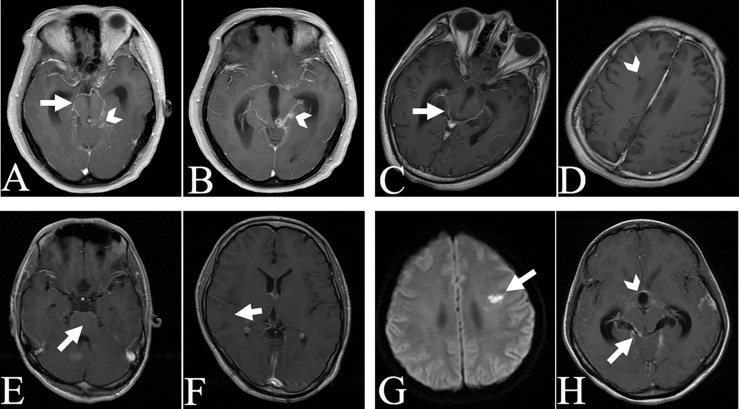
Twenty three TBM patients were classified as 12 definite and 11 clinical diagnoses, which were based on clinical manifestations, pathogen evidence, CSF parameters, brain imaging, and treatment response. The mNGS method identified sequences of (MBTC) from 18 samples (18/23, 78.26%). In patients with definite TBM, the sensitivity of mNGS, AFB, PCR, and culture to detect MTB in the first CSF samples were 66.67, 33.33, 25, and 8.33%, respectively. The specificity of each method was 100%. Among the four negative mNGS cases (4/23, 17.39%), three turned out positive by repeated AFB stain. The agreement of mNGS with the total of conventional methods was 44.44% (8/18). Combination of mNGS and conventional methods increased the detection rate to 95.65%. One patient was diagnosed as complex of TBM and cryptococcal meningitis, in which AFB stain and cryptococcal antigen enzyme immunoassay were positive and the DNA of was detected by mNGS.
Our study indicates that mNGS is an alternative method to detect the presence of mycobacterial DNA in CSF samples from patients with TBM and deserves to be applied as a front-line CSF test.
宏基因组下一代测序(mNGS)在结核性脑膜炎(TBM)诊断中的应用仍缺乏充分的特征描述。在此,我们回顾性分析了接受mNGS检测以及包括结核分枝杆菌(MTB)培养、聚合酶链反应(PCR)和抗酸杆菌(AFB)染色在内的传统检测的TBM患者的数据,并比较了这些方法的敏感性和特异性。
我们回顾性招募了2015年12月至2018年10月期间入院的TBM患者。首次采集的脑脊液(CSF)样本同时进行mNGS检测和传统检测。此外,细菌性/隐球菌性脑膜炎或病毒性脑膜脑炎患者作为mNGS阳性对照,一名自身免疫性脑炎患者作为mNGS阴性对照。
23例TBM患者根据临床表现、病原体证据、脑脊液参数、脑部影像学检查和治疗反应分为12例确诊病例和11例临床诊断病例。mNGS方法从18份样本(18/23,78.26%)中鉴定出结核分枝杆菌复合群(MBTC)序列。在确诊的TBM患者中,mNGS、AFB、PCR和培养法在首次脑脊液样本中检测MTB的敏感性分别为66.67%、33.33%、25%和8.33%。每种方法的特异性均为100%。在4例mNGS阴性病例(4/23,17.39%)中,3例经重复AFB染色后呈阳性。mNGS与所有传统方法的一致性为44.44%(8/18)。mNGS与传统方法联合使用可将检测率提高至95.65%。1例患者被诊断为TBM合并隐球菌性脑膜炎,其中AFB染色和隐球菌抗原酶免疫测定呈阳性,mNGS检测到结核分枝杆菌DNA。
我们的研究表明,mNGS是检测TBM患者脑脊液样本中分枝杆菌DNA存在的一种替代方法,值得作为一线脑脊液检测方法应用。