You Yajie, Ni Ying Meng, Shi Guochao
Department of Transfusion, First Affiliated Hospital of Nanjing Medical University, Nanjing, China.
Department of Respiratory and Critical Care Medicine, Ruijin Hospital, Shanghai Jiao Tong University School of Medicine, Shanghai, China.
Syst Rev. 2024 Dec 27;13(1):317. doi: 10.1186/s13643-024-02733-8.
Metagenomic next-generation sequencing (mNGS) has emerged as a promising tool in clinical practice due to its unbiased approach to pathogen detection. Its diagnostic performance in pulmonary tuberculosis (PTB), however, remains to be fully evaluated.
This study aims to systematically review and Meta-analyze the diagnostic accuracy of mNGS in patients with PTB.
We conducted a literature search in PubMed (MEDLINE), Web of Science, Cochrane, and EMBASE databases, including studies published up to 2024. Studies comparing the diagnostic accuracy of mNGS with other methods such as Xpert-MTB/RIF and Mycobacteria tuberculosis (MTB) culture using bronchoalveolar lavage fluid (BALF), sputum, and lung biopsy tissue were included. Preclinical studies, review articles, editorials, conference abstracts, and book chapters were excluded. Statistical analysis was performed using Rev-man5, R package metabias, and Stata software.
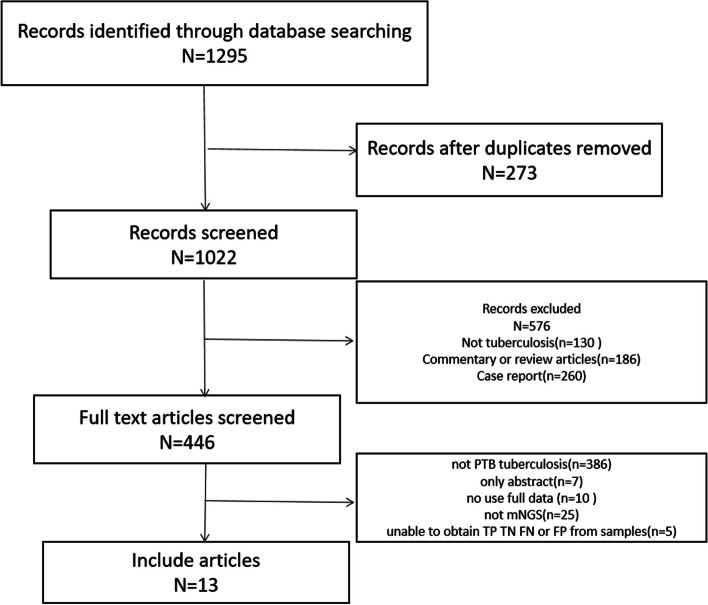
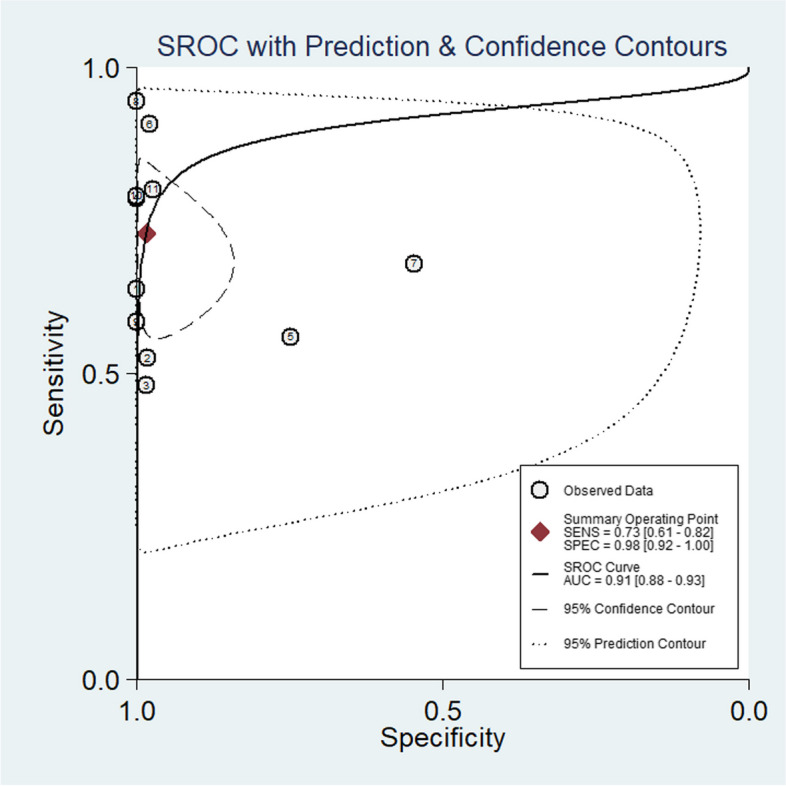
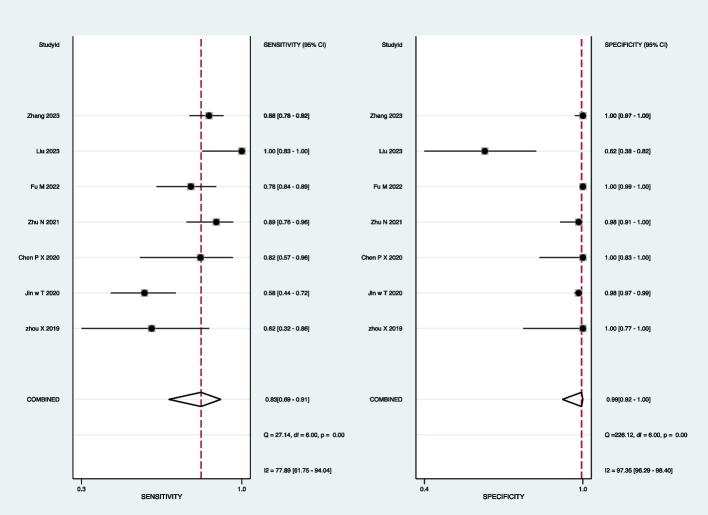
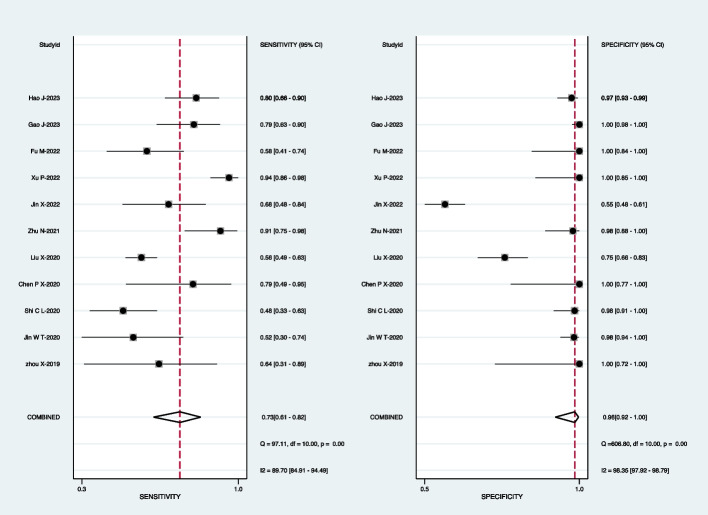
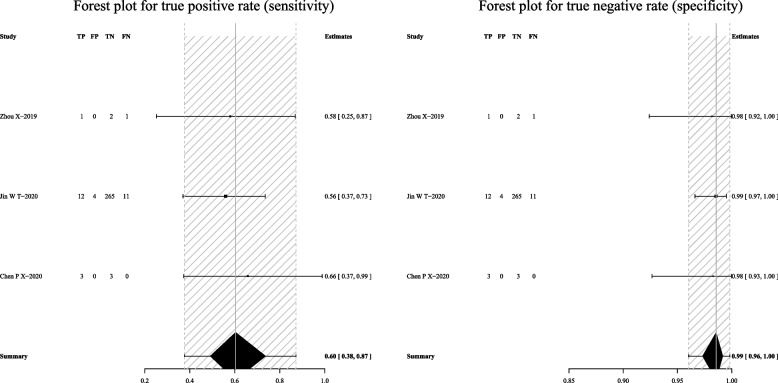
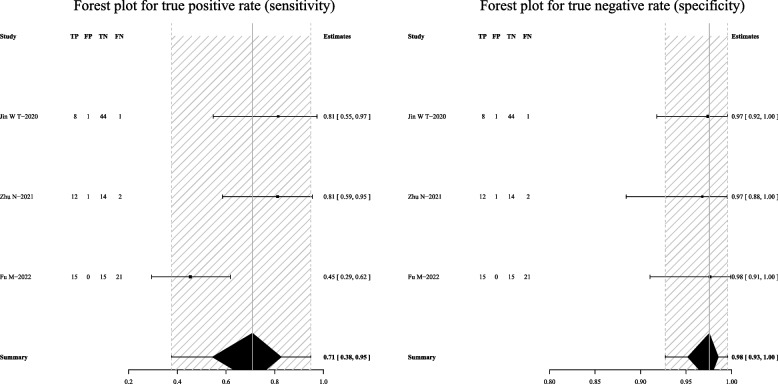
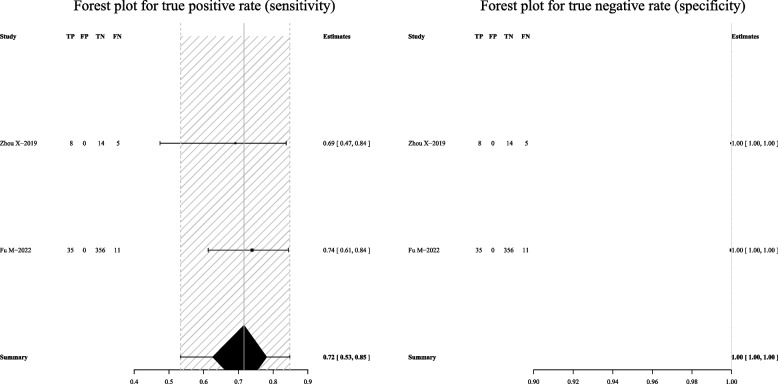
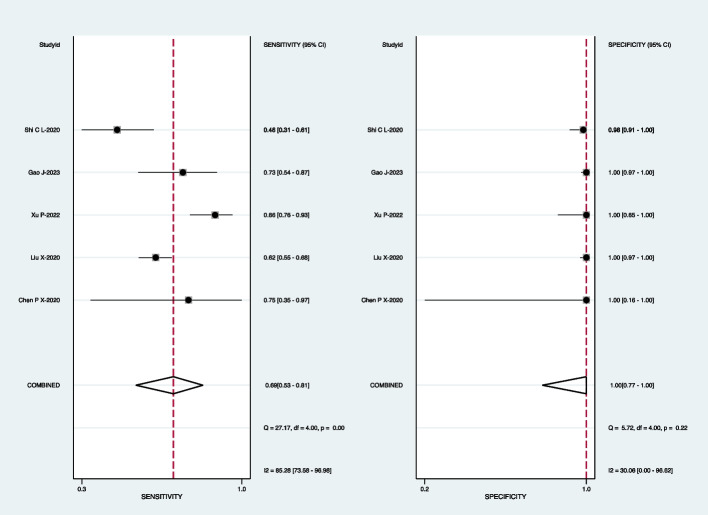
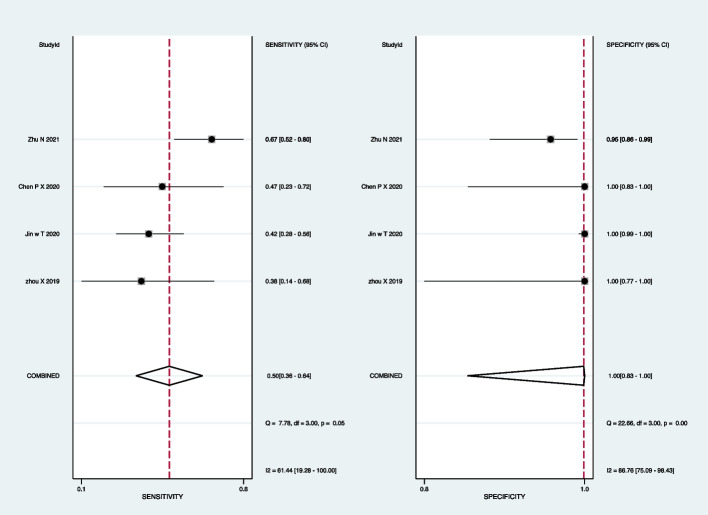
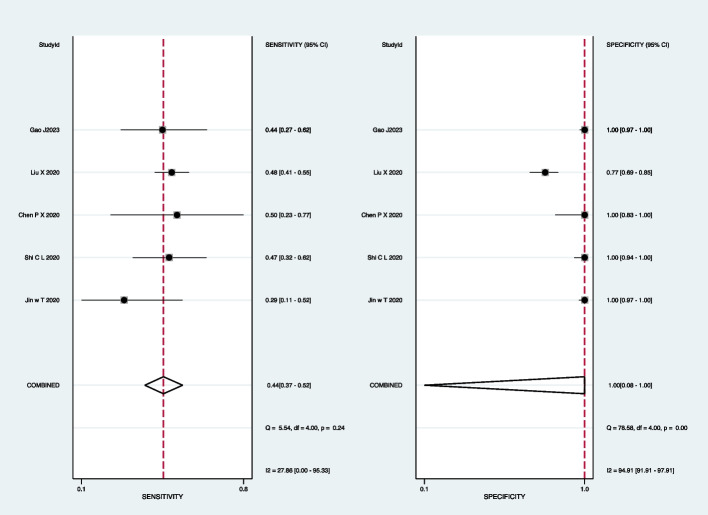
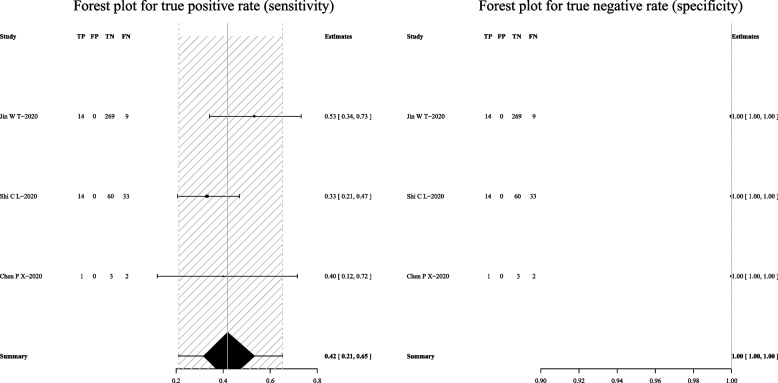
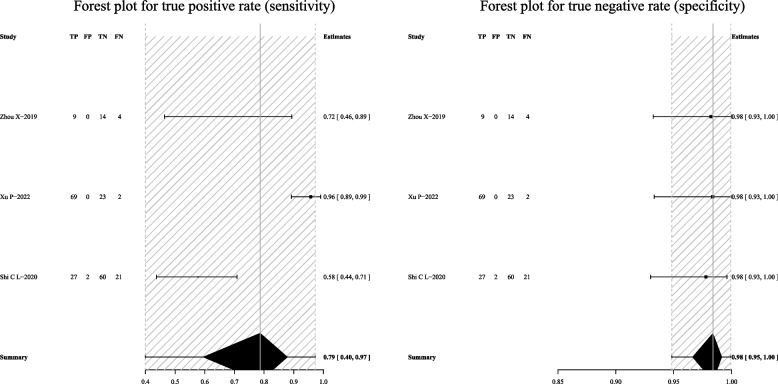
Thirteen studies met the inclusion criteria and were included in the meta-analysis. The pooled sensitivity and specificity of mNGS for PTB were 83% (95% CI: 69-91%) and 99% (95% CI: 92-100%), respectively. Subgroup analyses revealed that in BALF, mNGS demonstrated a pooled sensitivity of 73% (95% CI: 61-82%) and specificity of 98% (95% CI: 92-100%); in the sputum, the pooled sensitivity was 60% (95% CI: 38-87%) with a specificity of 99% (95% CI: 96-100%); and in the lung biopsy tissue, the pooled sensitivity was 71% (95% CI: 38-95%) and the specificity was 98% (95% CI: 93-100%). For Xpert-MTB/RIF, the pooled sensitivity and specificity were 72% (95% CI: 53-85%) and 100% (95%CI: 100-100%), respectively. Subgroup analyses demonstrated that in BALF, Xpert-MTB/RIF exhibited a pooled sensitivity of 69% (95% CI: 53-81%) and a specificity of 100% (95% CI: 77-100%). The pooled sensitivity and specificity of mycobacteria culture were 50% (95% CI: 36-64%) and 100% (95% CI: 83-100%), respectively. Subgroup analyses indicated that in BALF, the pooled sensitivity of mycobacteria culture was 44% (95% CI: 37-52%) with a specificity of 100% (95% CI: 8-100%); in the sputum, the pooled sensitivity was 42% (95% CI: 21-65%) and the specificity was 100% (95% CI: 100-100%). When combining mNGS with Xpert-MTB/RIF, the pooled sensitivity and specificity were 79% (95% CI: 40-97%) and 98% (95% CI: 95-100%), respectively.
mNGS demonstrates similar diagnostic accuracy to Xpert-MTB/RIF in PTB and outperforms mycobacteria culture in terms of sensitivity. Furthermore, mNGS exhibits good detection capabilities across various PTB clinical samples.
PROSPERO CRD42023427586.
宏基因组下一代测序(mNGS)因其在病原体检测中无偏倚的方法,已成为临床实践中有前景的工具。然而,其在肺结核(PTB)中的诊断性能仍有待全面评估。
本研究旨在系统评价和Meta分析mNGS在PTB患者中的诊断准确性。
我们在PubMed(MEDLINE)、Web of Science、Cochrane和EMBASE数据库中进行文献检索,纳入截至2024年发表的研究。纳入比较mNGS与其他方法(如Xpert-MTB/RIF和结核分枝杆菌(MTB)培养)在支气管肺泡灌洗液(BALF)、痰液和肺活检组织中的诊断准确性的研究。排除临床前研究、综述文章、社论、会议摘要和书籍章节。使用Rev-man5、R包metabias和Stata软件进行统计分析。
13项研究符合纳入标准并纳入Meta分析。mNGS诊断PTB的合并敏感性和特异性分别为83%(95%CI:69-91%)和99%(95%CI:92-100%)。亚组分析显示,在BALF中,mNGS的合并敏感性为73%(95%CI:61-82%),特异性为98%(95%CI:92-100%);在痰液中,合并敏感性为60%(95%CI:38-87%),特异性为99%(95%CI:96-100%);在肺活检组织中,合并敏感性为71%(95%CI:38-95%),特异性为98%(95%CI:93-100%)。对于Xpert-MTB/RIF,合并敏感性和特异性分别为72%(95%CI:53-85%)和100%(95%CI:100-100%)。亚组分析表明,在BALF中,Xpert-MTB/RIF的合并敏感性为69%(95%CI:53-81%),特异性为100%(95%CI:77-100%)。分枝杆菌培养的合并敏感性和特异性分别为50%(95%CI:36-64%)和100%(95%CI:83-100%)。亚组分析表明,在BALF中,分枝杆菌培养的合并敏感性为44%(95%CI:37-52%),特异性为100%(95%CI:8-100%);在痰液中,合并敏感性为42%(95%CI:21-65%),特异性为100%(95%CI:100-100%)。当将mNGS与Xpert-MTB/RIF联合使用时,合并敏感性和特异性分别为79%(95%CI:40-97%)和98%(95%CI:95-100%)。
mNGS在PTB中的诊断准确性与Xpert-MTB/RIF相似,在敏感性方面优于分枝杆菌培养。此外,mNGS在各种PTB临床样本中均表现出良好的检测能力。
PROSPERO CRD42023427586。