Katoh Daisuke, Yoshino Hiroshi, Ikehara Kayoko, Kumashiro Naoki, Uchino Hiroshi, Tsuboi Kumiko, Hirose Takahisa
Division of Diabetes, Metabolism, and Endocrinology, Department of Medicine, Toho University Graduate School of Medicine, Japan.
Intern Med. 2020 Feb 1;59(3):383-388. doi: 10.2169/internalmedicine.2179-18. Epub 2019 Sep 26.
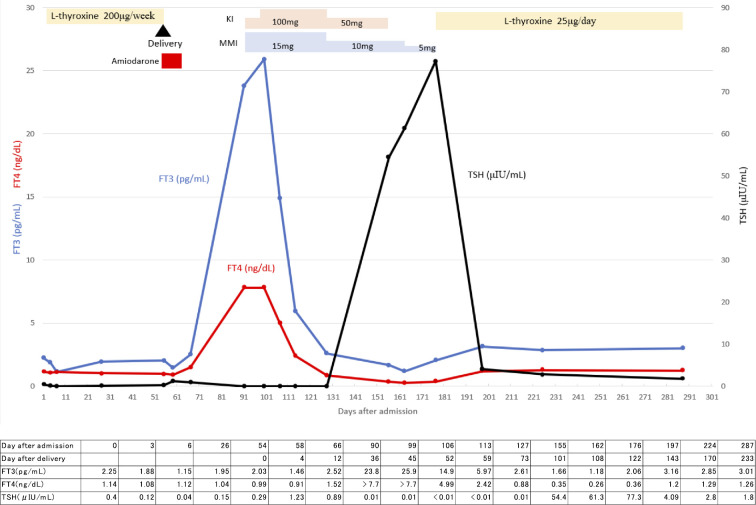
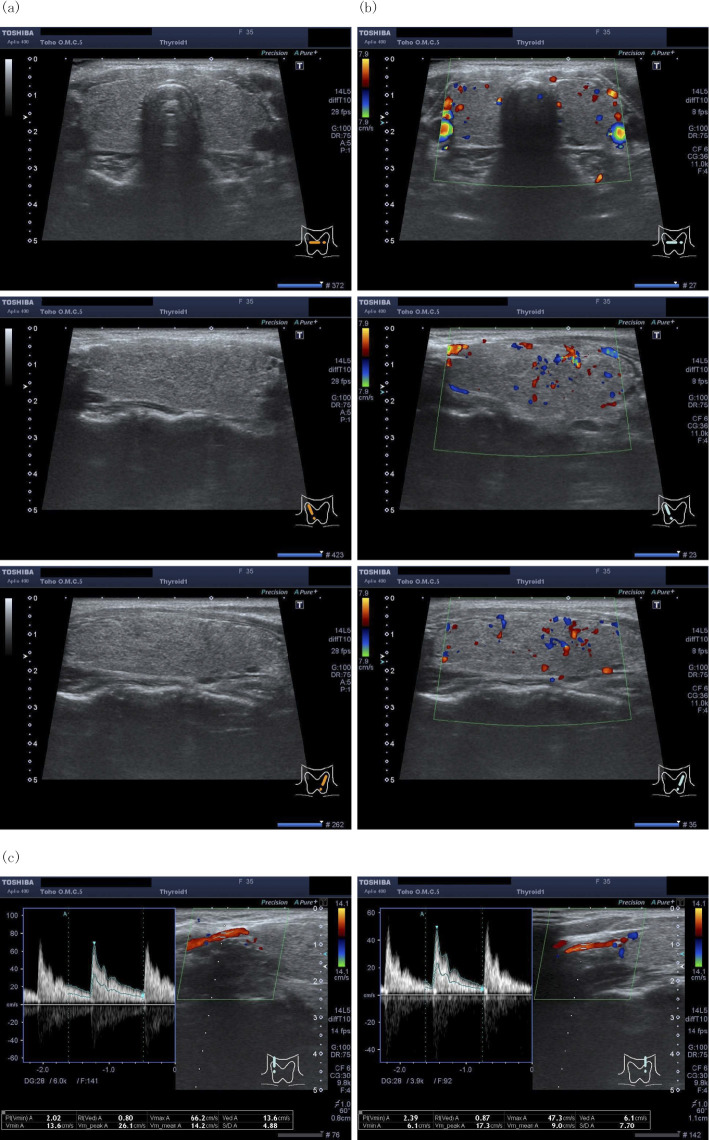
A patient with underlying Hashimoto's thyroiditis developed amiodarone-induced thyrotoxicosis type 1 that was successfully treated using methimazole in combination with potassium iodide. A 35-year-old woman admitted for perinatal care of twin-to-twin transfusion syndrome was given amiodarone for 7 days for paroxysmal ventricular contraction following pulseless ventricular tachycardia 1 day after delivery. She developed thyrotoxicosis one month after the discontinuation of amiodarone therapy and was negative for thyroid-stimulating hormone receptor antibody. An increased peak velocity of the superior thyroid artery suggested amiodarone-induced thyrotoxicosis type 1. Her thyroid function recovered after combination therapy with methimazole and potassium iodide.
一名患有潜在桥本甲状腺炎的患者发生了1型胺碘酮诱发的甲状腺毒症,使用甲巯咪唑联合碘化钾成功治疗。一名因双胎输血综合征围产期护理入院的35岁女性,在分娩后1天出现无脉性室性心动过速后,因阵发性室性收缩接受了7天的胺碘酮治疗。在胺碘酮治疗停药1个月后,她出现了甲状腺毒症,促甲状腺激素受体抗体检测为阴性。甲状腺上动脉峰值速度增加提示1型胺碘酮诱发的甲状腺毒症。她在接受甲巯咪唑和碘化钾联合治疗后甲状腺功能恢复。