Department of Chemical and Biological Engineering , University of Colorado Boulder , Boulder , Colorado 80303 , United States.
ACS Appl Mater Interfaces. 2019 Oct 9;11(40):36324-36332. doi: 10.1021/acsami.9b11095. Epub 2019 Sep 26.
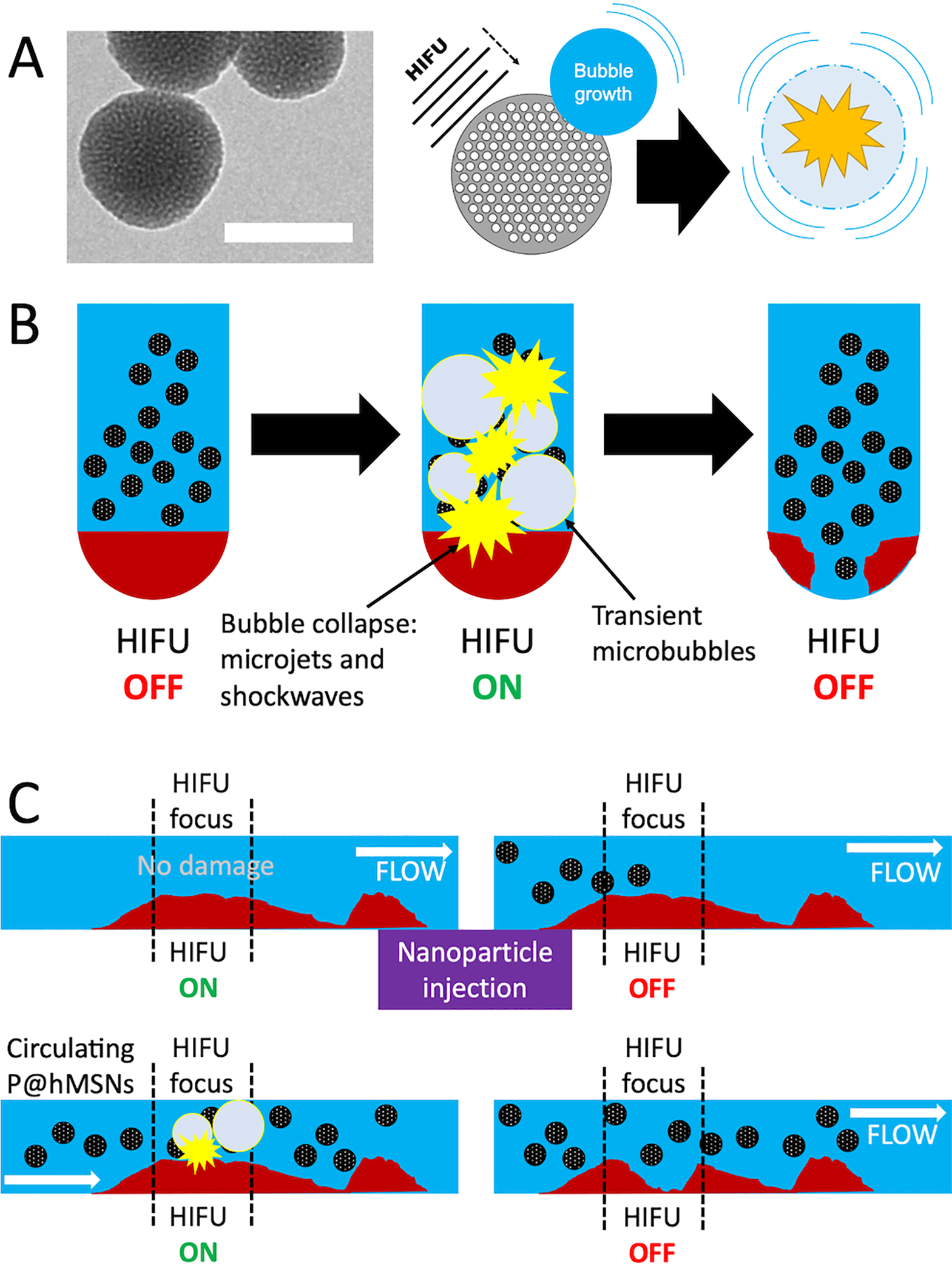
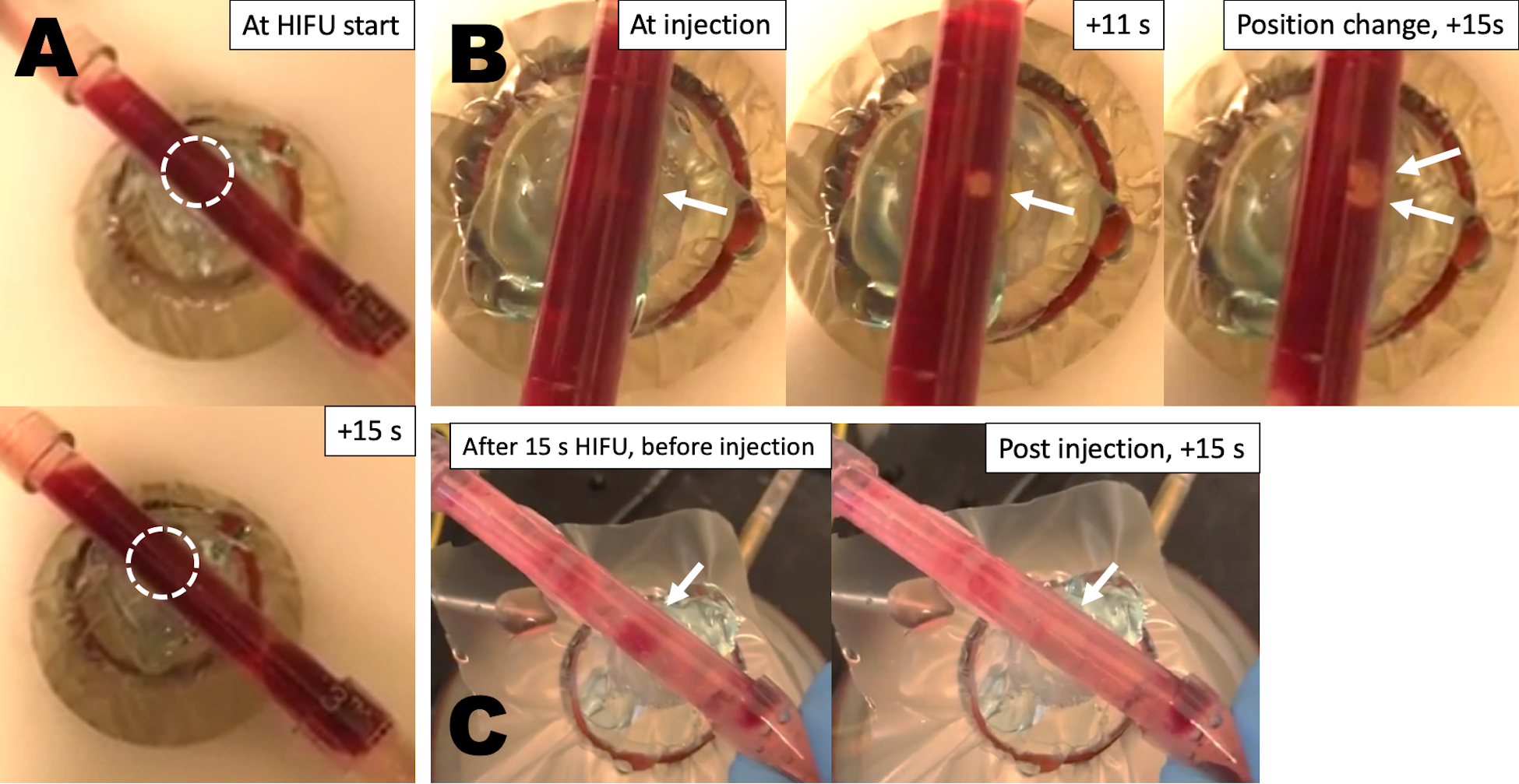
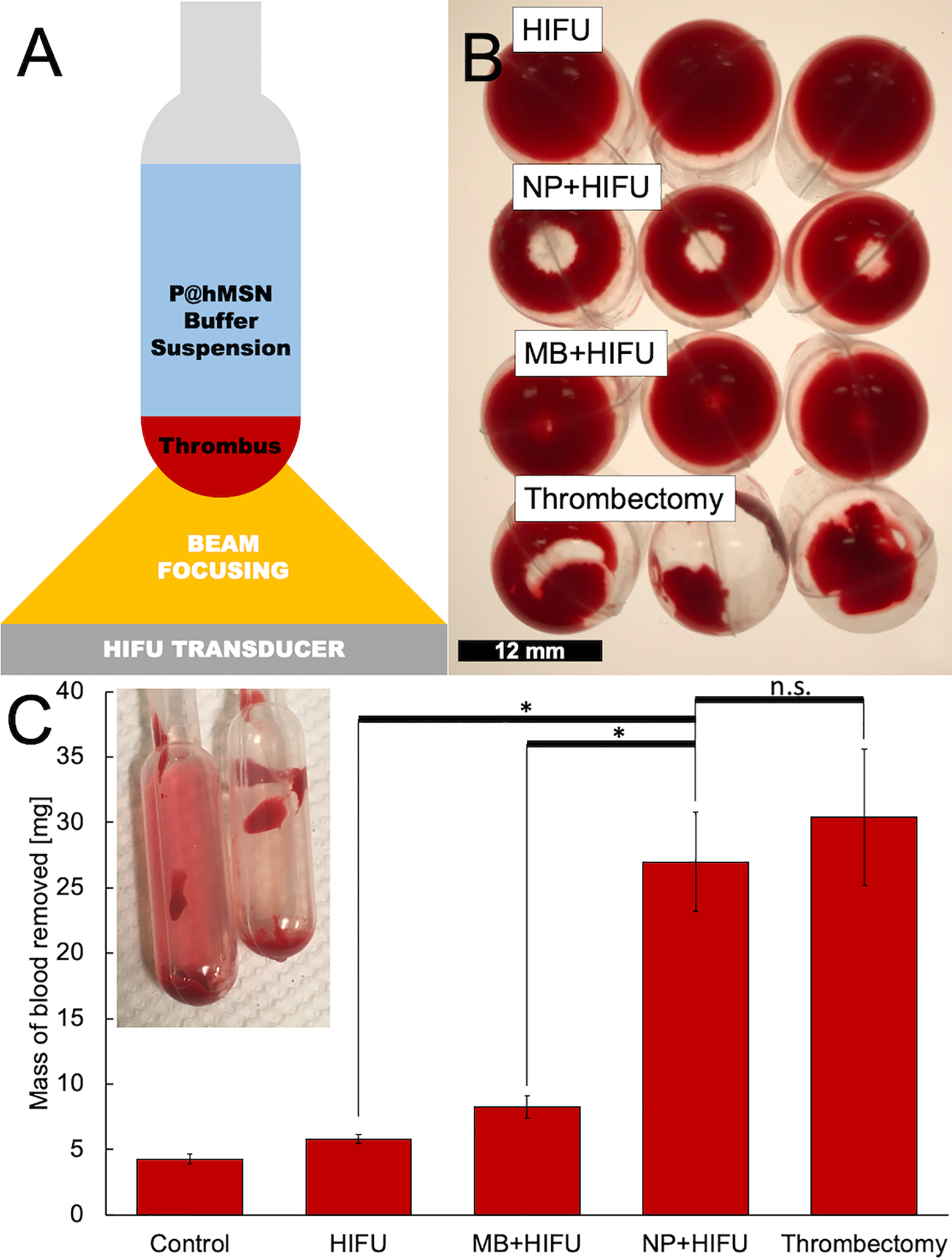
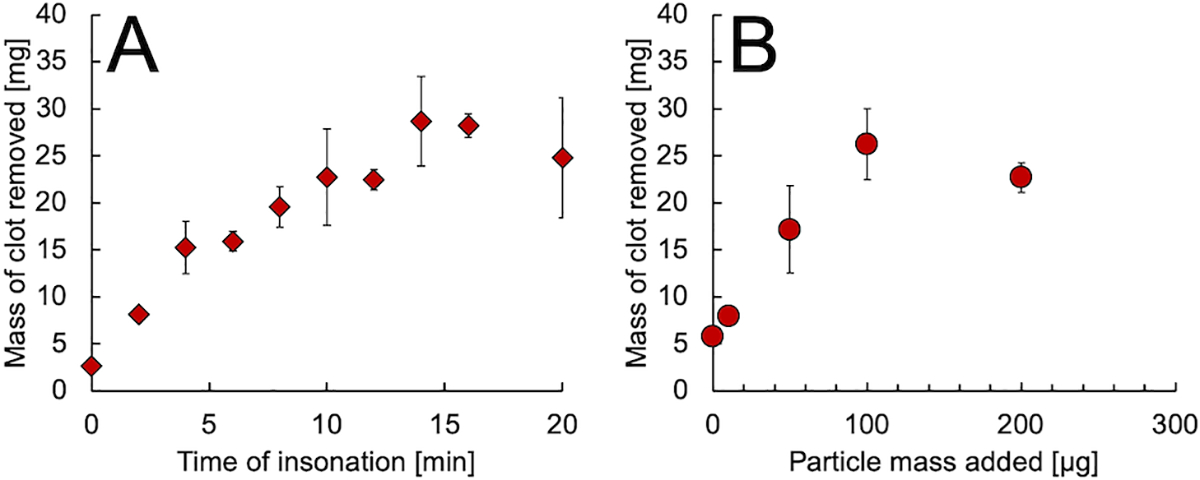
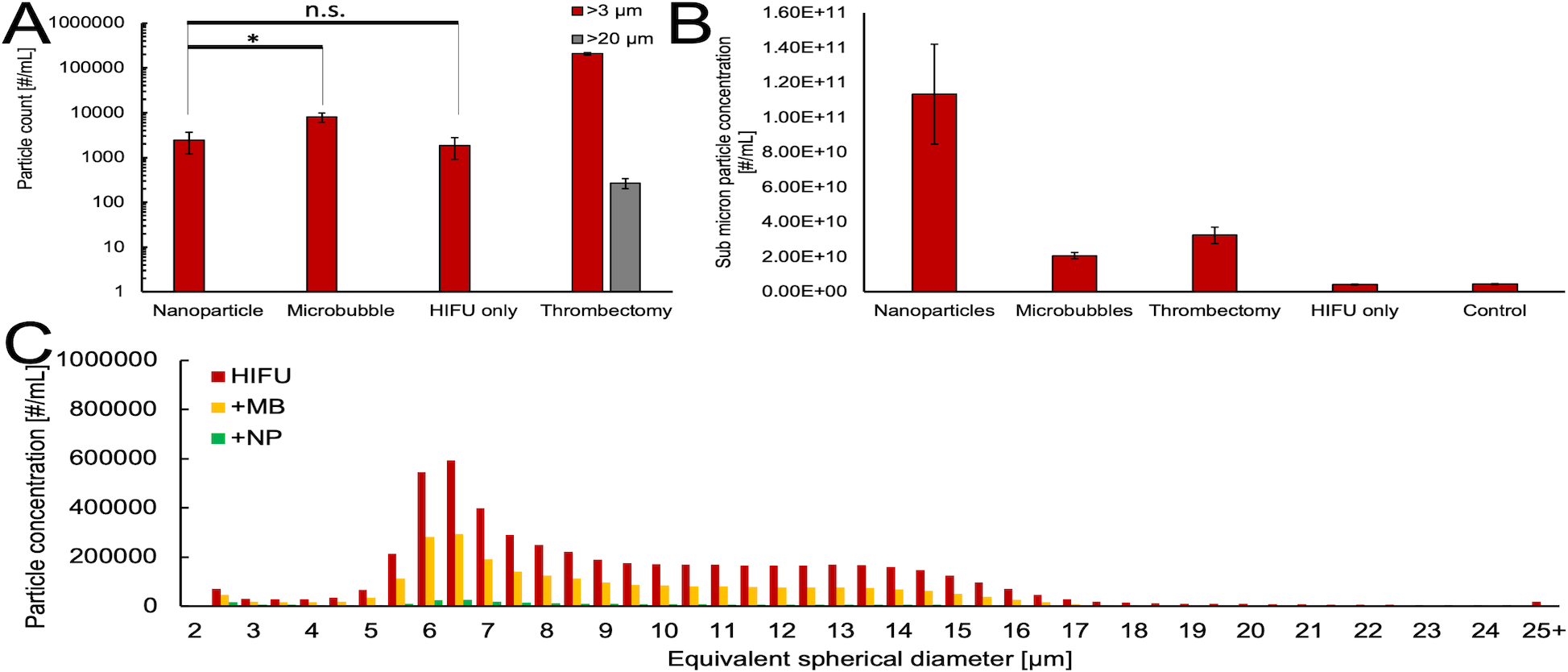
Here we report the efficacy of a nanoparticle-assisted high-intensity focused ultrasound (HIFU) treatment that selectively destroys blood clots while minimizing generation of microparticles, or microemboli, that can cause further complications postsurgery. Treatment of malignant blood clots (thrombi) and the resulting emboli are critical problems for numerous patients, and treatments addressing these conditions would benefit from advancements in noninvasive procedures such as HIFU. While recanalization of occlusive blood clots is currently addressed with surgical intervention that seeks to minimize formation of large emboli, there is a danger of microemboli (micrometer-size particles) that have been theorized to be responsible for the poor correlation between apparent surgical success and patient outcome. Here, the addition of phospholipid-coated hydrophobically modified silica nanoparticles (P@hMSNs) improved the efficacy of HIFU treatment by serving as cavitation nuclei for mechanical disruption of thrombi. This treatment was evaluated for the ability to clear the HIFU focal area of a thick and dense thrombus within 10 min. Moreover, it was found that the use of P@hMSN+HIFU treatment generated a significantly smaller microembolic load as compared to comparison techniques, including a HIFU + microbubble contrast agent, HIFU alone, and direct mechanical disruption. This reduction in the microembolic load can occur either with primary removal of the clot by P@hMSN+HIFU or by insonation of the clot fragments after mechanical thrombectomy. Lastly, this method was evaluated in a flow model, where nonocclusive model thrombi and model emboli were mechanically ablated within the focal area within 15 s. Together, these results represent a combination therapy capable of resolving thrombi and microembolisms resulting from thrombectomy through localized destruction of clotted material.
在这里,我们报告了一种纳米颗粒辅助高强度聚焦超声(HIFU)治疗的疗效,该治疗方法可以选择性地破坏血栓,同时最大限度地减少产生可能导致术后进一步并发症的微颗粒(微栓塞)。恶性血栓(血栓)的治疗以及由此产生的栓塞是许多患者的关键问题,针对这些情况的治疗方法将受益于 HIFU 等非侵入性手术的进步。虽然目前通过旨在最大限度减少大栓塞形成的手术干预来解决闭塞性血栓的再通问题,但存在微栓塞(微米大小的颗粒)的危险,据推测,微栓塞是手术成功率与患者预后之间相关性差的原因。在这里,添加磷脂包覆的疏水改性二氧化硅纳米颗粒(P@hMSNs)通过充当血栓机械破坏的空化核,提高了 HIFU 治疗的疗效。这种治疗方法评估了在 10 分钟内清除 HIFU 焦点区域内厚而致密血栓的能力。此外,与比较技术相比,发现使用 P@hMSN+HIFU 治疗会产生明显更小的微栓塞负荷,包括 HIFU+微泡造影剂、单独的 HIFU 和直接机械破坏。这种微栓塞负荷的减少可能发生在 P@hMSN+HIFU 直接去除血栓的情况下,也可能发生在机械血栓切除术之后对血栓碎片进行照射的情况下。最后,在流动模型中评估了这种方法,其中在 15 秒内可以在焦点区域内机械消融非闭塞模型血栓和模型栓塞物。总之,这些结果代表了一种联合治疗方法,能够通过局部破坏凝结物质来解决血栓形成和血栓切除术引起的微栓塞。