Department of Gastroenterology, Chinese Medicine Research and Development Center, Sex Hormone Research Center, Research Center for Tumor Medicine, China Medical University Hospital, Taichung, Taiwan.
Department of OBS & GYN, China Medical University Hospital, Taichung, Taiwan.
J Cell Mol Med. 2019 Nov;23(11):7417-7426. doi: 10.1111/jcmm.14605. Epub 2019 Sep 26.
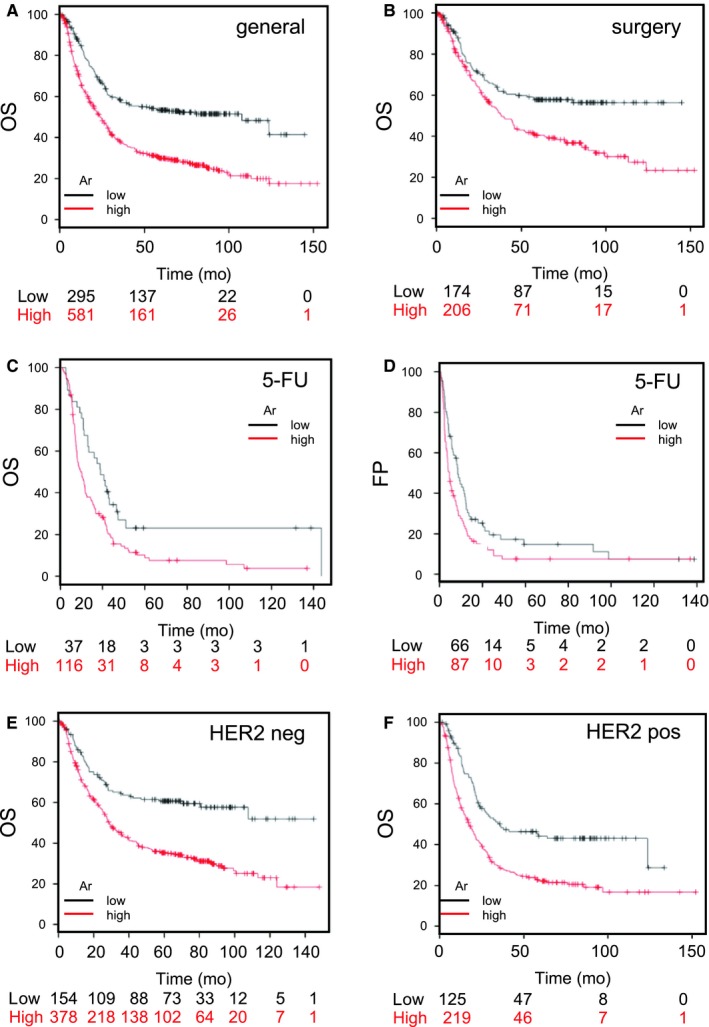
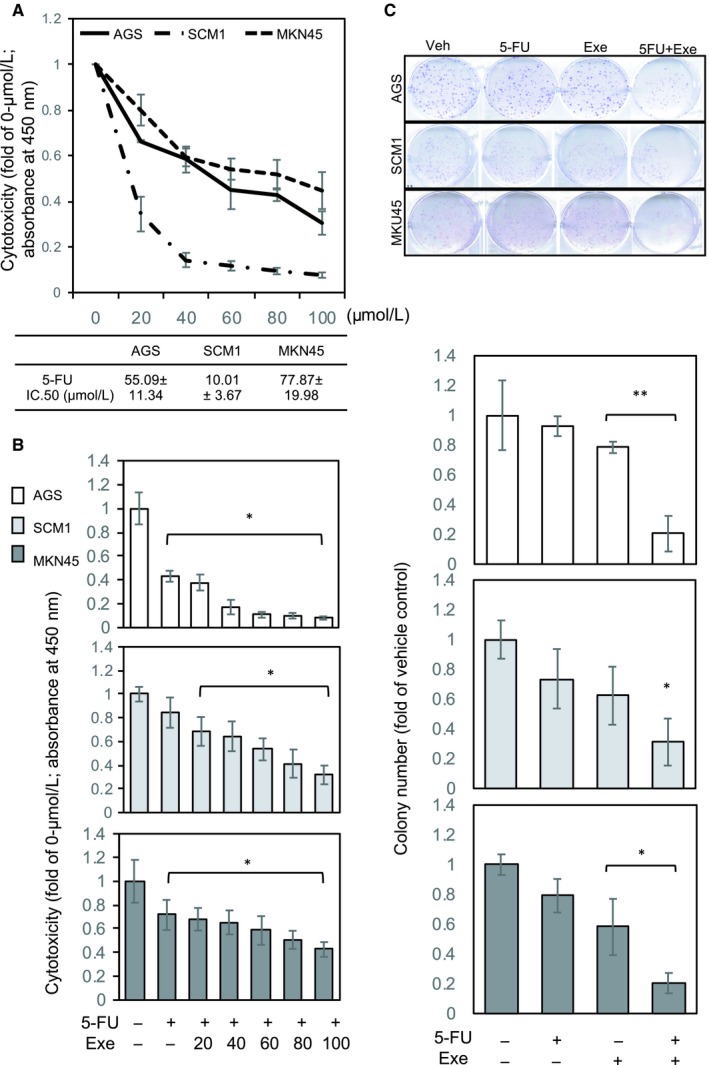
CYP19A1/aromatase (Ar) is a prognostic biomarker of gastric cancer (GCa). Ar is a critical enzyme for converting androstenedione to oestradiol in the steroidogenesis cascade. For decades, Ar has been targeted with Ar inhibitors (ARIs) in gynaecologic malignancies; however, it is unexplored in GCa. A single-cohort tissue microarray examination was conducted to study the association between Ar expression and disease outcome in Asian patients with GCa. The results revealed that Ar was a prognostic promoter. Bioinformatics analyses conducted on a Caucasian-based cDNA microarray databank showed Ar to be positively associated with GCa prognosis for multiple clinical modalities, including surgery, 5-Fluorouracil (5-FU) for adjuvant chemotherapy, or HER2 positivity. These findings imply that targeting Ar expression exhibits a potential for fulfilling unmet medical needs. Hence, Ar-targeting compounds were tested, and the results showed that exemestane exhibited superior cancer-suppressing efficacy to other ARIs. In addition, exemestane down-regulated Ar expression. Ablating Ar abundance with short hairpin (sh)Ar could also suppress GCa cell growth, and adding 5-FU could facilitate this effect. Notably, adding oestradiol could not prevent exemestane or shAr effects, implicating a nonenzymatic mechanism of Ar in cancer growth. Regarding translational research, treatment with exemestane alone exhibited tumour suppression efficacy in a dose-dependent manner. Combining subminimal doses of 5-FU and exemestane exerted an excellent tumour suppression effect without influencing bodyweight. This study validated the therapeutic potentials of exemestane in GCa. Combination of metronomic 5-FU and exemestane for GCa therapy is recommended.
CYP19A1/芳香酶(Ar)是胃癌(GCa)的预后生物标志物。Ar 是类固醇生成级联反应中将雄烯二酮转化为雌二醇的关键酶。几十年来,Ar 一直是妇科恶性肿瘤中 Ar 抑制剂(ARIs)的靶标;然而,在 GCa 中尚未得到探索。进行了一项单队列组织微阵列检查,以研究亚洲 GCa 患者中 Ar 表达与疾病结局之间的关系。结果表明 Ar 是一个预后促进剂。对基于白种人的 cDNA 微阵列数据库进行的生物信息学分析表明,Ar 与多种临床方法(包括手术、5-氟尿嘧啶(5-FU)用于辅助化疗或 HER2 阳性)的 GCa 预后呈正相关。这些发现意味着靶向 Ar 表达具有满足未满足医疗需求的潜力。因此,测试了针对 Ar 表达的化合物,结果表明依西美坦比其他 ARIs 具有更好的抗癌效果。此外,依西美坦下调了 Ar 的表达。短发夹(sh)Ar 耗竭 Ar 丰度也可以抑制 GCa 细胞生长,添加 5-FU 可以促进这种作用。值得注意的是,添加雌二醇不能预防依西美坦或 shAr 的作用,暗示 Ar 在癌症生长中存在非酶促机制。关于转化研究,依西美坦单独治疗以剂量依赖性方式表现出肿瘤抑制作用。亚最小剂量的 5-FU 和依西美坦联合使用可发挥出色的肿瘤抑制作用,而不会影响体重。这项研究验证了依西美坦在 GCa 中的治疗潜力。建议将依西美坦联合低剂量 5-FU 用于 GCa 治疗。