Institute of Endocrinology and Metabolism, The Second Xiangya Hospital, Central South University, Changsha, Hunan, China.
Department of Endocrinology, Hunan Provincial People's Hospital, Changsha, Hunan, China.
Cell Prolif. 2019 Nov;52(6):e12693. doi: 10.1111/cpr.12693. Epub 2019 Sep 27.
Osteopetrosis is a rare inherited skeletal disease characterized by increased bone mineral density due to the loss of osteoclast function or differentiation potential.
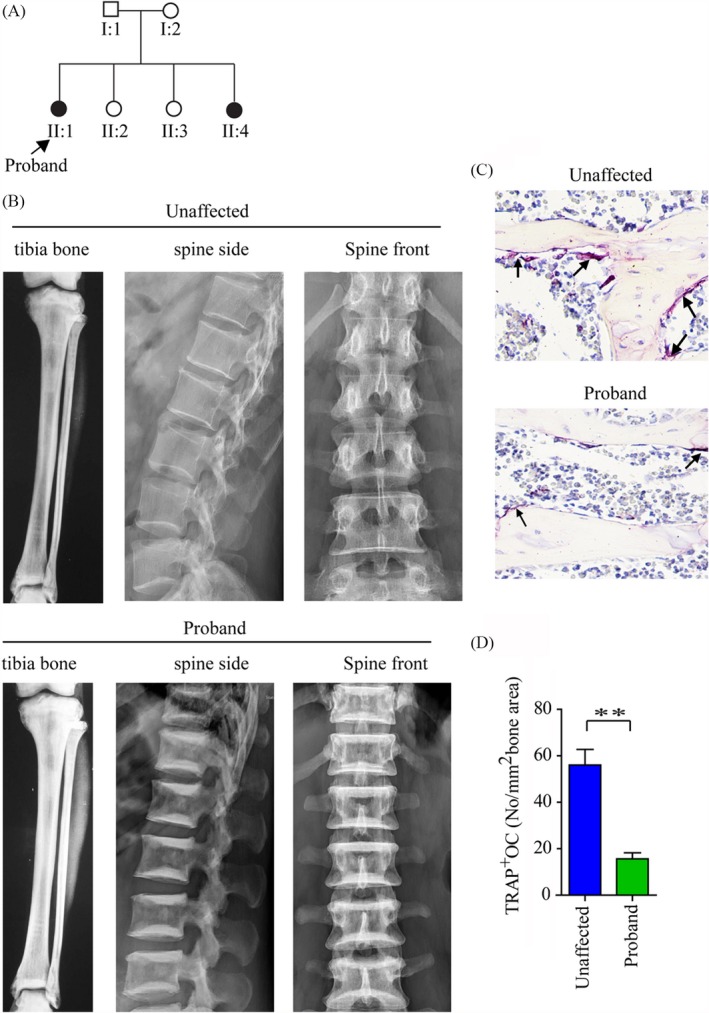
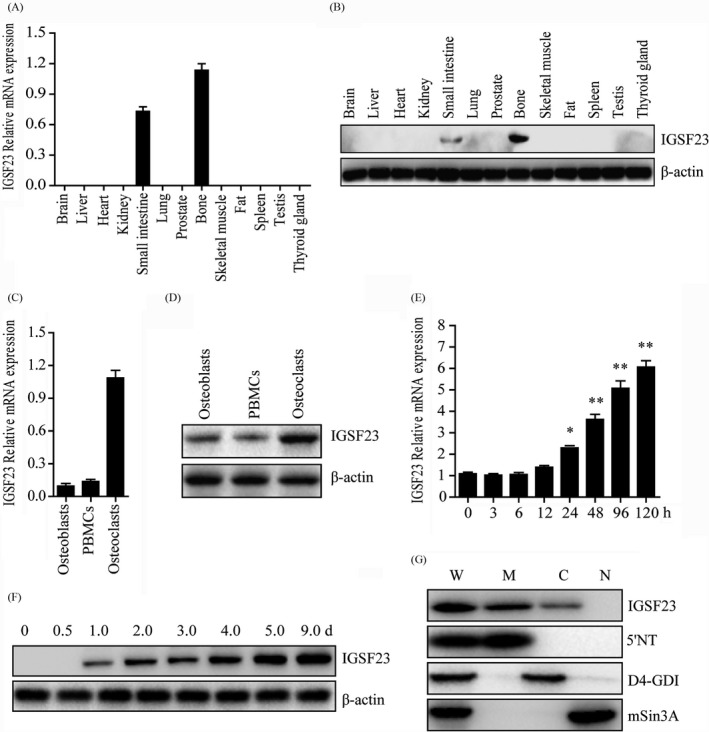
The study involved a Chinese patient with osteopetrosis (the proband) and her immediate family members and 180 controls without osteopetrosis. Bone density of the femoral neck, lumbar spine and total body was measured using dual-energy x-ray absorptiometry. Osteoclast differentiation by the participants' peripheral blood mononuclear cells (PBMCs) was investigated using tartrate-resistant acid phosphatase (TRAP) staining. Osteoblast differentiation was examined with Alizarin Red S staining. Reverse transcription-quantitative PCR was used to amplify immunoglobulin superfamily member 23 (IGSF23), c-FOS and nuclear factor of activated T cells 1 (NFATC1).
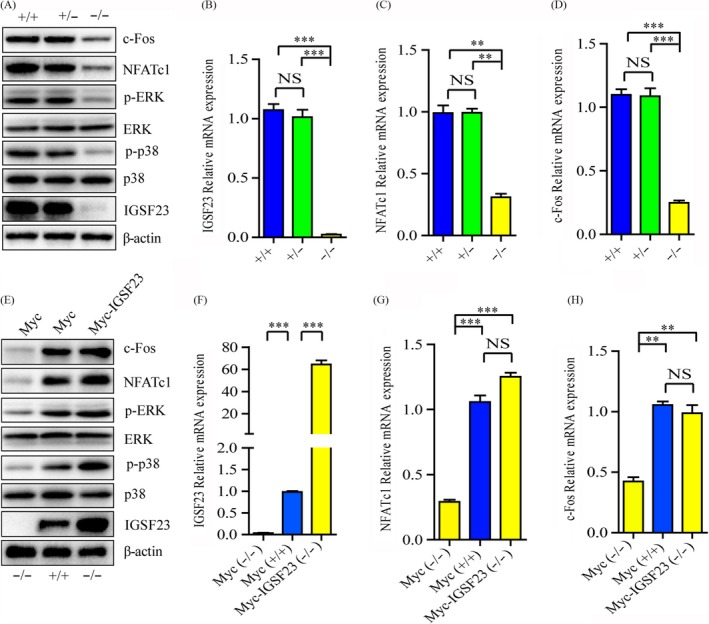
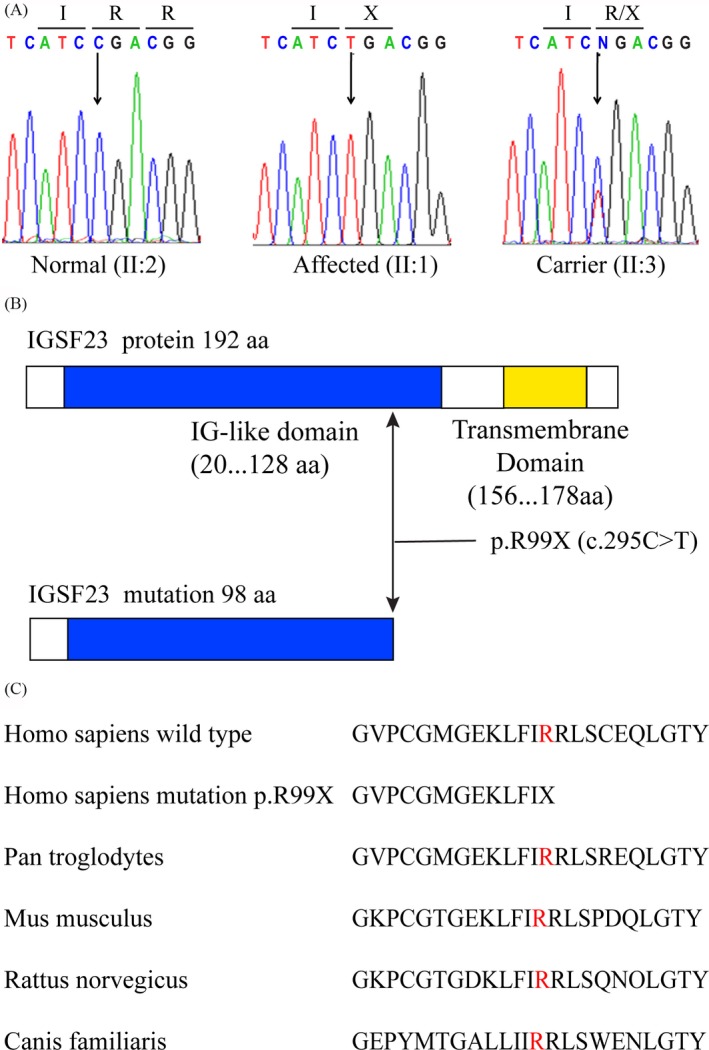
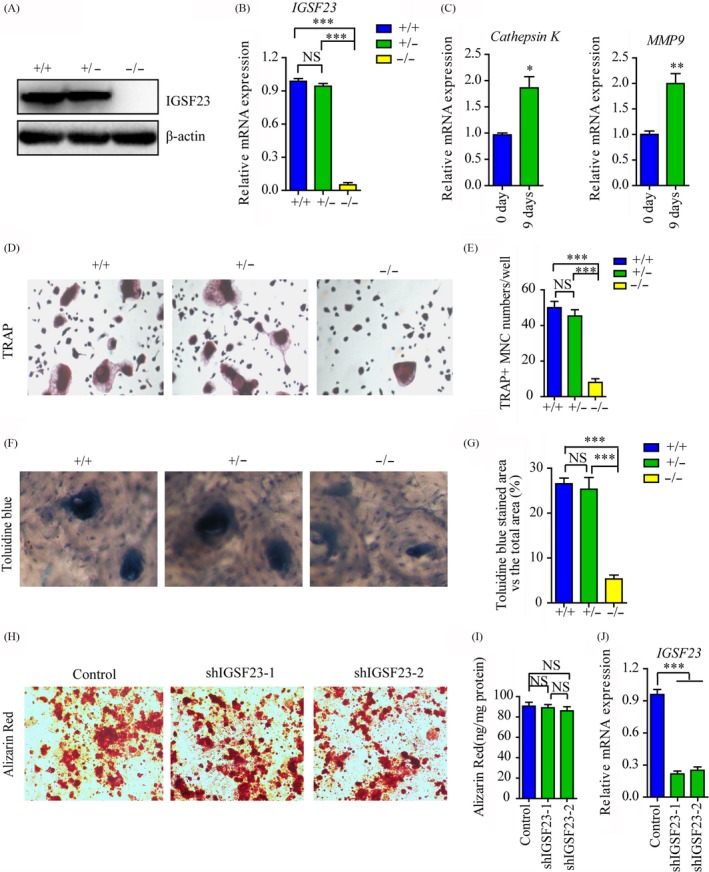
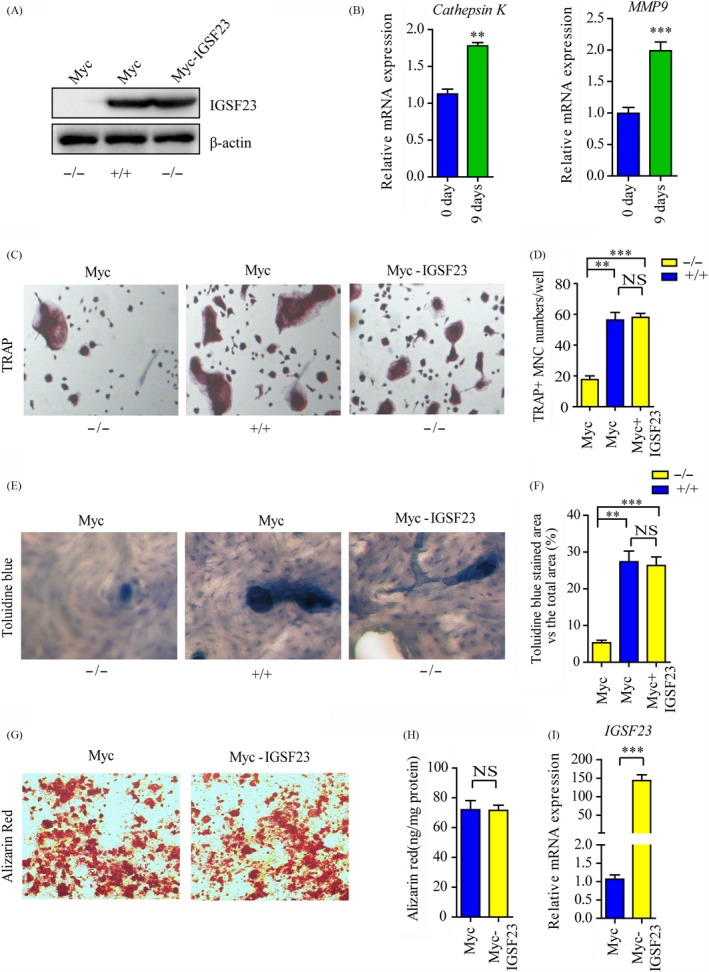
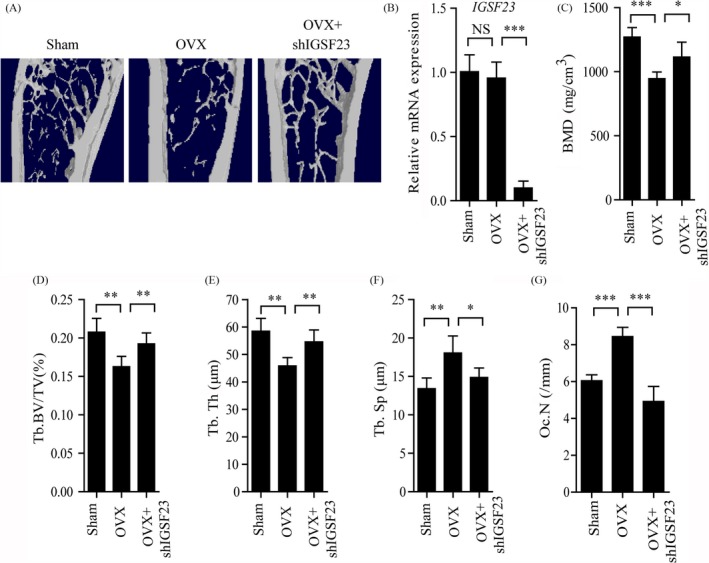
We found a homozygous mutation (c.295C>T) in the IGSF23 gene in two osteopetrosis samples. The mutation led to the formation of a stop codon, causing loss of the immunoglobulin-like domain and the whole transmembrane domain. PBMCs from the proband (IGSF23 ) exhibited poor ability for differentiating into mature osteoclasts in vitro. Overexpression of IGSF23 rescued the ability of IGSF23 PBMCs to differentiate into osteoclasts. Moreover, knockdown of IGSF23 reversed the bone loss in OVX mice by injecting AAV-shIGSF23 into mice femoral bone marrow cavity. Furthermore, we also found that the IGSF23 mutation led to decreased c-Fos and NFATC1 expression levels by inhibiting the mitogen-activated protein kinase signalling pathways.
IGSF23-mediated osteoclast differentiation of PBMCs may serve as a potential target in osteoporosis therapy.
成骨不全症是一种罕见的遗传性骨骼疾病,其特征是由于破骨细胞功能或分化潜能丧失导致骨矿物质密度增加。
本研究纳入了一名成骨不全症患者(先证者)及其直系亲属和 180 名无成骨不全症对照者。使用双能 X 线吸收仪测量股骨颈、腰椎和全身的骨密度。通过抗酒石酸酸性磷酸酶(TRAP)染色研究参与者外周血单核细胞(PBMC)中的破骨细胞分化。通过茜素红 S 染色检查成骨细胞分化。使用逆转录定量 PCR 扩增免疫球蛋白超家族成员 23(IGSF23)、c-FOS 和激活 T 细胞核因子 1(NFATC1)。
我们在两个成骨不全症样本中发现了 IGSF23 基因的纯合突变(c.295C>T)。该突变导致形成一个终止密码子,导致免疫球蛋白样结构域和整个跨膜结构域缺失。先证者的 PBMC(IGSF23 )体外分化为成熟破骨细胞的能力较差。IGSF23 的过表达挽救了 IGSF23 PBMC 分化为破骨细胞的能力。此外,通过向小鼠股骨骨髓腔注射 AAV-shIGSF23,敲低 IGSF23 逆转了 OVX 小鼠的骨丢失。此外,我们还发现 IGSF23 突变通过抑制丝裂原活化蛋白激酶信号通路导致 c-Fos 和 NFATC1 表达水平降低。
IGSF23 介导的 PBMC 破骨细胞分化可能成为骨质疏松症治疗的潜在靶点。