Key Laboratory of Hematology of Jiangxi Province, Department of Hematology, The Second Affiliated Hospital of Nanchang University, Nanchang, China.
Key Laboratory of Molecular Medicine of Jiangxi, The Second Affiliated Hospital of Nanchang University, Nanchang, China.
Cancer Med. 2019 Dec;8(17):7143-7160. doi: 10.1002/cam4.2518. Epub 2019 Sep 30.
Recent studies have revealed that long noncoding RNAs (lncRNAs) may hold crucial triggers of the pathogenesis of hematological malignancies, while the studies evaluating the expression pattern of lncRNA in acute myeloid leukemia (AML) are few. Thus, this study aimed to investigate the implication of lncRNA expression pattern in AML development and progression.
Bone marrow samples from four AML patients and four controls were subjected to lncRNA sequencing. Then, bone marrow samples from 110 AML patients and 40 controls were proposed to real-time quantitative polymerase chain reaction (RT-qPCR) validation for 10 candidate lncRNAs. Clinical data and survival profiles were recorded in AML patients. Furthermore, lncRNA RP4-576H24.2 expression in AML cell lines and its effect on AML cell proliferation and apoptosis were detected.
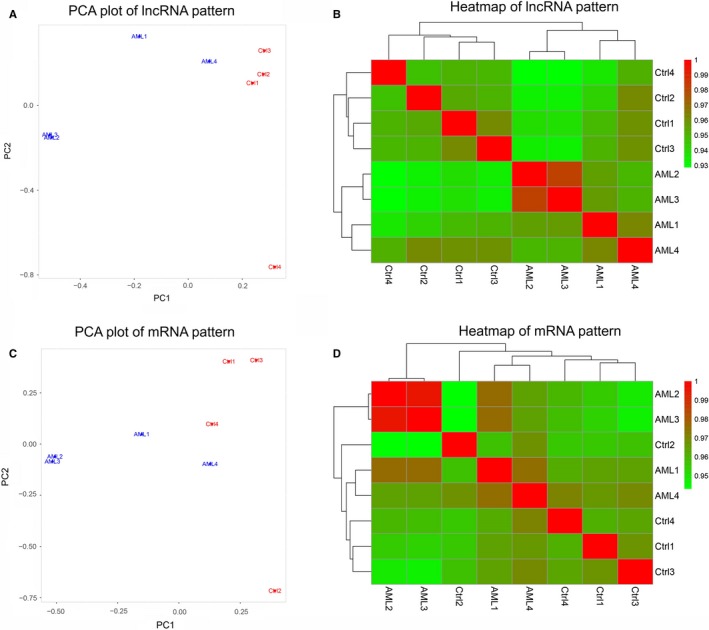
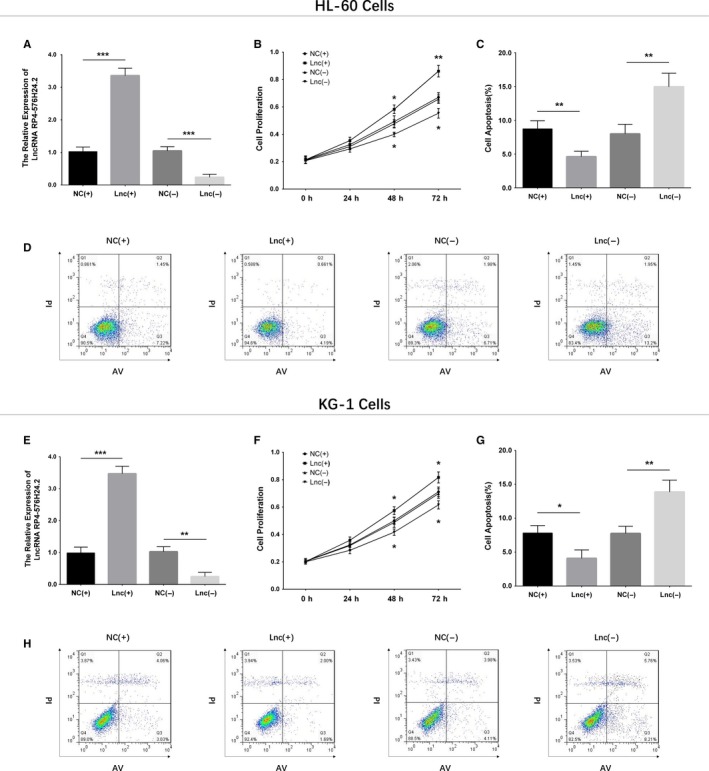
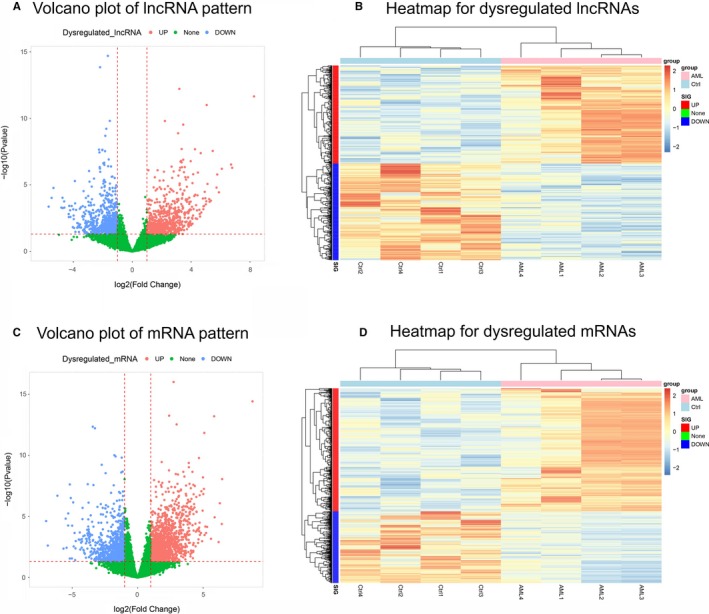
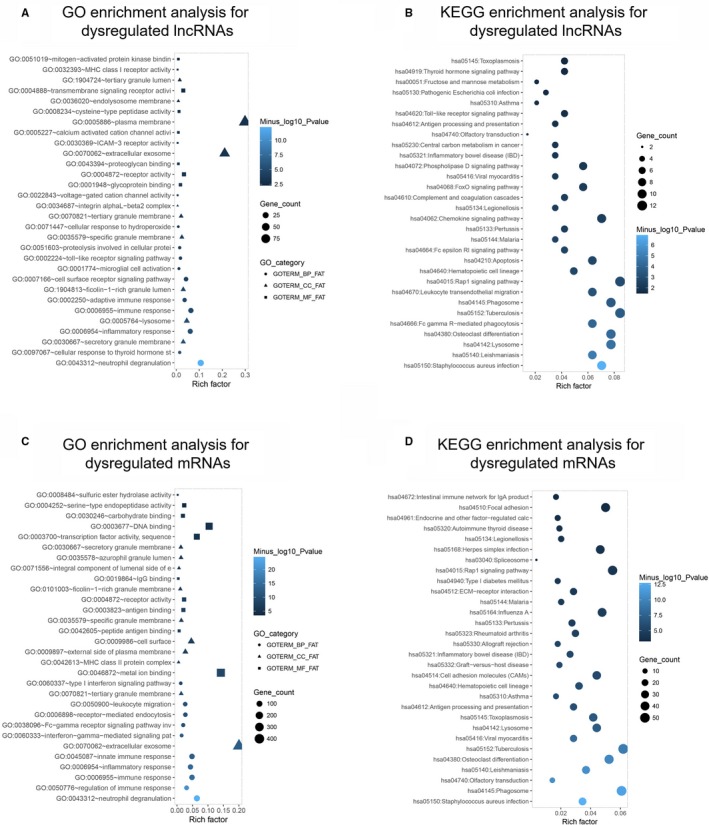
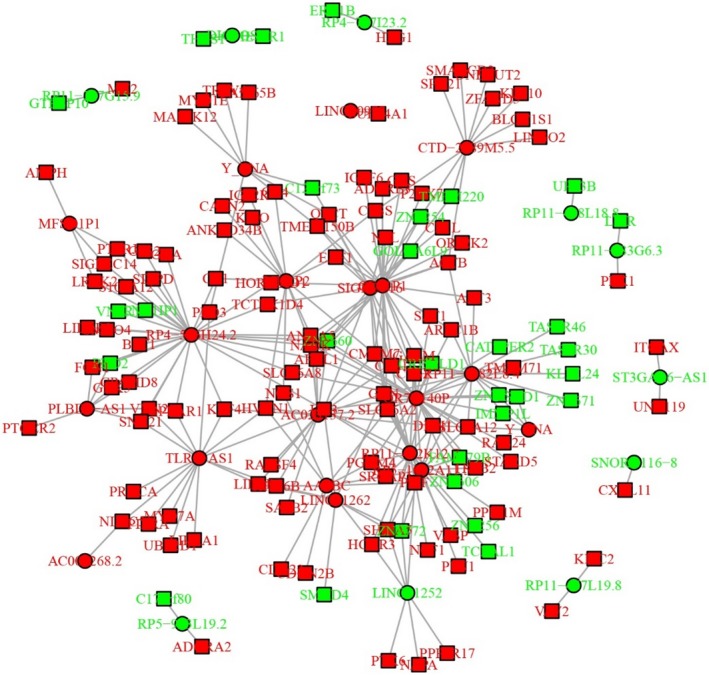
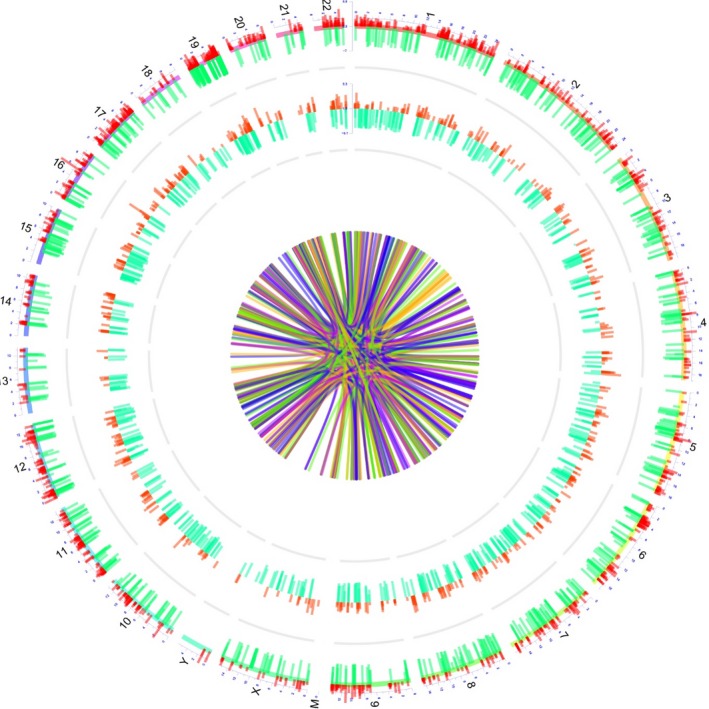
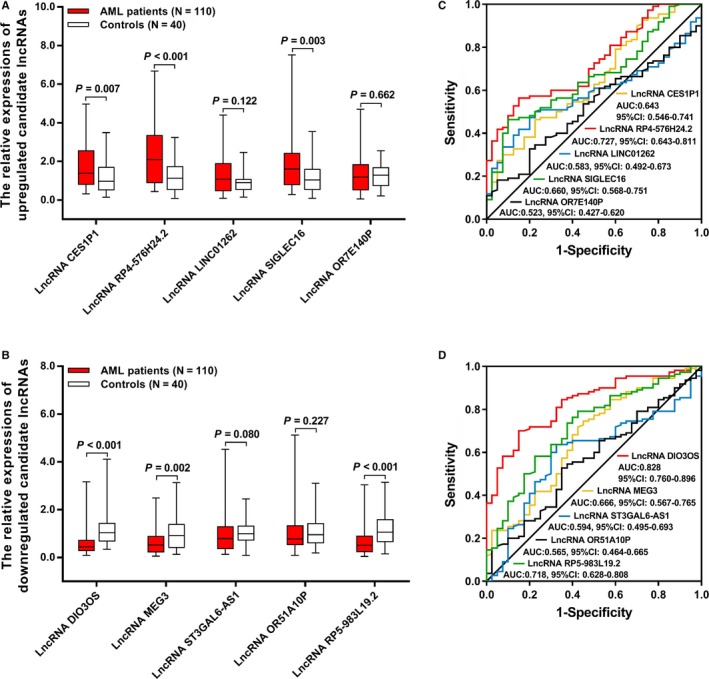
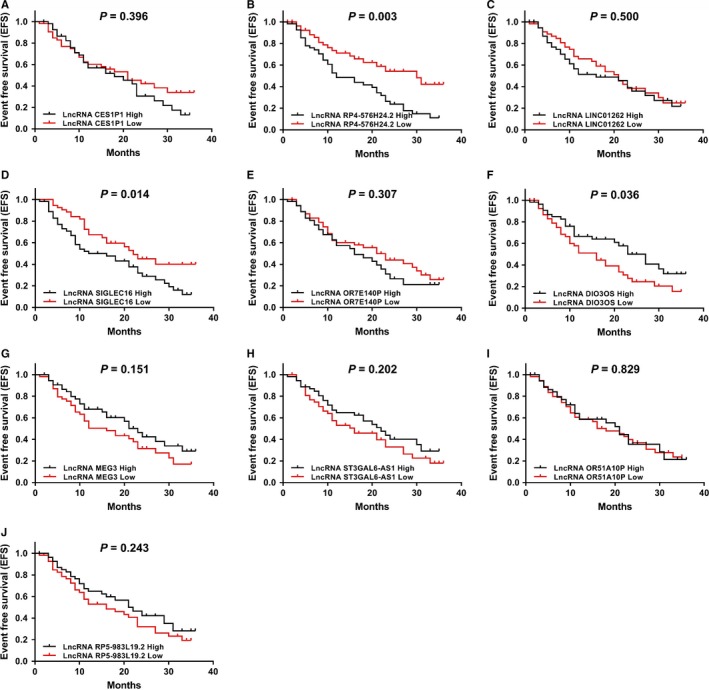
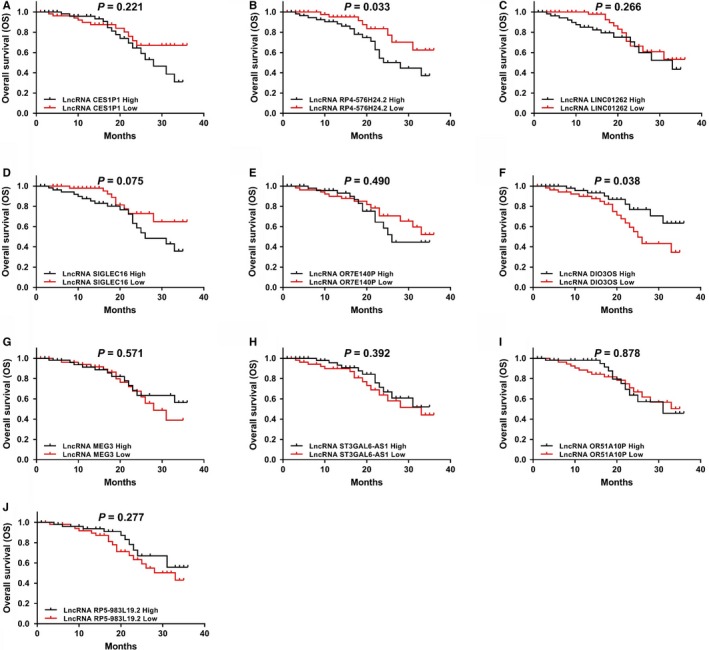
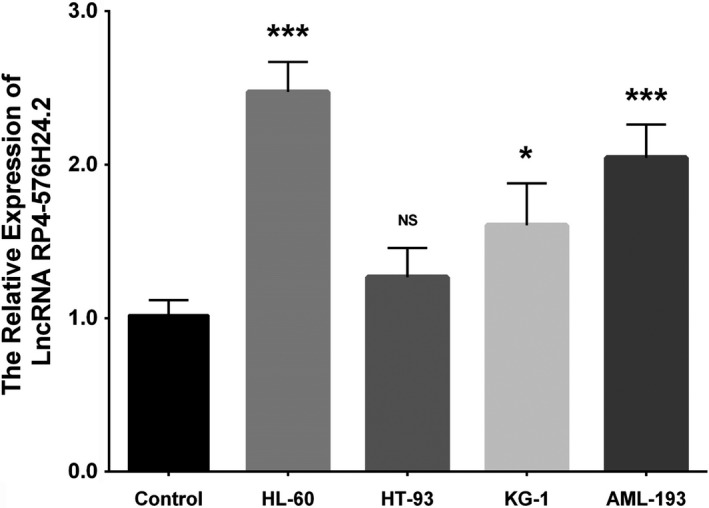
LncRNA expression pattern by sequencing clearly distinguished AML patients from controls, and 630 upregulated and 621 downregulated lncRNAs were identified in AML patients compared to controls, which were mainly enriched in AML oncogene-related biological process and pathways (such as neutrophil degranulation, leukocyte transendothelial migration, and hematopoietic cell lineage). RT-qPCR validation observed that six lncRNAs correlated with AML risk, one lncRNA associated with risk stratification, and three lncRNAs correlated with survivals, among which lncRNA RP4-576H24.2 was the only one correlated with AML susceptibility, risk stratification, and survivals. Further in vitro experiments showed that lncRNA RP4-576H24.2 was upregulated in AML cell lines compared to normal bone marrow mononuclear cells (BMMCs), and promoted proliferation while inhibited apoptosis in HL-60 and KG-1 cells.
LncRNA expression pattern is closely involved in the development and progression of AML, and several specific lncRNAs exhibit potential to be biomarkers for AML risk and prognosis. Besides, lncRNA RP4-576H24.2 might be a potential oncogene in AML pathogenesis.
最近的研究表明,长非编码 RNA(lncRNA)可能是血液恶性肿瘤发病机制的关键触发因素,而评估 lncRNA 在急性髓系白血病(AML)中表达模式的研究较少。因此,本研究旨在探讨 lncRNA 表达模式在 AML 发生和发展中的意义。
对 4 例 AML 患者和 4 例对照者的骨髓样本进行 lncRNA 测序。然后,对 110 例 AML 患者和 40 例对照者的骨髓样本进行实时定量聚合酶链反应(RT-qPCR)验证,对 10 个候选 lncRNA 进行验证。记录 AML 患者的临床数据和生存资料。此外,检测 AML 细胞系中 lncRNA RP4-576H24.2 的表达及其对 AML 细胞增殖和凋亡的影响。
测序的 lncRNA 表达模式可清楚地区分 AML 患者与对照者,与对照者相比,AML 患者中有 630 个上调和 621 个下调的 lncRNA,主要富集在 AML 癌基因相关的生物学过程和途径(如中性粒细胞脱颗粒、白细胞穿内皮迁移和造血细胞谱系)。RT-qPCR 验证观察到 6 个 lncRNA 与 AML 风险相关,1 个 lncRNA 与风险分层相关,3 个 lncRNA 与生存相关,其中 lncRNA RP4-576H24.2 是唯一与 AML 易感性、风险分层和生存相关的 lncRNA。进一步的体外实验表明,与正常骨髓单个核细胞(BMMC)相比,lncRNA RP4-576H24.2 在 AML 细胞系中上调,并促进 HL-60 和 KG-1 细胞的增殖,同时抑制其凋亡。
lncRNA 表达模式与 AML 的发生和发展密切相关,一些特定的 lncRNA 具有作为 AML 风险和预后标志物的潜力。此外,lncRNA RP4-576H24.2 可能是 AML 发病机制中的潜在癌基因。