Luo Zhenqin, Cao Peiguo
Oncology Department, The Third Xiangya Hospital of Central South University, Changsha, Hunan 410013, People's Republic of China.
Cancer Manag Res. 2019 Sep 20;11:8517-8527. doi: 10.2147/CMAR.S213707. eCollection 2019.
Hepatoblastoma is the most common liver malignancy in children. The long noncoding RNA (IncRNA) PVT1 plays oncogenic roles in human cancers; however, its regulation and function in hepatoblastoma remain poorly understood.
This study was designed to investigate the regulation and function of PVT1 in hepatoblastoma.
PVT1 expression was compared between human hepatoblastoma tissues and adjacent non-tumor tissues, and then analyzed using Kaplan-Meier method. The proliferation of hepatoblastoma cells was determined by BrdU incorporation assay. The tumor xenograft model was used to assess tumor proliferation in vivo. The gene expression level was measured by qRT-pCR, Western blot and immunohistochemistry analyses.
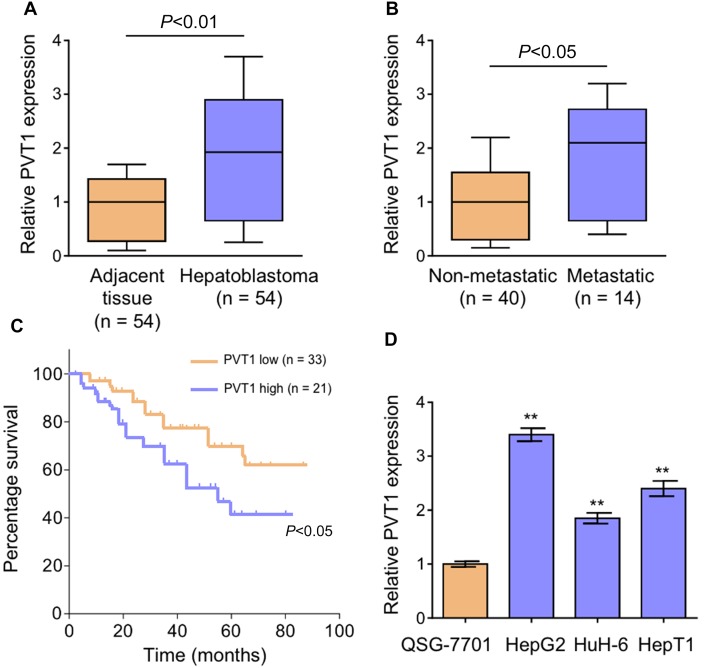
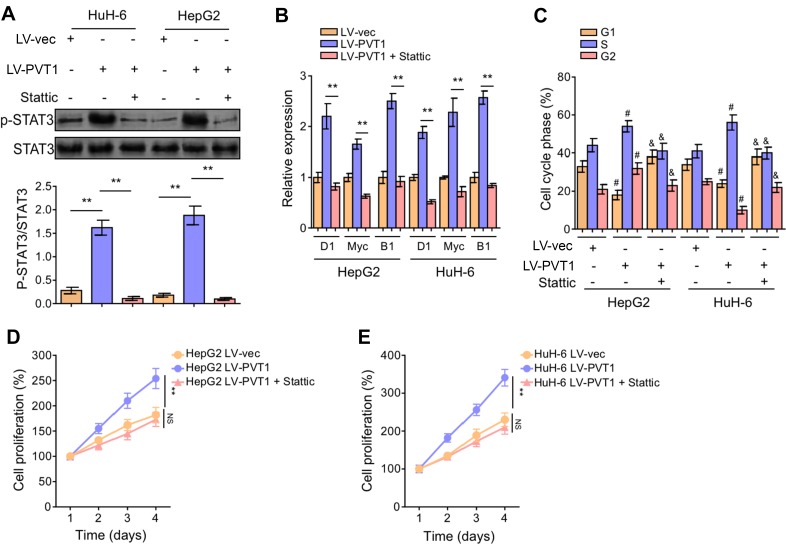
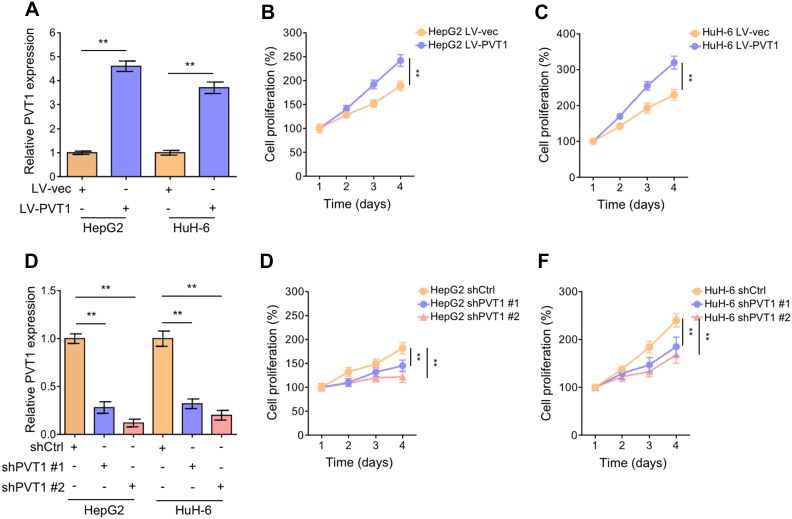
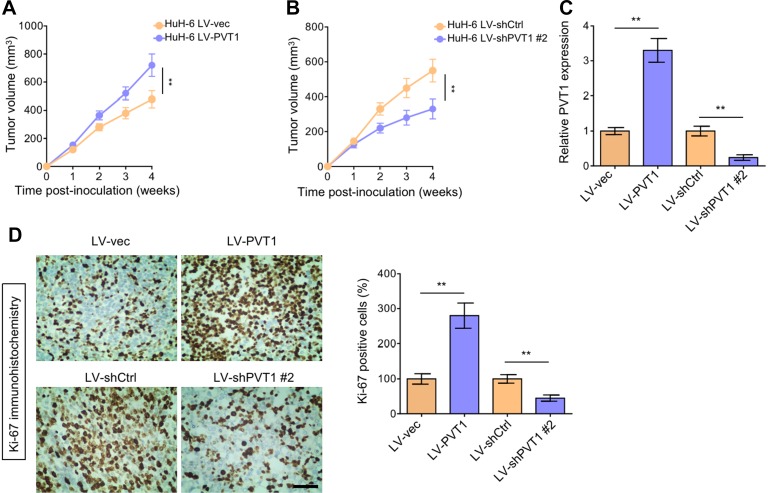
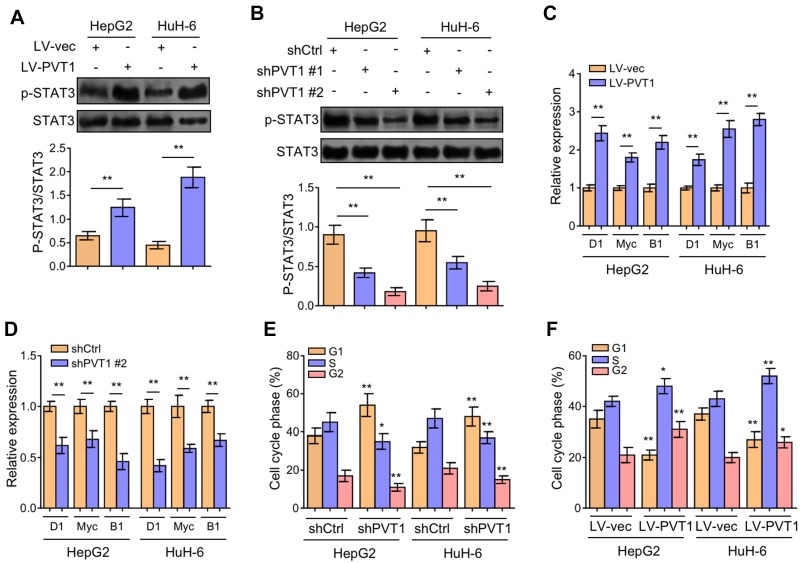
Compared with normal counterparts, PVT1 is upregulated in human hepatoblastoma tissues as well as in hepatoblastoma cell lines. Additionally, PVT1 promotes the proliferation of hepatoblastoma cells in vitro and accelerates tumor growth in xenograft model in vivo. Mechanistically, PVT1 promotes the activation of the signal transducer and activator of transcription 3 (STAT3), which leads to the transcriptional activation of downstream targets involved in cell cycle progression, and moreover,STAT3 inhibition with the selective inhibitor stattic abolishes PVT1 pro-proliferative role in hepatoblastoma cells.
PVT1 promotes hepatoblastoma cell proliferation through activating STAT3-induced cell cycle progression, which may implicate PVT1 as a potential therapeutic target for hepatoblastoma treatment.
肝母细胞瘤是儿童最常见的肝脏恶性肿瘤。长链非编码RNA(lncRNA)PVT1在人类癌症中发挥致癌作用;然而,其在肝母细胞瘤中的调控和功能仍知之甚少。
本研究旨在探讨PVT1在肝母细胞瘤中的调控及功能。
比较人肝母细胞瘤组织与相邻非肿瘤组织中PVT1的表达,然后采用Kaplan-Meier法进行分析。通过BrdU掺入法检测肝母细胞瘤细胞的增殖。采用肿瘤异种移植模型评估体内肿瘤增殖情况。通过qRT-pCR、蛋白质免疫印迹和免疫组织化学分析测定基因表达水平。
与正常组织相比,PVT1在人肝母细胞瘤组织及肝母细胞瘤细胞系中表达上调。此外,PVT1在体外促进肝母细胞瘤细胞增殖,并在体内异种移植模型中加速肿瘤生长。机制上,PVT1促进信号转导和转录激活因子3(STAT3)的激活,从而导致参与细胞周期进程的下游靶点的转录激活,此外,用选择性抑制剂stattic抑制STAT3可消除PVT1在肝母细胞瘤细胞中的促增殖作用。
PVT1通过激活STAT3诱导的细胞周期进程促进肝母细胞瘤细胞增殖,这可能意味着PVT1是肝母细胞瘤治疗的潜在治疗靶点。