Hamberger Jens, Meissner Karin, Hinterberger Thilo, Loew Thomas, Weimer Katja
Department of Psychosomatic Medicine, University Clinic Regensburg, Regensburg, Germany.
Division of Health Promotion, University of Applied Sciences Coburg, Coburg, Germany.
Front Psychiatry. 2019 Sep 12;10:653. doi: 10.3389/fpsyt.2019.00653. eCollection 2019.
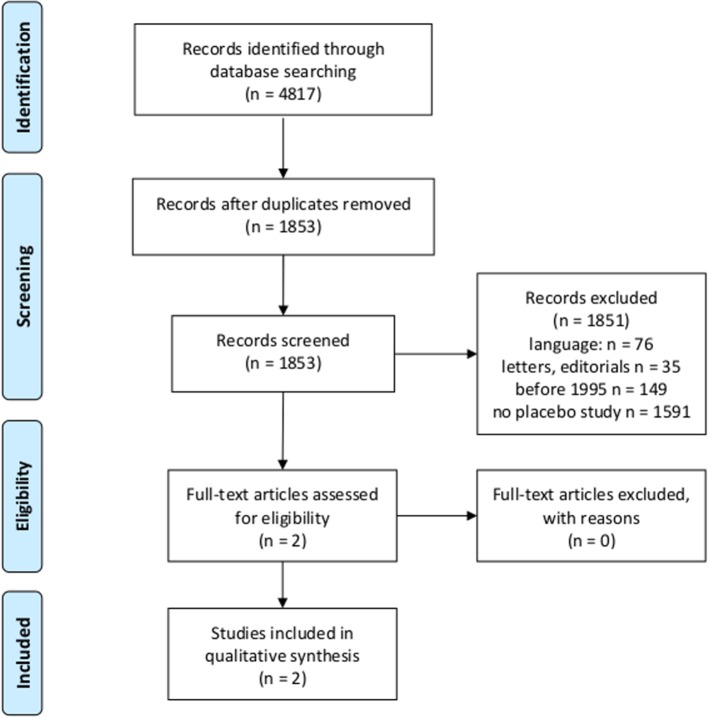
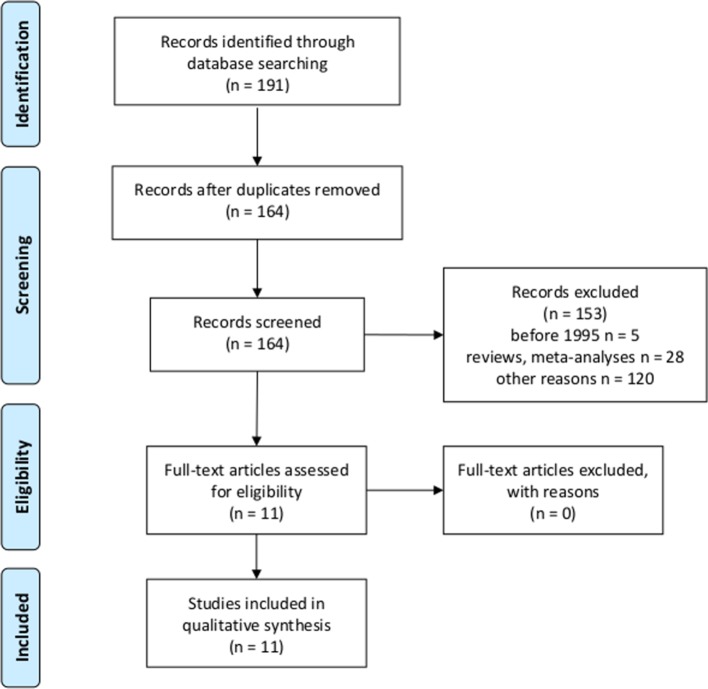
Recent research shows that placebo mechanisms can be utilized in ethical and legal ways such as in open-label conditions, when patients know that they receive placebos, and through psychological interventions aiming to optimize patients' expectations. Showing that placebo interventions are also cost-efficient could improve their acceptability. To review studies that performed health economic evaluations (HEEs) of intentional placebo interventions and to review studies that intentionally applied placebo interventions and reported outcomes eligible for HEEs. Two systematic reviews of the literature were performed. For the first review, we searched MEDLINE using "placebo" and Medical Subject Headings (MeSH) terms associated with HEEs such as "costs," "cost-benefit analyses," and "economics." Studies were eligible if they employed patients, applied placebo interventions, included an appropriate control group, and reported results of cost analyses. For the second review, we searched the Journal of Interdisciplinary Placebo Studies (JIPS) database and MEDLINE using search terms for outcomes eligible for cost-utility analyses, such as "quality of life" or "quality-adjusted life years" ("QALYs"). Risk of bias of all studies found was assessed according to the , and a narrative synthesis of the results is provided. The first search resulted in 1,853 articles, which were screened for eligibility. Two studies were found only in which costs or cost-effectiveness analysis were reported, but with medium to high risks of biases. The second search yielded 164 articles particularly from the JIPS database of which 11 studies met our search criteria: in six studies, patients received placebo pills in open-label conditions; three studies investigated effects of patient-physician relationships; and two studies used psychological interventions to optimize treatment expectations, in patients with various diseases and disorders. These studies report outcomes potentially eligible for HEEs when costs of interventions were known. Risks of biases were low to medium, but patients were not blinded to the conditions in most studies. The state of knowledge about HEEs of placebo interventions is scarce. To gain more visibility and acceptability for placebo interventions, future studies should measure outcomes usable for HEEs and costs of interventions, and HEEs should be performed for existing studies if data are available.
近期研究表明,安慰剂机制可以通过符合伦理和法律的方式加以利用,比如在开放标签的情况下,即患者知晓自己接受的是安慰剂,以及通过旨在优化患者预期的心理干预。证明安慰剂干预具有成本效益可能会提高其可接受性。检索对有意使用的安慰剂干预措施进行卫生经济评估(HEE)的研究,以及检索有意应用安慰剂干预措施并报告符合卫生经济评估标准的结果的研究。进行了两项文献系统综述。对于第一次综述,我们使用“安慰剂”以及与卫生经济评估相关的医学主题词(MeSH),如“成本”“成本效益分析”和“经济学”在MEDLINE数据库中进行检索。如果研究纳入了患者、应用了安慰剂干预措施、设置了适当的对照组并报告了成本分析结果,则这些研究符合纳入标准。对于第二次综述,我们使用适用于成本效用分析的结果检索词,如“生活质量”或“质量调整生命年”(“QALYs”),在《跨学科安慰剂研究杂志》(JIPS)数据库和MEDLINE中进行检索。根据[具体评估标准]对所有检索到的研究的偏倚风险进行评估,并对结果进行叙述性综合分析。第一次检索得到1853篇文章,对其进行了合格性筛选。仅发现两项报告了成本或成本效益分析的研究,但偏倚风险为中到高。第二次检索得到164篇文章,特别是来自JIPS数据库的文章,其中11项研究符合我们的检索标准:在6项研究中,患者在开放标签条件下接受安慰剂药丸;3项研究调查了医患关系的影响;2项研究使用心理干预来优化各种疾病和病症患者的治疗预期。当干预成本已知时,这些研究报告了可能符合卫生经济评估标准的结果。偏倚风险为低到中,但大多数研究中患者未对干预条件进行盲法处理。关于安慰剂干预措施卫生经济评估的知识现状匮乏。为了提高安慰剂干预措施的知名度和可接受性,未来的研究应测量可用于卫生经济评估的结果和干预成本,并且如果有数据,应对现有研究进行卫生经济评估。