Department of Critical Care Medicine, The First Affiliated Hospital, College of Medicine, Zhejiang University, Hangzhou, China.
Department of Infectious Diseases, Sir Run Run Shaw Hospital, College of Medicine, Zhejiang University, Hangzhou, China.
J Cell Mol Med. 2019 Dec;23(12):8314-8327. doi: 10.1111/jcmm.14709. Epub 2019 Oct 1.
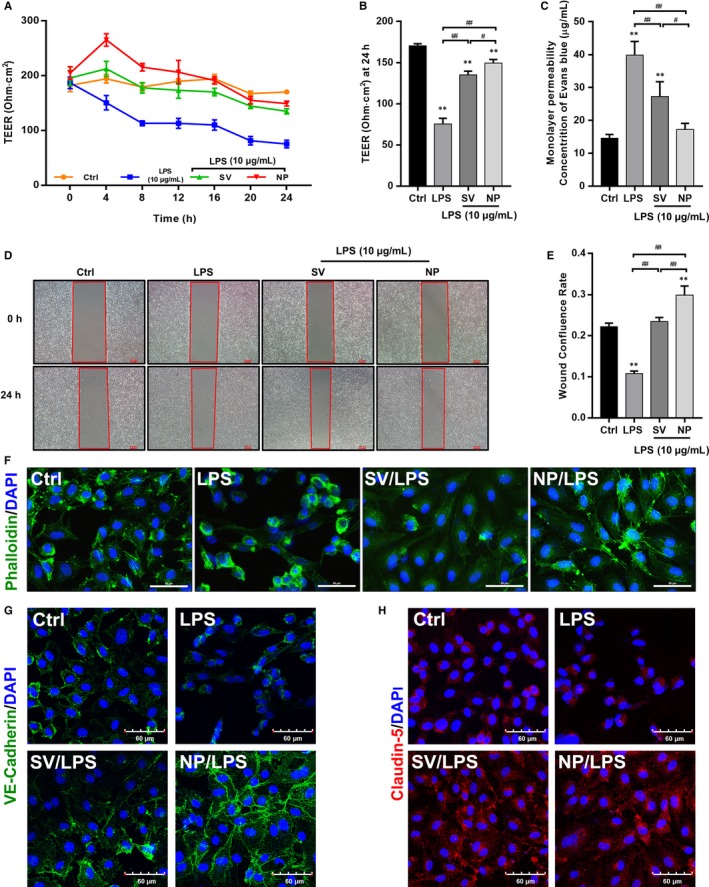
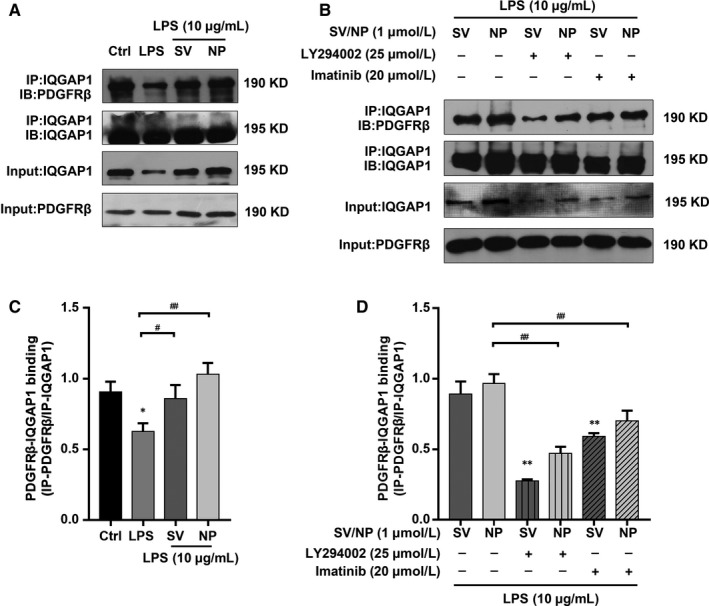
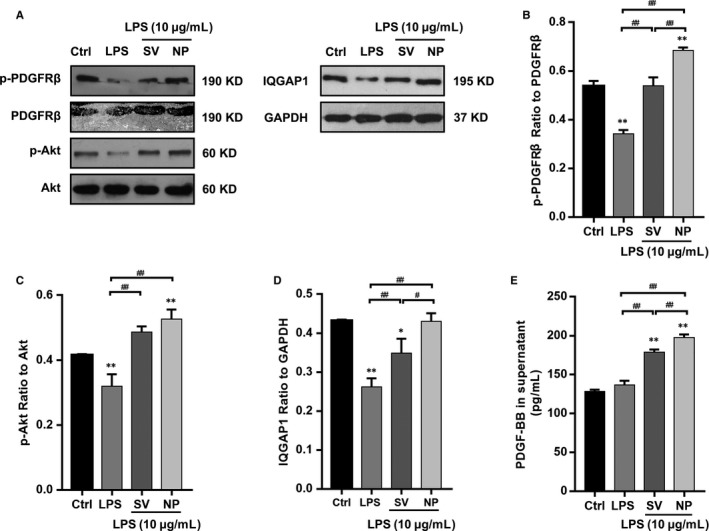
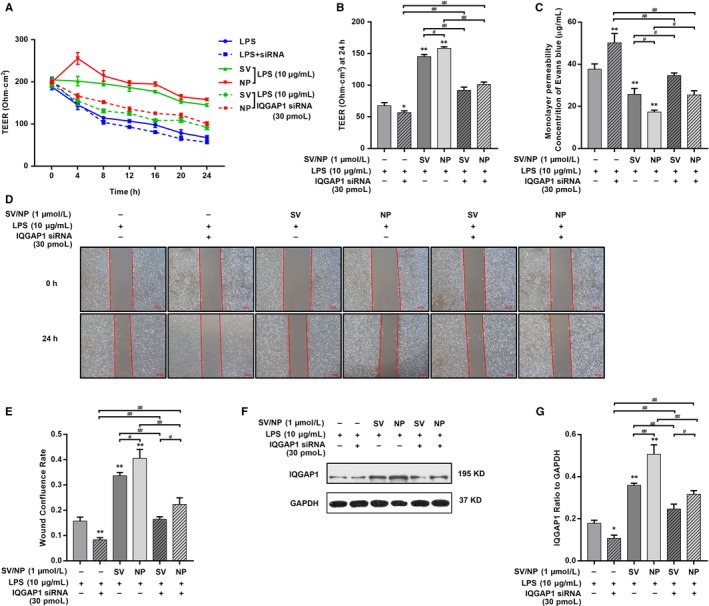
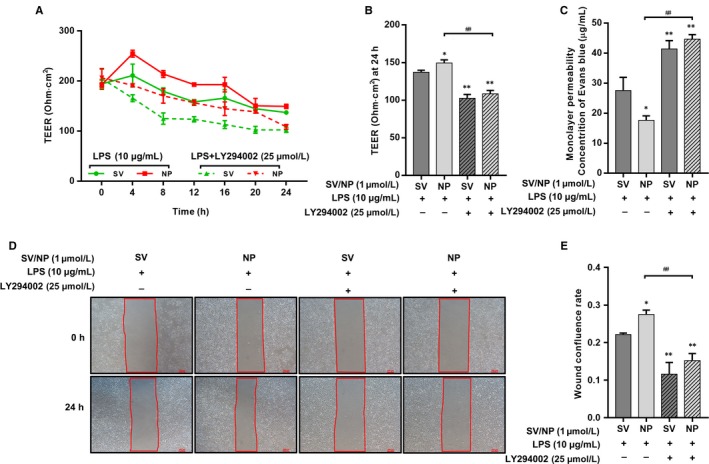
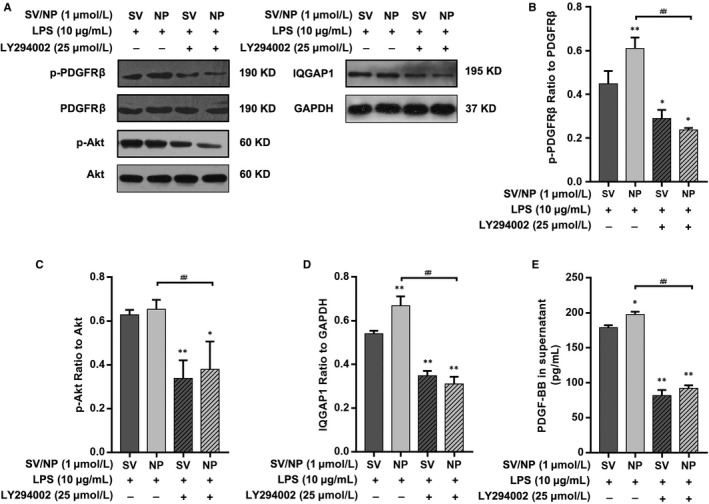
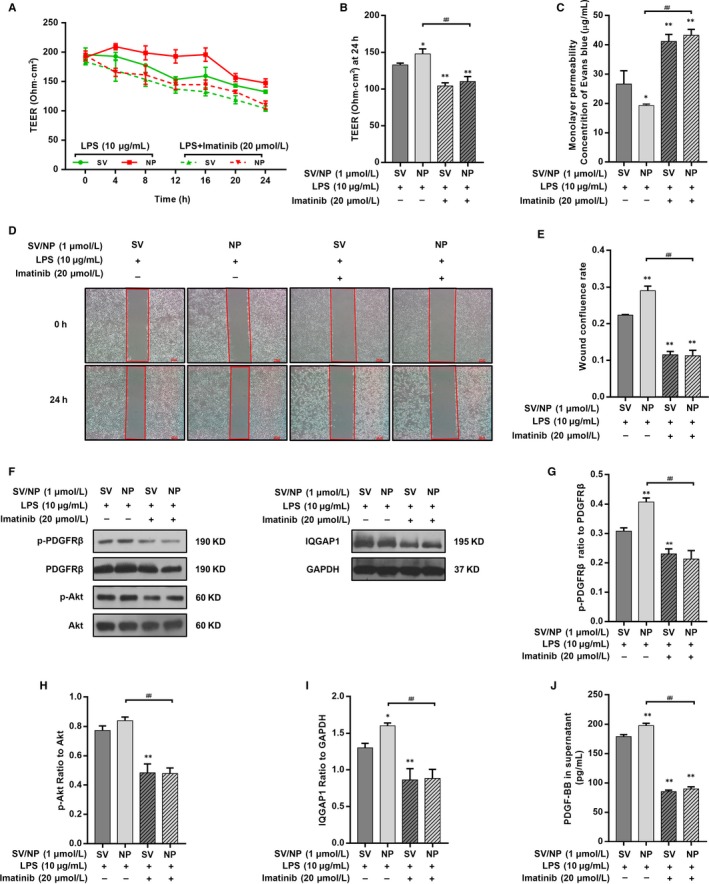
Endothelial barrier dysfunction is a critical pathophysiological process of sepsis. Impaired endothelial cell migration is one of the main reasons for endothelial dysfunction. Statins may have a protective effect on endothelial barrier function. However, the effect and mechanism of statins on lipopolysaccharide (LPS)-induced endothelial barrier dysfunction remain unclear. Simvastatin (SV) was loaded in nanostructured lipid carriers to produce SV nanoparticles (SV-NPs). Normal SV and SV-NPs were used to treat human umbilical vein vascular endothelial cells (HUVECs) injured by LPS. Barrier function was evaluated by monitoring cell monolayer permeability and transendothelial electrical resistance, and cell migration ability was measured by a wound healing assay. LY294002 and imatinib were used to inhibit the activity of PI3K/Akt and platelet-derived growth factor receptor (PDGFR) β. IQ-GTPase-activating protein 1 (IQGAP1) siRNA was used to knockdown endogenous IQGAP1, which was used to verify the role of the PDGFRβ/PI3K/Akt/IQGAP1 pathway in SV/SV-NPs-mediated barrier protection in HUVECs injured by LPS. The results show that SV/SV-NPs promoted the migration and decreased the permeability of HUVECs treated with LPS, and the efficacy of the SV-NPs exceeded that of SV significantly. LY294002, imatinib and IQGAP1 siRNA all suppressed the barrier protection of SV/SV-NPs. SV/SV-NPs promoted the secretion of platelet-derived growth factor-BB (PDGF-BB) and activated the PDGFRβ/PI3K/Akt/IQGAP1 pathway. SV preparations restored endothelial barrier function by restoring endothelial cell migration, which is involved in the regulation of the PDGFRβ/PI3K/Akt/IQGAP1 pathway and PDGF-BB secretion. As an appropriate formulation for restoring endothelial dysfunction, SV-NPs may be more effective than SV.
内皮屏障功能障碍是脓毒症的一个关键病理生理过程。内皮细胞迁移受损是内皮功能障碍的主要原因之一。他汀类药物可能对内皮屏障功能具有保护作用。然而,他汀类药物对脂多糖(LPS)诱导的内皮屏障功能障碍的作用和机制尚不清楚。将辛伐他汀(SV)载入纳米结构脂质载体中,制备 SV 纳米粒(SV-NPs)。用 LPS 损伤的人脐静脉血管内皮细胞(HUVECs)分别处理正常 SV 和 SV-NPs。通过监测细胞单层通透性和跨内皮电阻来评估屏障功能,通过划痕愈合试验测量细胞迁移能力。用 LY294002 和伊马替尼抑制 PI3K/Akt 和血小板衍生生长因子受体(PDGFR)β的活性。用 IQ-GTPase-activating protein 1(IQGAP1)siRNA 敲低内源性 IQGAP1,以验证 PDGFRβ/PI3K/Akt/IQGAP1 通路在 LPS 损伤的 HUVECs 中 SV/SV-NPs 介导的屏障保护中的作用。结果表明,SV/SV-NPs 促进了 LPS 处理的 HUVECs 的迁移并降低了其通透性,且 SV-NPs 的效果明显优于 SV。LY294002、伊马替尼和 IQGAP1 siRNA 均抑制了 SV/SV-NPs 的屏障保护作用。SV/SV-NPs 促进了血小板衍生生长因子-BB(PDGF-BB)的分泌并激活了 PDGFRβ/PI3K/Akt/IQGAP1 通路。SV 制剂通过恢复内皮细胞迁移来恢复内皮屏障功能,这涉及 PDGFRβ/PI3K/Akt/IQGAP1 通路和 PDGF-BB 分泌的调节。作为恢复内皮功能障碍的合适制剂,SV-NPs 可能比 SV 更有效。