Li Hong, Du Haiyan, Zhang Guangxian, Wu Yingya, Qiu Pengxiang, Liu Jingjing, Guo Jing, Liu Xijuan, Sun Lingling, Du Biaoyan, Tan Yuhui
Department of Biochemistry and Molecular Biology, Guangzhou University of Chinese Medicine, Guangzhou, China.
The Research Center of Basic Integrative Medicine, Guangzhou University of Chinese Medicine, Guangzhou, China.
PeerJ. 2019 Sep 20;7:e7760. doi: 10.7717/peerj.7760. eCollection 2019.
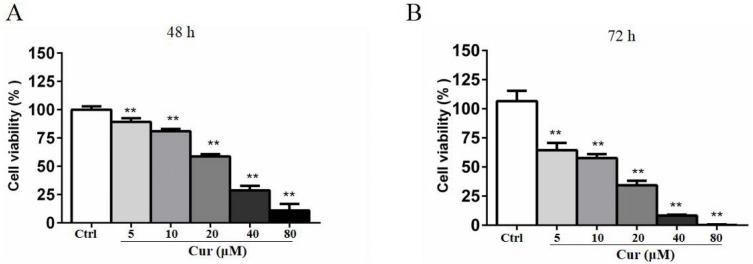
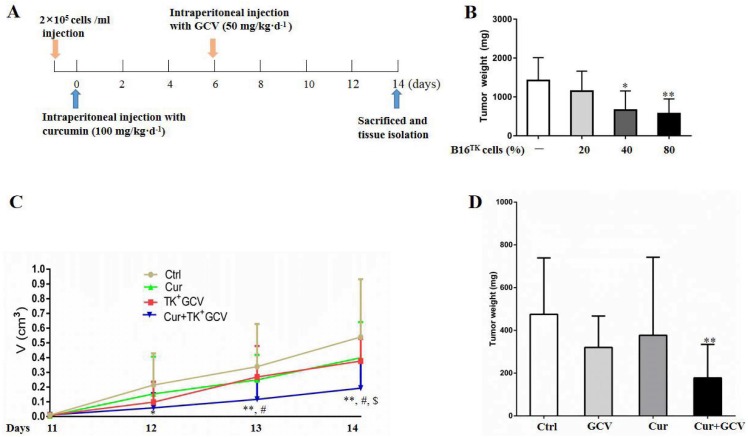
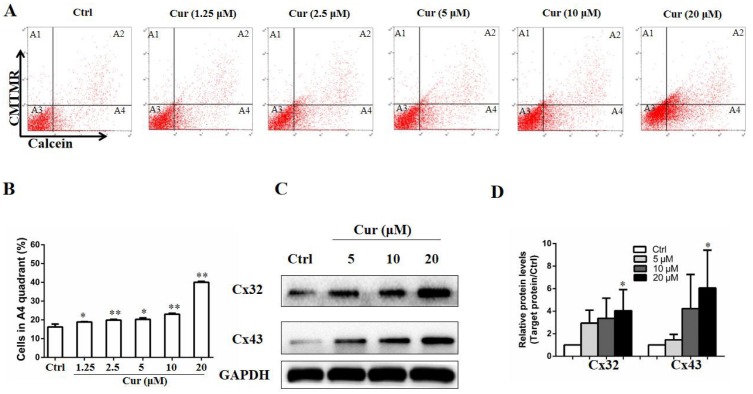
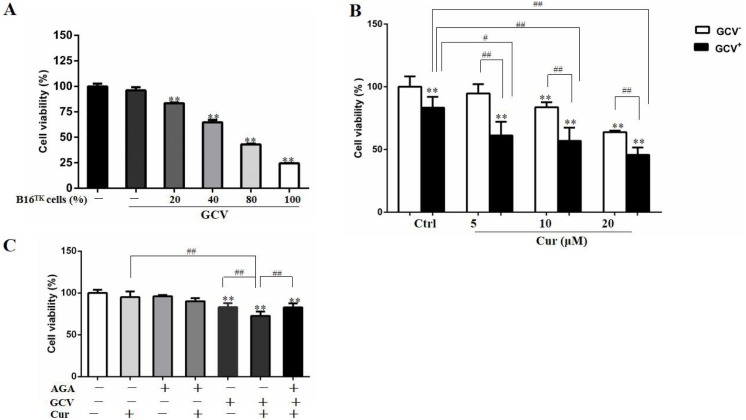
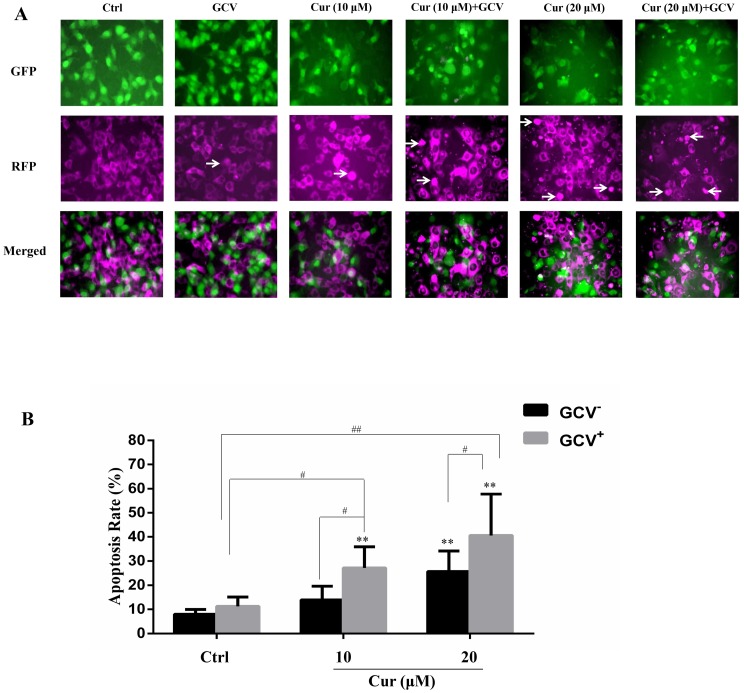
Melanoma is a global concern and accounts for the major mortality of skin cancers. Herpes simplex virus thymidine kinase gene with ganciclovir (HSV-TK/GCV) is a promising gene therapy for melanoma. Despite its low efficiency, it is well known for its bystander effect which is mainly mediated by gap junction. In this study, we found that curcumin reduced B16 melanoma cell viability in both time- and dose-dependent manner. Further study showed that curcumin improved the gap junction intercellular communication (GJIC) function, and upregulated the proteins essential to gap junction, such as connexin 32 and connexin 43, indicating the potential role in enhancing the bystander effect of HSV-TK/GCV. By co-culturing the B16 cells, which stably expressed TK gene, with wildtype B16 (B16) cells, we found that co-treatment of curcumin and GCV synergistically inhibited B16 cell proliferation, but the effect could be eliminated by the gap junction inhibitor AGA. Moreover, curcumin markedly increased apoptosis rate of B16 cells, suggesting its effect in enhancing the bystander effect of HSV-TK/GCV. In the in-vivo study, we established the xenografted melanoma model in 14 days by injecting mixture of B16 and B16 cell in a ratio of 3:7. The result demonstrated that, co-administration of curcumin and GCV significantly inhibited the xenograft growth, as indicated by the smaller size and less weight. The combinational effect was further confirmed as a synergistic effect. In conclusion, the results demonstrated that curcumin could enhance the killing effect and the bystander effect of HSV-TK/GCV in treating melanoma, which might be mediated by improved gap junction. Our data suggested that combination of HSV-TK/GCV with curcumin could be a potential chemosensitization strategy for cancer treatment.
黑色素瘤是一个全球性问题,并且是皮肤癌主要的致死原因。单纯疱疹病毒胸苷激酶基因与更昔洛韦(HSV-TK/GCV)是一种很有前景的黑色素瘤基因治疗方法。尽管其效率较低,但它以其旁观者效应而闻名,这种效应主要由间隙连接介导。在本研究中,我们发现姜黄素以时间和剂量依赖性方式降低B16黑色素瘤细胞活力。进一步研究表明,姜黄素改善了间隙连接细胞间通讯(GJIC)功能,并上调了间隙连接所必需的蛋白质,如连接蛋白32和连接蛋白43,表明其在增强HSV-TK/GCV旁观者效应方面的潜在作用。通过将稳定表达TK基因的B16细胞与野生型B16(B16)细胞共培养,我们发现姜黄素和GCV联合处理协同抑制B16细胞增殖,但这种效应可被间隙连接抑制剂AGA消除。此外,姜黄素显著提高了B16细胞的凋亡率,表明其在增强HSV-TK/GCV旁观者效应方面的作用。在体内研究中,我们通过以3:7的比例注射B16和B16细胞混合物,在14天内建立了异种移植黑色素瘤模型。结果表明,姜黄素和GCV联合给药显著抑制了异种移植瘤的生长,表现为体积更小、重量更轻。联合效应进一步被确认为协同效应。总之,结果表明姜黄素可以增强HSV-TK/GCV在治疗黑色素瘤中的杀伤作用和旁观者效应,这可能是通过改善间隙连接介导的。我们的数据表明,HSV-TK/GCV与姜黄素联合使用可能是一种潜在的癌症化疗增敏策略。