Nanotechnology Research Center, Pharmaceutical Technology Institute, Mashhad University of Medical Sciences, Mashhad, Iran; Department of Pharmaceutical Nanotechnology, School of Pharmacy, Mashhad University of Medical Sciences, Mashhad, Iran.
Nanotechnology Research Center, Pharmaceutical Technology Institute, Mashhad University of Medical Sciences, Mashhad, Iran.
Int J Parasitol Drugs Drug Resist. 2019 Dec;11:156-165. doi: 10.1016/j.ijpddr.2019.09.004. Epub 2019 Sep 23.
Currently, there is no topical treatment available for any form of cutaneous leishmaniasis (CL) in most of the endemic areas. The aim of the current study was to develop a topical nano-liposomal Amphotericin B (AmB) for the treatment of CL.
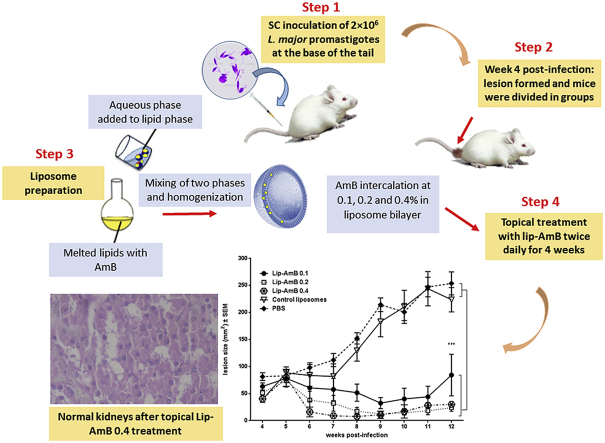
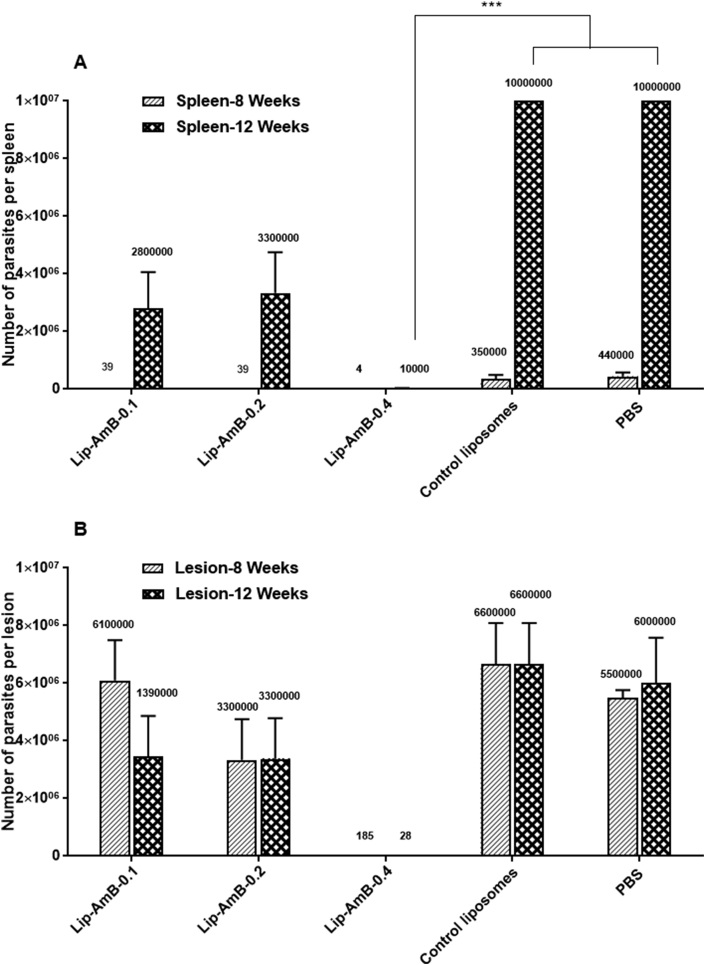
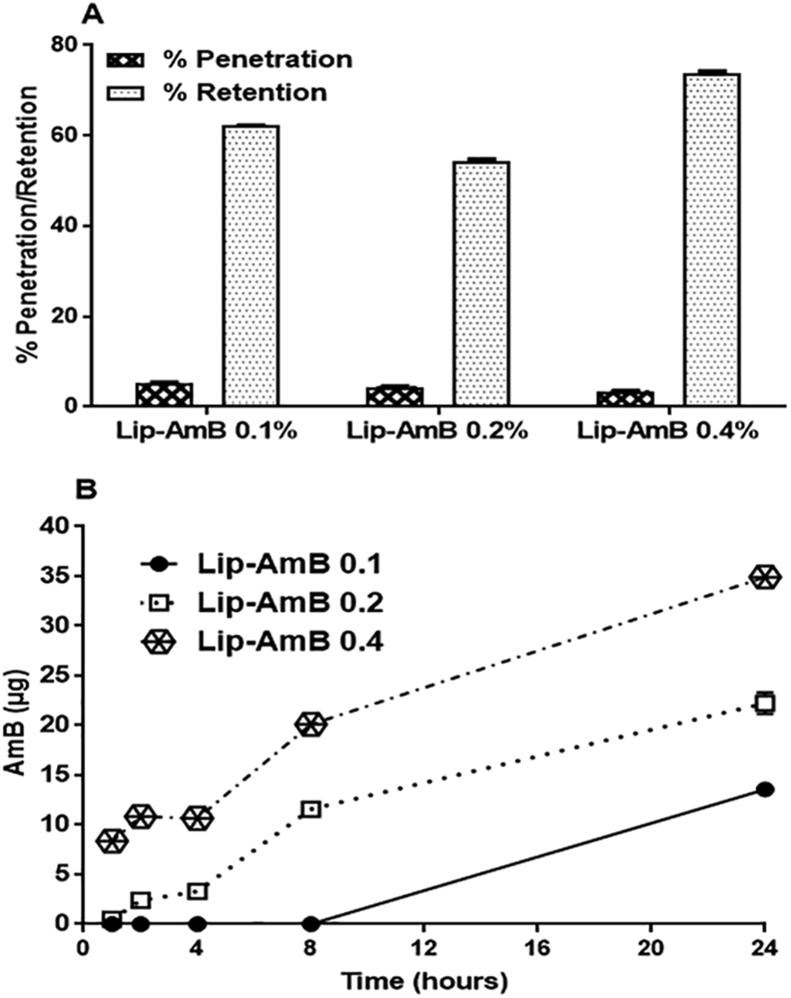
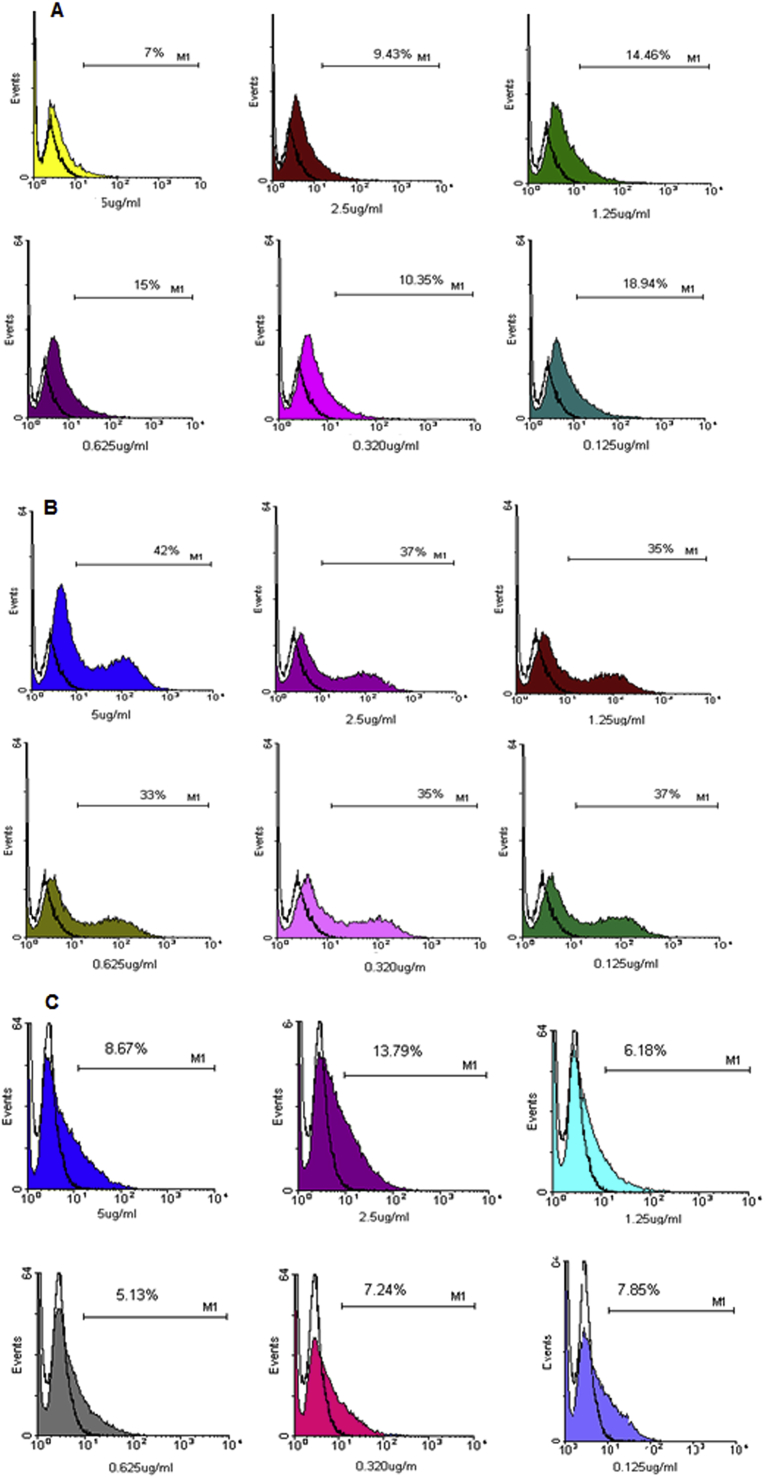
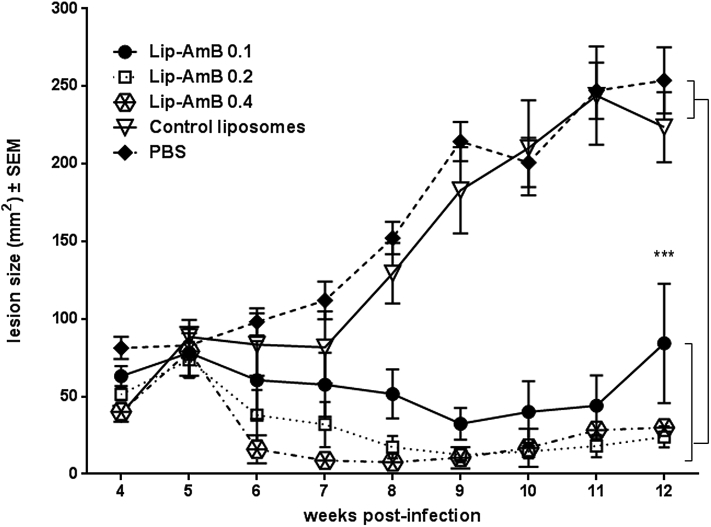
METHODOLOGY/PRINCIPAL FINDINGS: Liposomes containing 0.1, 0.2 and 0.4% AmB (Lip-AmB) were formulated and characterized for the size, entrapment efficiency, long term stability, and skin penetration properties using Franz diffusion cells. Liposomes diameters were around 100 nm with no change during more than 20 months' storage either at 4 °C or at room temperature. Franz diffusion cells studies showed that almost 4% of the applied formulations penetrated across the skin and the highest skin retention (73.92%) observed with Lip-AmB 0.4%. The median effective doses (ED), the doses of AmB required to kill 50% of L. major amastigotes were 0.151, 0.151, and 0.0856 (μg/mL) in Lip-AmB 0.1, 0.2, 0.4%, respectively. Lip-AmB 0.4% caused 80% reduction in fluorescence intensity of GFP+ L. tropica infected macrophages at 5 μg/mL of AmB concentration. Topical Lip-AmB was applied twice a day for 4 weeks to the skin of BALB/c mice to treat lesions caused by L. major. Results showed the superiority of Lip-AmB 0.4% compared to Lip-AmB 0.2 and 0.1%. The parasite was completely cleared from the skin site of infection and spleens at week 8 and 12 post-infection in mice treated with Lip-AmB 0.4%. The results suggest that topical Lip-AmB 0.4% may be a useful tool in the treatment of CL and merits further investigation.
目前,在大多数流行地区,还没有针对任何形式的皮肤利什曼病(CL)的局部治疗方法。本研究旨在开发一种局部纳米脂质体两性霉素 B(AmB)用于治疗 CL。
方法/主要发现:制备并表征了含有 0.1%、0.2%和 0.4%两性霉素 B(Lip-AmB)的脂质体的大小、包封效率、长期稳定性和皮肤渗透特性,使用 Franz 扩散池。脂质体的直径约为 100nm,在 4°C 或室温下储存超过 20 个月,其大小没有变化。Franz 扩散池研究表明,几乎有 4%的应用制剂穿透皮肤,而在 Lip-AmB 0.4%中观察到的最高皮肤保留率(73.92%)。Lip-AmB 0.1、0.2和 0.4%中的中位有效剂量(ED),即杀死 50%的 L. major 无鞭毛体所需的两性霉素 B 剂量分别为 0.151、0.151 和 0.0856(μg/mL)。Lip-AmB 0.4%在 5μg/mL 的两性霉素 B 浓度下可使 GFP+L. tropica 感染的巨噬细胞的荧光强度降低 80%。将 Lip-AmB 0.4%每天两次应用于 BALB/c 小鼠的皮肤 4 周,以治疗由 L. major 引起的病变。结果表明,Lip-AmB 0.4%优于 Lip-AmB 0.2%和 0.1%。在感染后第 8 周和第 12 周,用 Lip-AmB 0.4%治疗的小鼠从皮肤感染部位和脾脏中完全清除了寄生虫。结果表明,局部应用 Lip-AmB 0.4%可能是治疗 CL 的有用工具,值得进一步研究。