Department of Physiology, College of Medicine, Gachon University, Lee Gil Ya Cancer and Diabetes Institute, 155 Getbeolro, Yeonsu-gu, Incheon 21999, Republic of Korea.
Department of Thoracic and Cardiovascular Surgery, Gachon University Gil Medical Center, Gachon University, Incheon 21565, Republic of Korea.
Mediators Inflamm. 2019 Sep 8;2019:7583760. doi: 10.1155/2019/7583760. eCollection 2019.
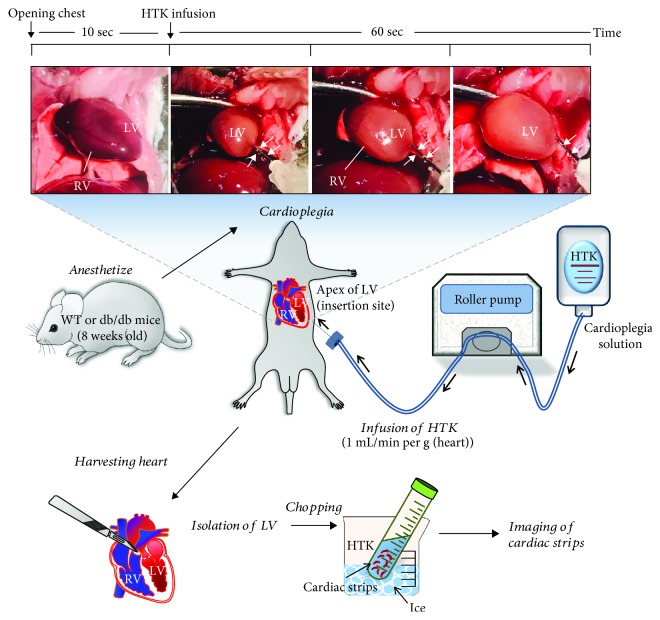
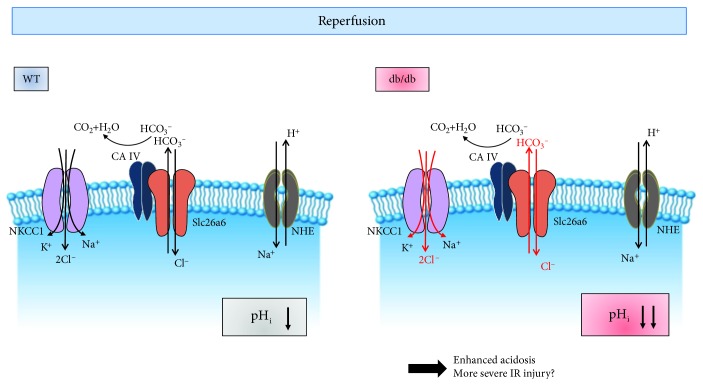
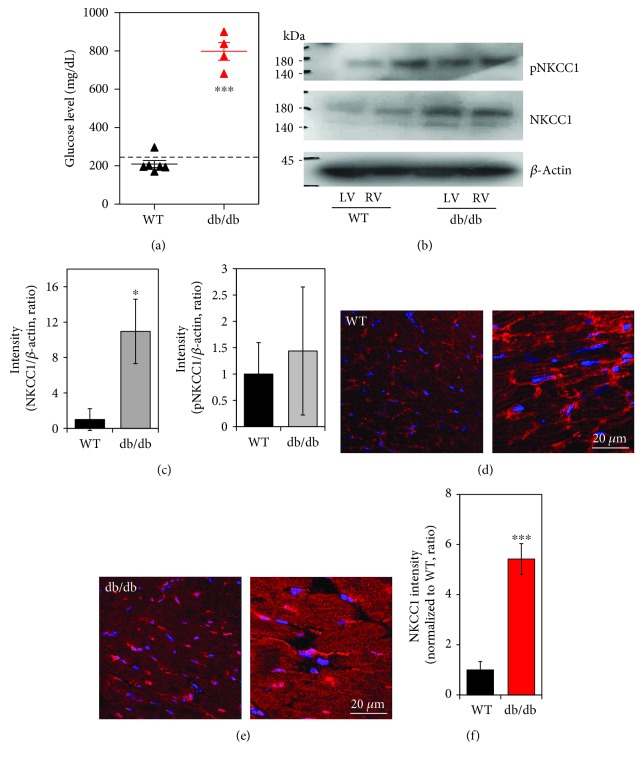
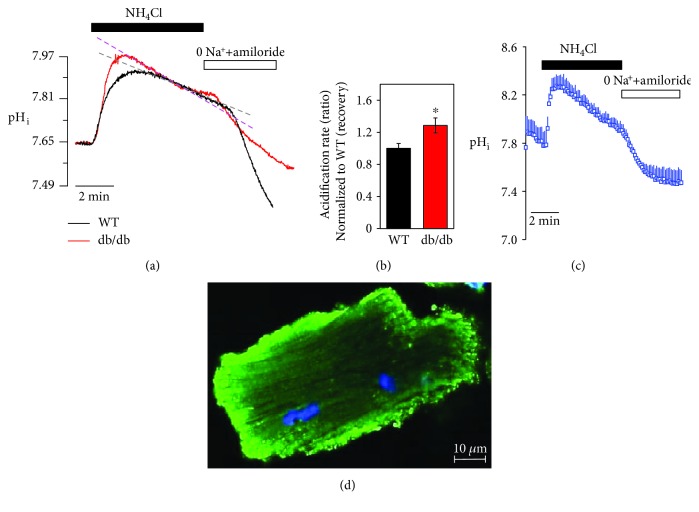
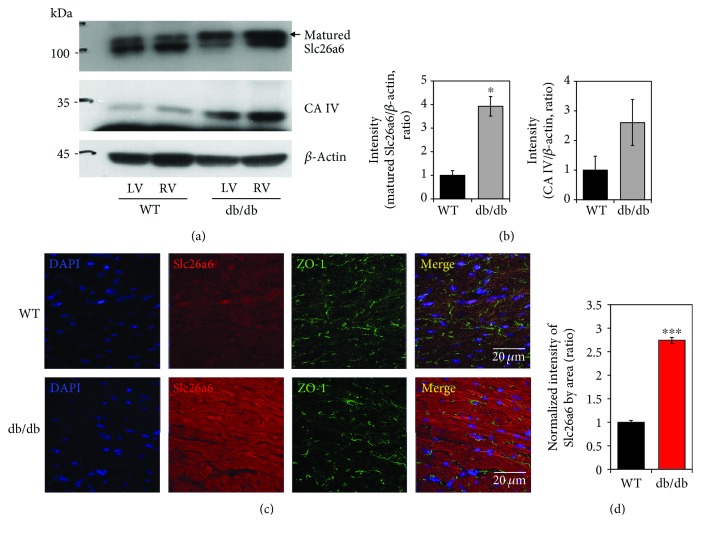
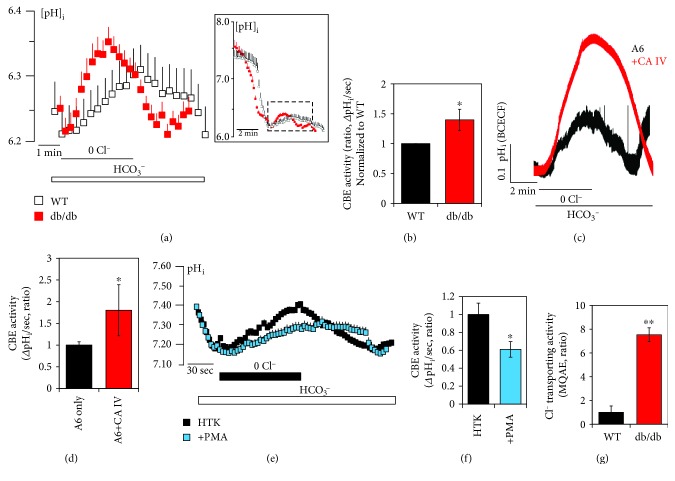
Diabetic heart dysfunctions during cardiac surgeries have revealed several clinical problems associated with ion imbalance. However, the mechanism of ion imbalance mediated by cardioplegia and a diabetic heart is largely unclear. We hypothesized that ion transporters might be regulated differently in the diabetic heart and that the differentially regulated ion transporters may involve in ion imbalance of the diabetic heart after cardioplegic arrest. In this study, we modified the Langendorff-free cardioplegia method and identified the involved ion transporters after cardioplegia-induced arrest between wild type and db/db heart. Enhanced expression of Na-K-2Cl cotransporter 1 (NKCC1) was observed in the db/db heart compared to the wild type heart. Enhanced NKCC1 activity was observed in the left ventricle of db/db mice compared to that of wild type after cardioplegia-induced arrest. The expression and activity of Slc26a6, a dominant Cl/HCO exchanger in cardiac tissues, were enhanced in left ventricle strips of db/db mice compared to that of wild type. The Cl transporting activity in left ventricle strips of db/db mice was dramatically increased as compared to that of wild type. Interestingly, expression of Slc26a6, as well as carbonic anhydrase IV as a supportive enzyme of Slc26a6, was increased in db/db cardiac strips compared to wild type cardiac strips. Thus, the enhanced Cl transporting activity and expression by NKCC1 and Slc26a6 in db/db cardiac tissues after cardioplegia-induced arrest provide greater insight into enhanced acidosis and Cl movement-mediated db/db heart dysfunction. Thus, we suggested that enhanced Cl influx and HCO efflux through NKCC1 and Slc26a6 offer more acidic circumstances in the diabetic heart after cardioplegic arrest. These transporters should be considered as potential therapeutic targets to develop the next generation of cardioplegia solution for protection against ischemia-reperfusion injury in diabetic hearts.
糖尿病患者心脏手术中心律失常的发生与离子失衡有关。然而,心脏停搏时,细胞内离子失衡的机制尚不清楚。我们假设在糖尿病心脏中,离子转运体可能受到不同的调节,并且这些受调节的离子转运体可能与心脏停搏后糖尿病心脏的离子失衡有关。在这项研究中,我们修改了 Langendorff 无心脏停搏心脏灌流方法,并确定了在心脏停搏后,野生型和 db/db 心脏之间不同的离子转运体。与野生型心脏相比,db/db 心脏中钠-钾-2 氯共转运蛋白 1(NKCC1)的表达增强。与野生型相比,db/db 小鼠心脏停搏后,左心室 NKCC1 活性增强。与野生型相比,心脏组织中主要的 Cl/HCO 交换体 Slc26a6 的表达和活性在 db/db 小鼠的左心室条带中增强。与野生型相比,db/db 小鼠左心室条带的 Cl 转运活性显著增加。有趣的是,与野生型心脏条带相比,db/db 心脏条带中 Slc26a6 的表达以及作为 Slc26a6 辅助酶的碳酸酐酶 IV 增加。因此,在心脏停搏后,db/db 心脏组织中 NKCC1 和 Slc26a6 的增强 Cl 转运活性和表达为增强的酸中毒和 Cl 移动介导的 db/db 心脏功能障碍提供了更深入的了解。因此,我们认为 NKCC1 和 Slc26a6 增强的 Cl 内流和 HCO 3 -外流为心脏停搏后糖尿病心脏提供了更酸性的环境。这些转运体应该被视为潜在的治疗靶点,以开发新一代心脏停搏液,用于保护糖尿病心脏免受缺血再灌注损伤。