Department of Neuroscience, Physiology & Pharmacology, UCL, London, United Kingdom.
Department of Biology, Faculty of Sciences, University of A Coruña, A Coruña, Spain.
Elife. 2019 Oct 8;8:e48114. doi: 10.7554/eLife.48114.
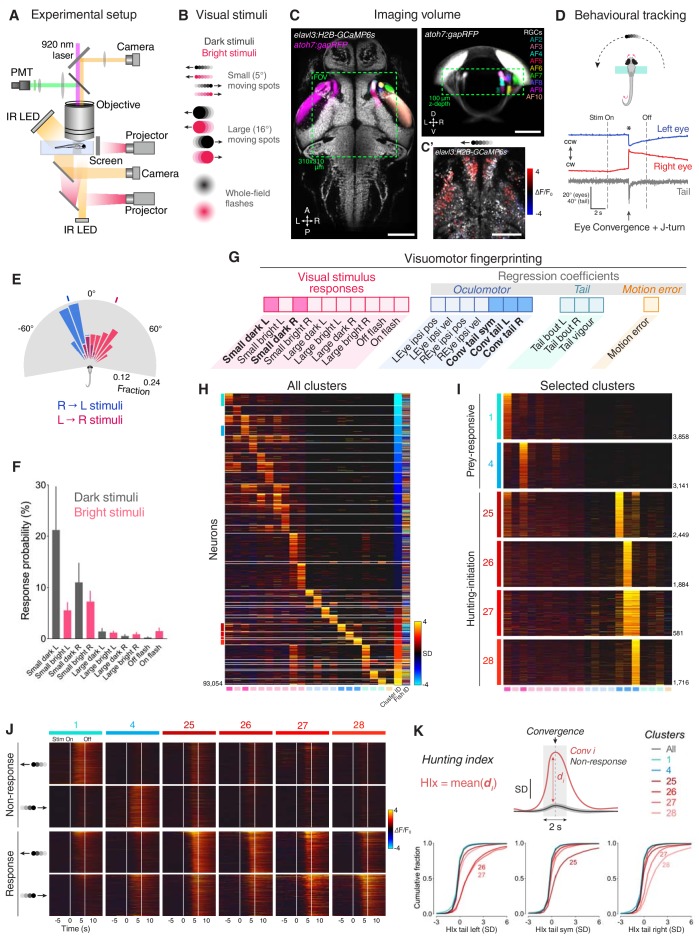
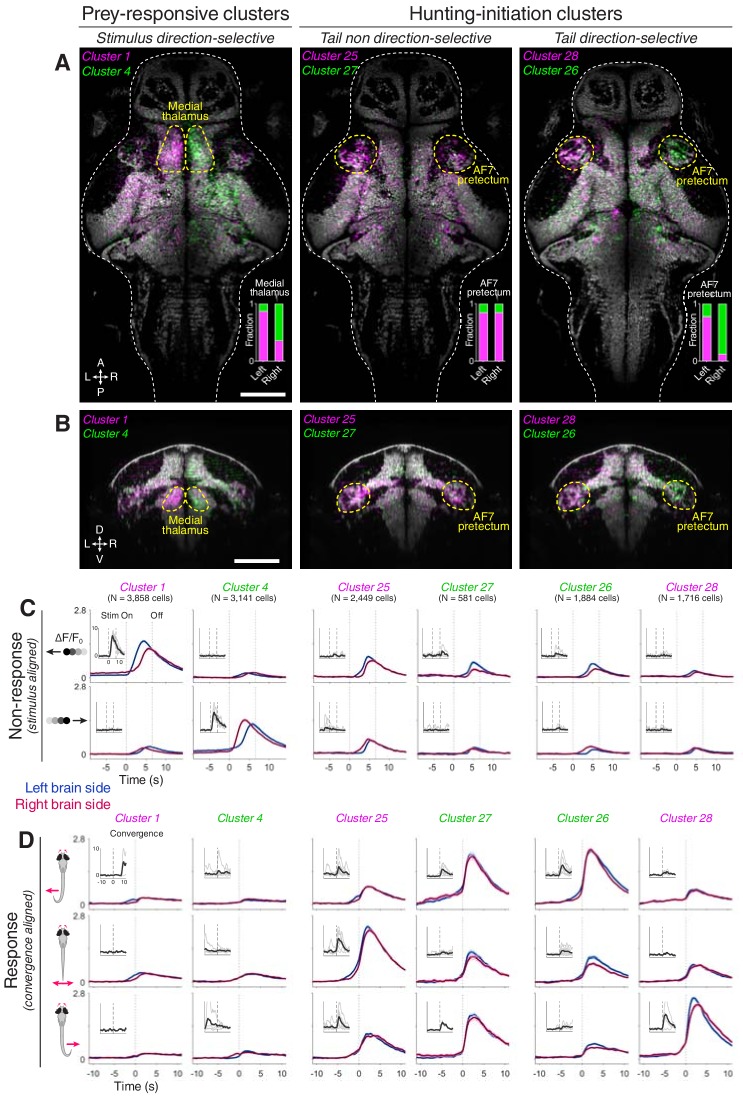
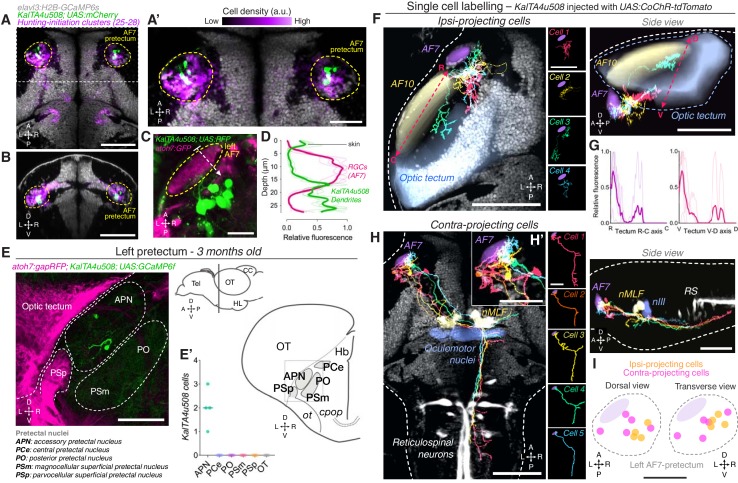
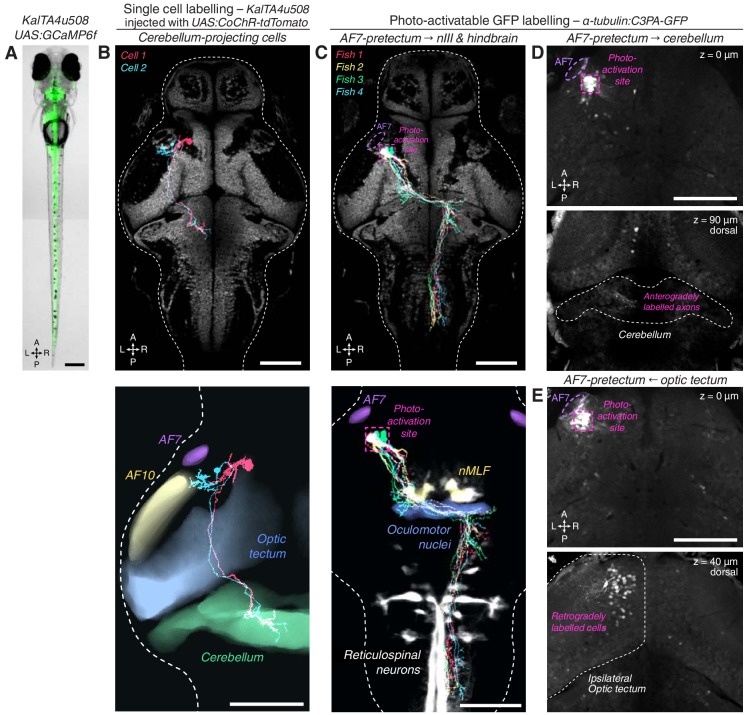
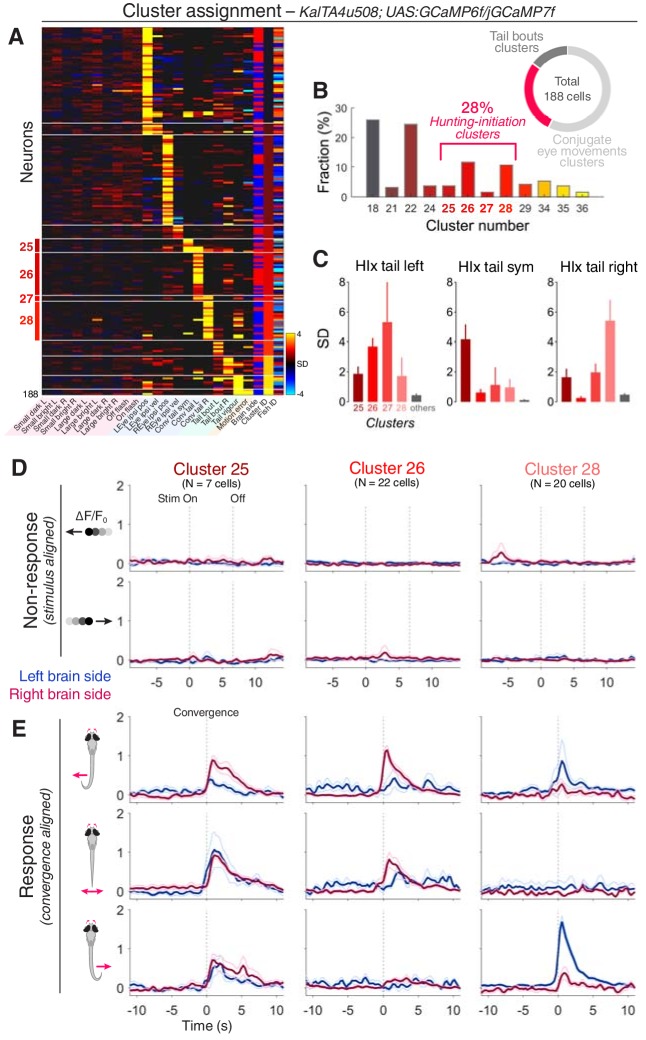
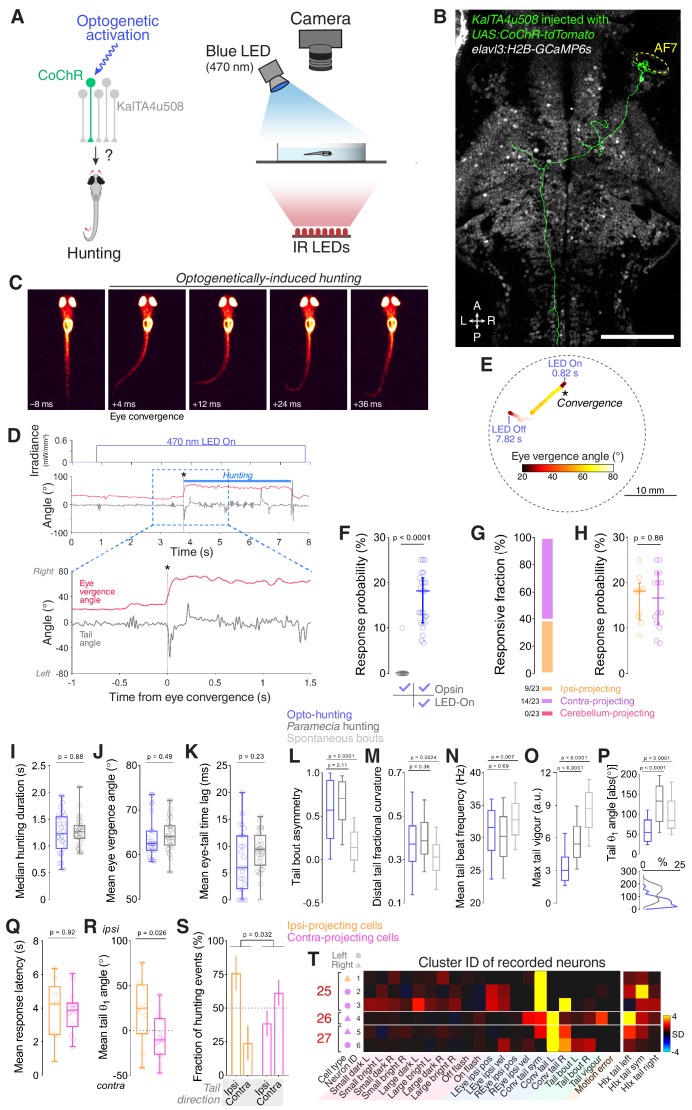
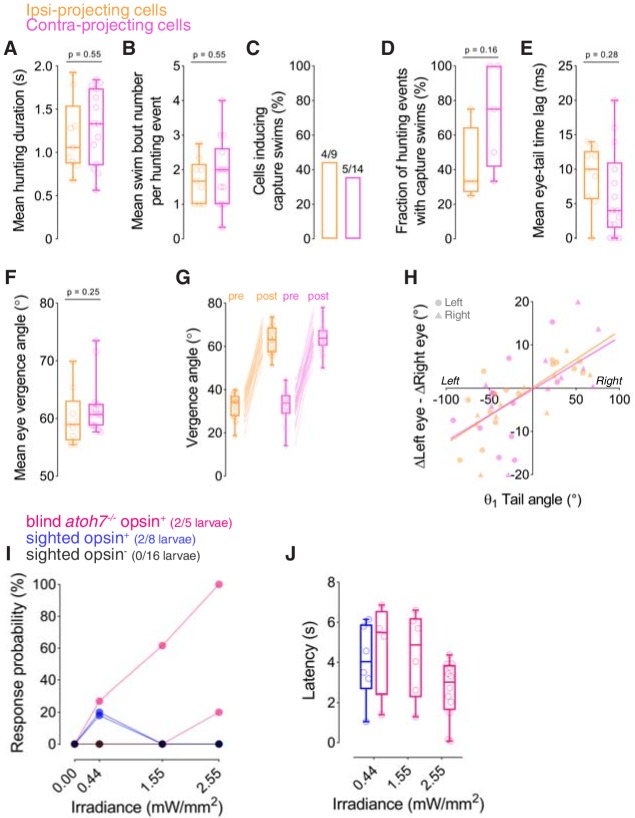
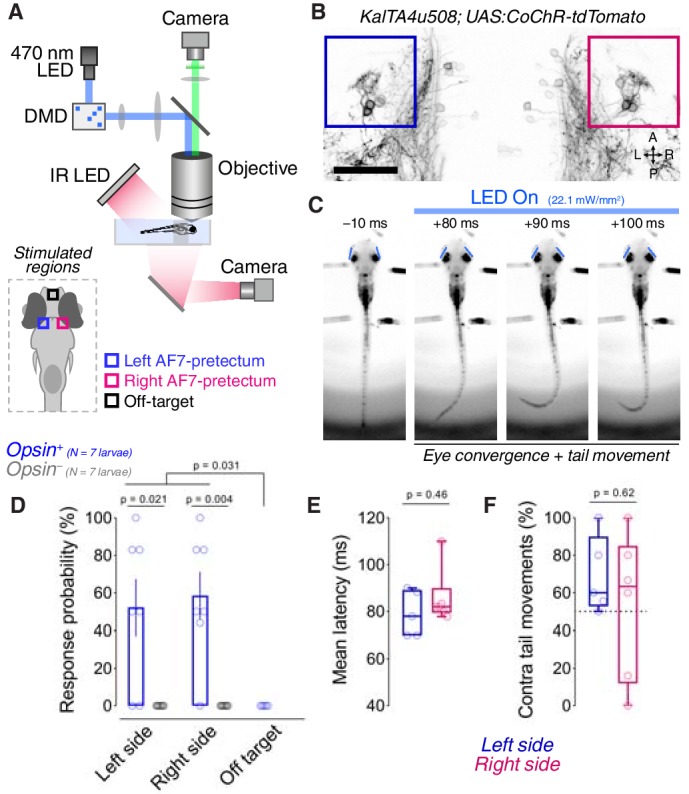
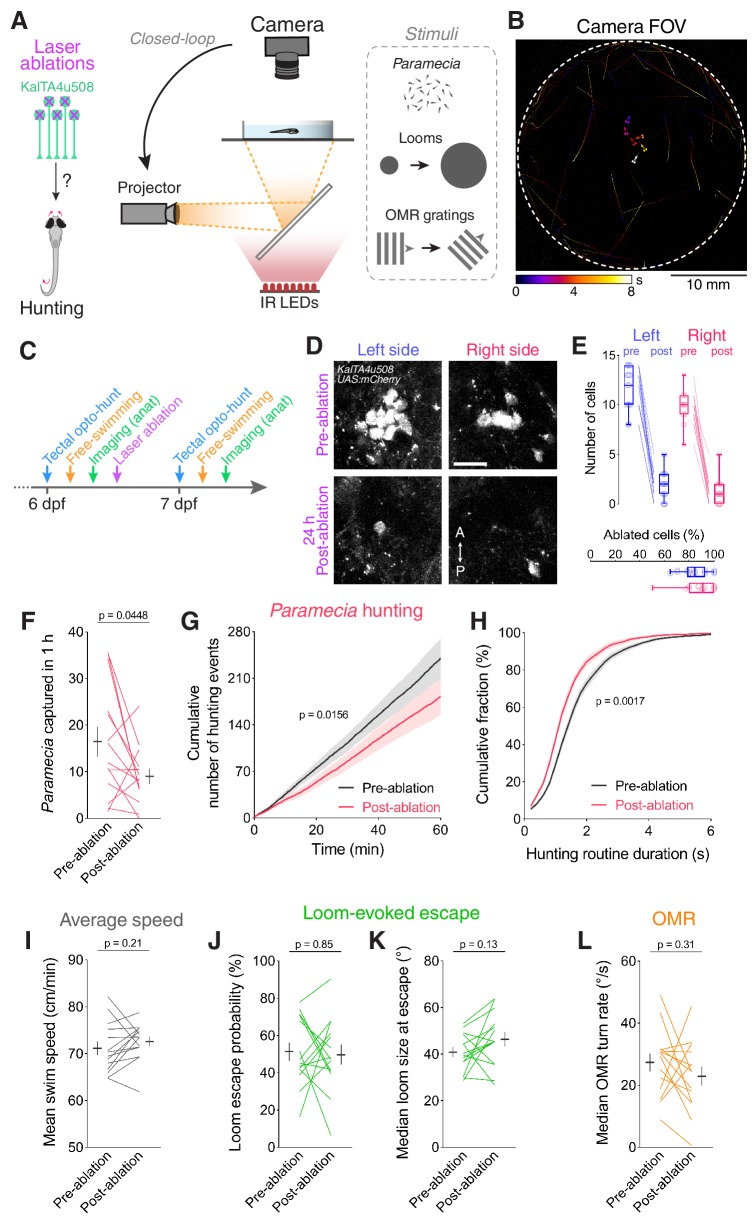
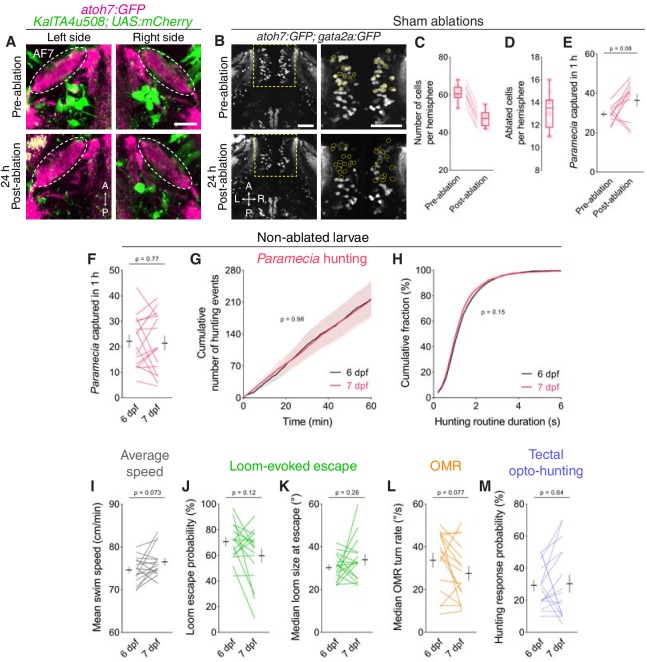
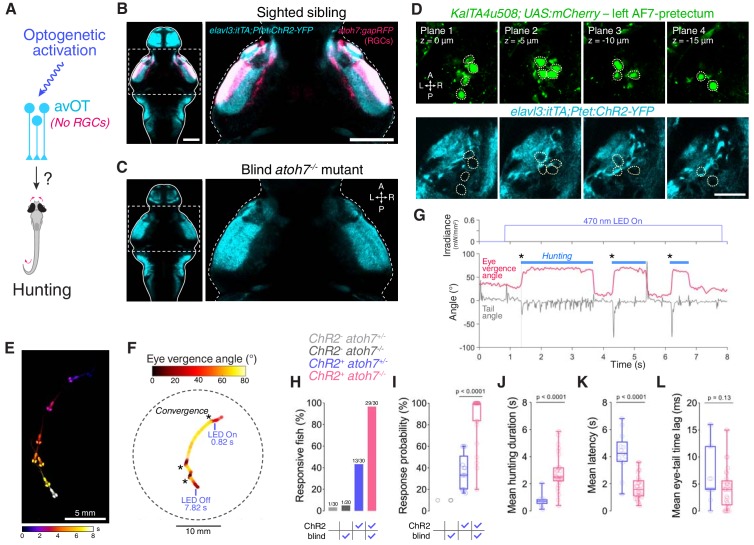
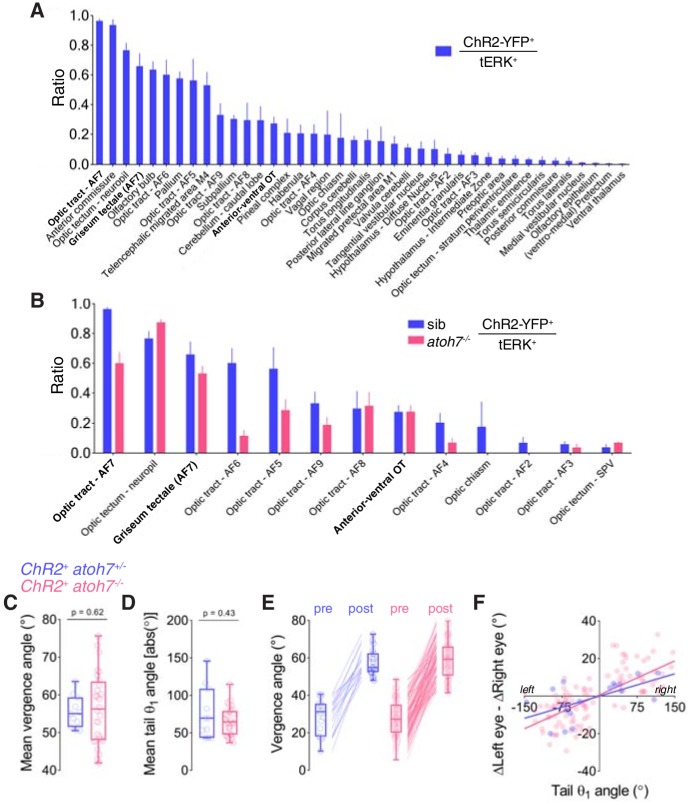
For many species, hunting is an innate behaviour that is crucial for survival, yet the circuits that control predatory action sequences are poorly understood. We used larval zebrafish to identify a population of pretectal neurons that control hunting. By combining calcium imaging with a virtual hunting assay, we identified a discrete pretectal region that is selectively active when animals initiate hunting. Targeted genetic labelling allowed us to examine the function and morphology of individual cells and identify two classes of pretectal neuron that project to ipsilateral optic tectum or the contralateral tegmentum. Optogenetic stimulation of single neurons of either class was able to induce sustained hunting sequences, in the absence of prey. Furthermore, laser ablation of these neurons impaired prey-catching and prevented induction of hunting by optogenetic stimulation of the anterior-ventral tectum. We propose that this specific population of pretectal neurons functions as a command system to induce predatory behaviour.
对于许多物种来说,捕猎是一种与生俱来的行为,对其生存至关重要,但控制捕食动作序列的回路却知之甚少。我们利用幼体斑马鱼来鉴定控制捕猎的顶盖神经元群体。通过钙成像与虚拟捕猎检测相结合,我们鉴定出一个在动物开始捕猎时会选择性激活的离散顶盖区域。靶向基因标记使我们能够检查单个细胞的功能和形态,并鉴定出两类投射到同侧视顶盖或对侧脑桥的顶盖神经元。光遗传刺激任一类的单个神经元都能够在没有猎物的情况下诱导持续的捕猎序列。此外,这些神经元的激光消融会损害捕食能力,并阻止前腹侧视顶盖的光遗传刺激诱导捕猎。我们提出,这个特定的顶盖神经元群体作为一个指挥系统来诱导捕食行为。