Julius Center for Health Sciences and Primary Care, University Medical Center Utrecht, Utrecht University, Utrecht, The Netherlands.
Department of Neurobiology, Care Sciences and Society, Karolinska Institutet, Stockholm, Sweden.
Acta Physiol (Oxf). 2020 Jun;229(2):e13400. doi: 10.1111/apha.13400. Epub 2019 Oct 31.
Loss of skeletal muscle mass is a common clinical finding in cancer patients. The purpose of this meta-analysis and systematic review was to quantify the effect of doxorubicin on skeletal muscle and report on the proposed molecular pathways possibly leading to doxorubicin-induced muscle atrophy in both human and animal models.
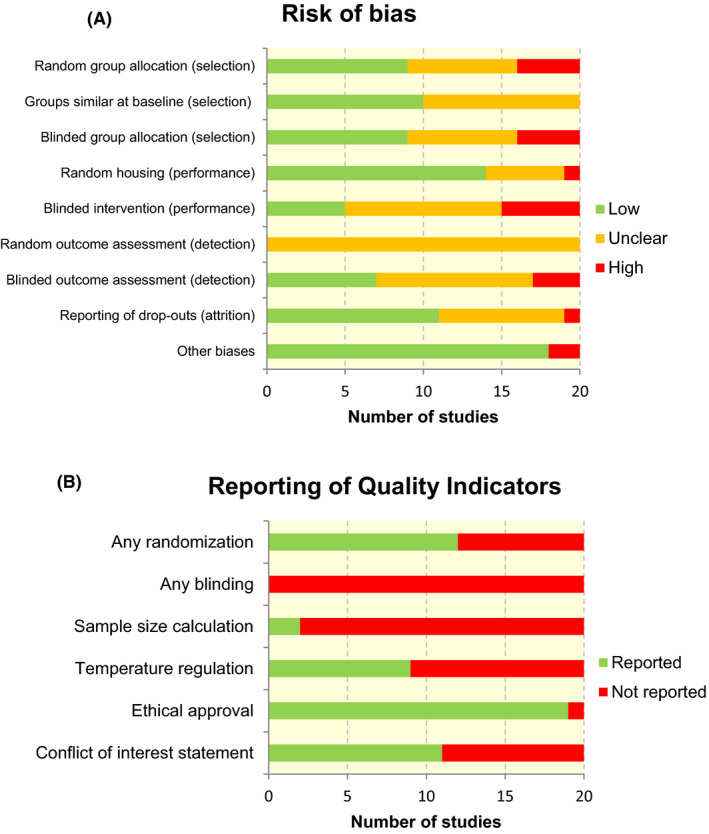
A systematic search of the literature was conducted in PubMed, EMBASE, Web of Science and CENTRAL databases. The internal validity of included studies was assessed using SYRCLE's risk of bias tool.
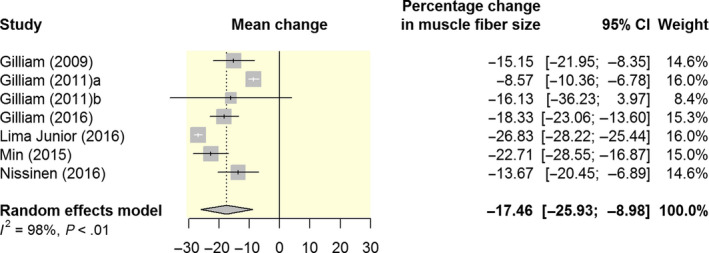
Twenty eligible articles were identified. No human studies were identified as being eligible for inclusion. Doxorubicin significantly reduced skeletal muscle weight (ie EDL, TA, gastrocnemius and soleus) by 14% (95% CI: 9.9; 19.3) and muscle fibre cross-sectional area by 17% (95% CI: 9.0; 26.0) when compared to vehicle controls. Parallel to negative changes in muscle mass, muscle strength was even more decreased in response to doxorubicin administration. This review suggests that mitochondrial dysfunction plays a central role in doxorubicin-induced skeletal muscle atrophy. The increased production of ROS plays a key role within this process. Furthermore, doxorubicin activated all major proteolytic systems (ie calpains, the ubiquitin-proteasome pathway and autophagy) in the skeletal muscle. Although each of these proteolytic pathways contributes to doxorubicin-induced muscle atrophy, the activation of the ubiquitin-proteasome pathway is hypothesized to play a key role. Finally, a limited number of studies found that doxorubicin decreases protein synthesis by a disruption in the insulin signalling pathway.
The results of the meta-analysis show that doxorubicin induces skeletal muscle atrophy in preclinical models. This effect may be explained by various interacting molecular pathways. Results from preclinical studies provide a robust setting to investigate a possible dose-response, separate the effects of doxorubicin from tumour-induced atrophy and to examine underlying molecular pathways. More research is needed to confirm the proposed signalling pathways in humans, paving the way for potential therapeutic approaches.
骨骼肌减少是癌症患者的常见临床发现。本荟萃分析和系统综述的目的是量化多柔比星对骨骼肌的影响,并报告在人类和动物模型中可能导致多柔比星诱导肌肉萎缩的提议分子途径。
在 PubMed、EMBASE、Web of Science 和 CENTRAL 数据库中进行了系统文献检索。使用 SYRCLE 的偏倚风险工具评估纳入研究的内部有效性。
确定了 20 篇符合条件的文章。未发现符合纳入条件的人类研究。与载体对照相比,多柔比星使骨骼肌重量(即 EDL、TA、腓肠肌和比目鱼肌)显著减少 14%(95%CI:9.9;19.3),肌纤维横截面积减少 17%(95%CI:9.0;26.0)。与肌肉质量的负变化平行,肌肉力量对多柔比星给药的反应甚至更为下降。本综述表明,线粒体功能障碍在多柔比星诱导的骨骼肌萎缩中起核心作用。ROS 的增加产生在这个过程中起着关键作用。此外,多柔比星激活了骨骼肌中的所有主要蛋白水解系统(即钙蛋白酶、泛素-蛋白酶体途径和自噬)。虽然这些蛋白水解途径中的每一种都有助于多柔比星诱导的肌肉萎缩,但激活泛素-蛋白酶体途径被假设起着关键作用。最后,少数研究发现多柔比星通过破坏胰岛素信号通路来减少蛋白质合成。
荟萃分析的结果表明,多柔比星在临床前模型中诱导骨骼肌萎缩。这种效应可能是由各种相互作用的分子途径解释的。临床前研究的结果为研究可能的剂量反应、将多柔比星的作用与肿瘤诱导的萎缩分开以及研究潜在的分子途径提供了一个强大的环境。需要更多的研究来证实人类中提出的信号通路,为潜在的治疗方法铺平道路。