Öztürk A Alper, Yenilmez Evrim, Özarda Mustafa Güçlü
Department of Pharmaceutical Technology, Faculty of Pharmacy, Anadolu University, 26470 Eskişehir, Turkey.
Department of Pharmaceutical Microbiology, Faculty of Pharmacy, Anadolu University, 26470 Eskişehir, Turkey.
Polymers (Basel). 2019 Oct 9;11(10):1632. doi: 10.3390/polym11101632.
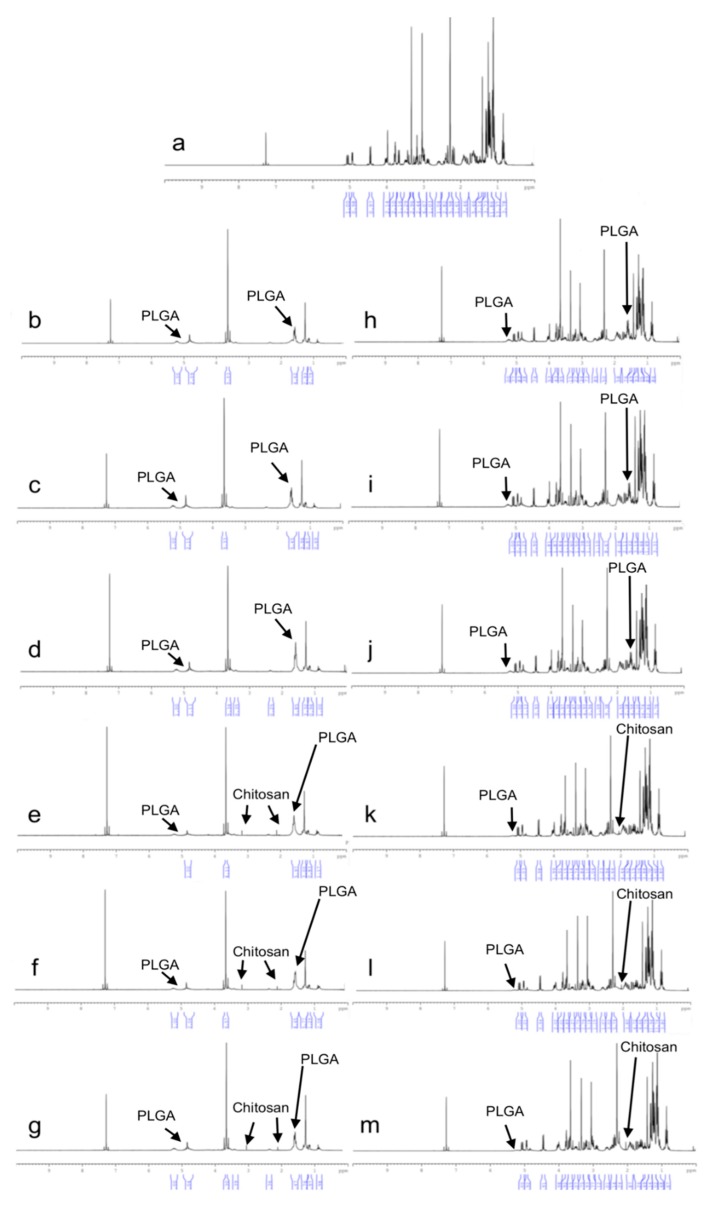
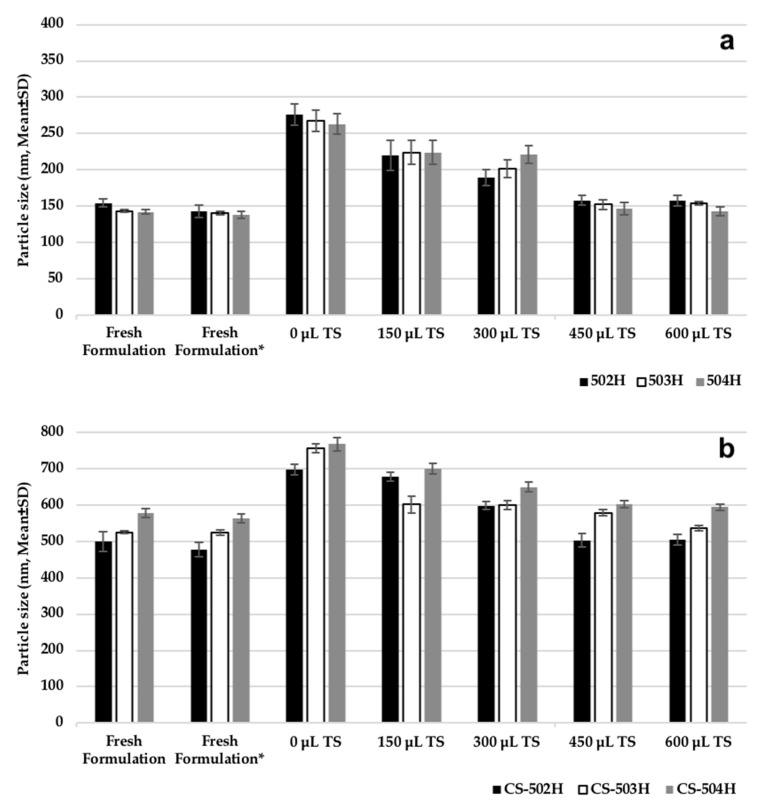
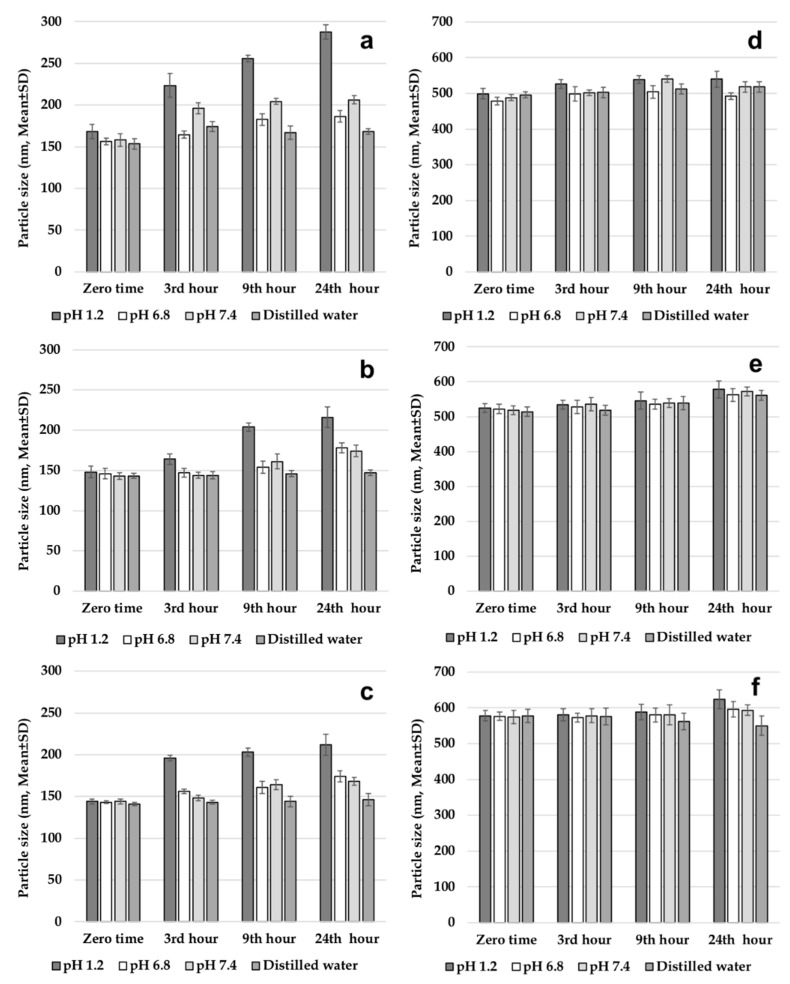
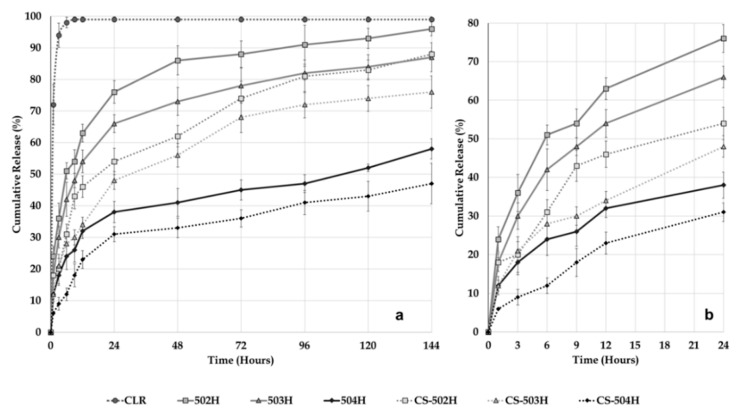
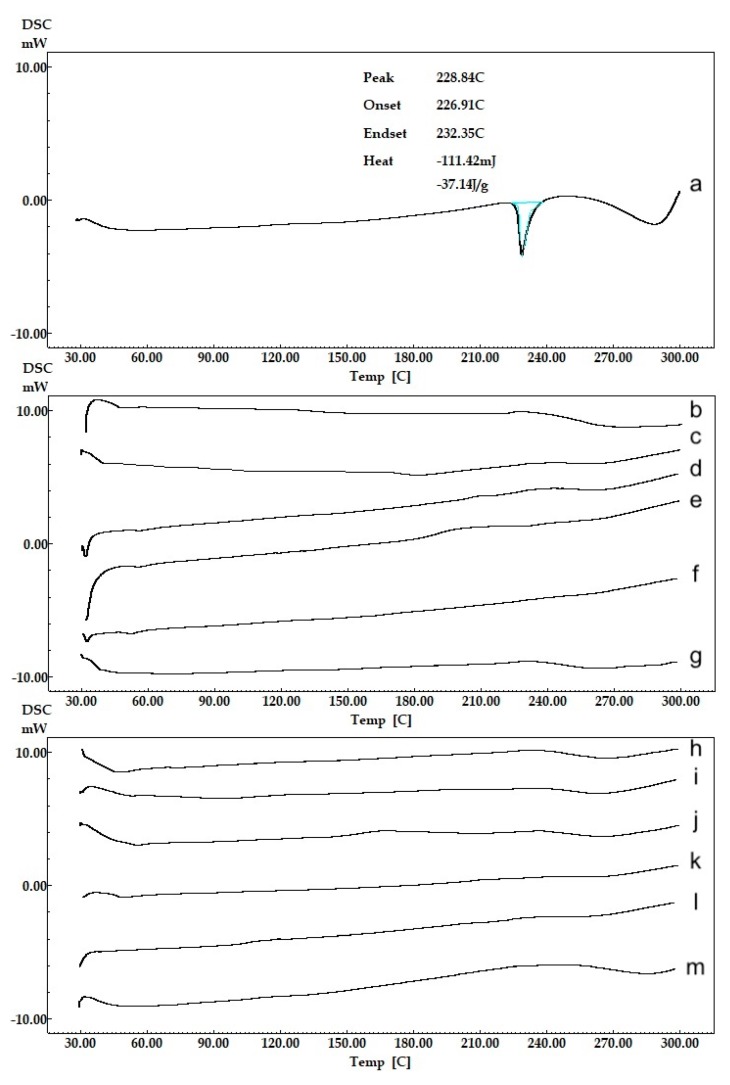
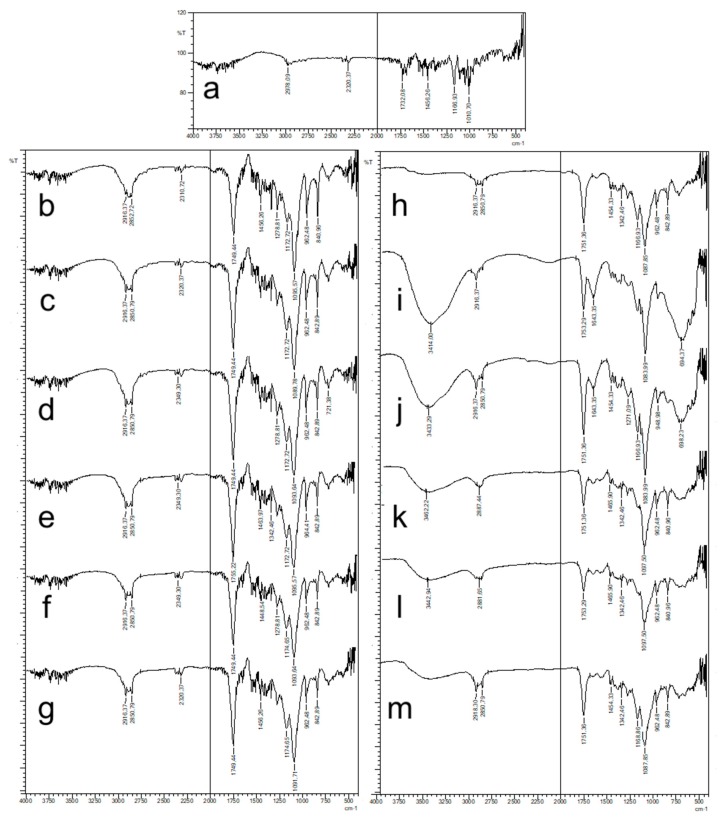
Clarithromycin (CLR) is a member of the macrolide antibiotic group. CLR has low systemic oral bioavailability and is a drug of class II of the Biopharmaceutical Classification System. In many studies, using nanoparticles (NPs) as a drug delivery system has been shown to increase the effectiveness and bioavailability of active drug substances. This study describes the development and evaluation of poly (lactic--glycolic acid) (PLGA) NPs and chitosan (CS)-coated PLGA NPs for oral delivery of CLR. NPs were obtained by nanoprecipitation technique and characterized in detail, and the effect of three molecular weights (M: 7.000-17.000, M: 38.000-54.000, M: 50.000-190.000) of PLGA and CS coating on particle size (PS), zeta potential (ZP), entrapment efficiency (EE%), and release properties etc. were elucidated. Gastrointestinal stability and cryoprotectant effect tests were performed on the NPs. The PS of the prepared NPs were in the range of 178 to 578 nm and they were affected by the M and CS coating. In surface-modified formulations with CS, the ZP of the NPs increased significantly to positive values. EE% varied from 62% to 85%, depending upon the M and CS coating. release studies of CLR-loaded NPs showed an extended release up to 144 h. Peppas-Sahlin and Weibull kinetic model was found to fit best for CLR release from NPs. By the broth microdilution test method, the antibacterial activity of the formulations was determined on (ATCC 25923), (ATCC 1911), and (ATCC 700603). The structures of the formulations were clarified by thermal (DSC), FT-IR, and H-NMR analysis. The results showed that PS, ZP, EE%, and dissolution rates of NPs were directly related to the M of PLGA and CS coating.
克拉霉素(CLR)是大环内酯类抗生素的一种。CLR的口服全身生物利用度较低,属于生物药剂学分类系统中的II类药物。在许多研究中,使用纳米颗粒(NPs)作为药物递送系统已被证明可提高活性药物成分的有效性和生物利用度。本研究描述了用于口服递送CLR的聚(乳酸-乙醇酸)(PLGA)纳米颗粒和壳聚糖(CS)包被的PLGA纳米颗粒的研制与评价。通过纳米沉淀技术获得纳米颗粒并进行详细表征,阐明了三种分子量(M:7000 - 17000、M:38000 - 54000、M:50000 - 19000)的PLGA和CS包被对粒径(PS)、zeta电位(ZP)、包封率(EE%)和释放特性等的影响。对纳米颗粒进行了胃肠道稳定性和冷冻保护作用测试。所制备纳米颗粒的PS在178至578 nm范围内,且受分子量和CS包被的影响。在CS表面改性制剂中,纳米颗粒的ZP显著增加至正值。EE%在62%至85%之间变化,取决于分子量和CS包被。载有CLR的纳米颗粒的释放研究显示其释放可延长至144小时。发现Peppas - Sahlin和Weibull动力学模型最适合纳米颗粒中CLR的释放。通过肉汤微量稀释试验方法,测定了制剂对金黄色葡萄球菌(ATCC 25923)、表皮葡萄球菌(ATCC 1911)和大肠杆菌(ATCC 700603)的抗菌活性。通过热分析(DSC)、傅里叶变换红外光谱(FT - IR)和氢核磁共振(H - NMR)分析阐明了制剂的结构。结果表明,纳米颗粒的PS、ZP、EE%和溶解速率与PLGA的分子量和CS包被直接相关。