Durmaz Eser, Ikitimur Baris, Kilickiran Avci Burcak, Atıcı Adem, Yurtseven Ece, Tokdil Hasan, Ebren Cansu, Polat Fuat, Karaca Orhan, Karadag Bilgehan, Ongen Zeki
Cardiology Department, Cerrahpasa School of Medicine, Istanbul University-Cerrahpasa, Istanbul, Turkey.
Cardiology Department, Goztepe Research and Training Hospital, Istabul, Turkey.
Ann Noninvasive Electrocardiol. 2020 May;25(3):e12718. doi: 10.1111/anec.12718. Epub 2019 Oct 11.
Although previous studies reported frequent premature atrial contractions(fPACs) increased the risk of adverse cardiovascular outcomes, especially atrial fibrillation(AF), there is a substantial inconsistency between reports concerning the definition of fPAC. In this study, we aimed to investigate the relationship between fPAC and cardiovascular outcomes, especially AF. We further searched for a cutoff value of fPAC for prediction of AF.
We retrospectively analyzed the ambulatory 24-hr Holter monitoring records and 392 patients included. Frequent PAC was defined as more than 720 PAC/24 hr as used for frequent ventricular premature beats. Patients' baseline characteristics, echocardiographic variables and medical history were recorded.
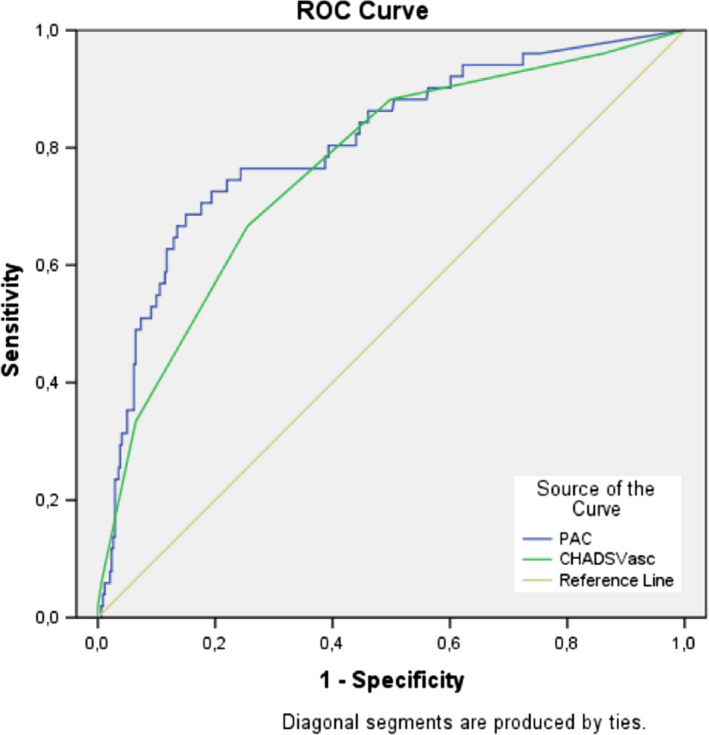
There were 189 patients with fPAC and 203 patients without fPAC. Patients with fPAC had more comorbidities in terms of hypertension, diabetes mellitus, coronary artery disease and congestive heart failure. CHA2DS2-VaSc was higher in patients with fPAC. Mean follow-up duration was 31 months, and the number of patients with new-onset AF during follow-up was significantly higher in fPAC group (22% vs. 5%, p < .001). fPAC was significantly and independently associated with new-onset AF and predicted AF with a cutoff value of 3,459 PAC/24 hr, and the risk of AF was 11-fold higher than those with <3,000 PAC/24 hr. In addition, an increased CHA2DS2-VaSc score was also associated with new-onset atrial fibrillation.
In our study, we have demonstrated that fPAC is significantly associated with new-onset AF, and this association is the strongest among those patients who have more than 3,000 PAC in 24 hr.
尽管先前的研究报告称频发房性早搏(fPACs)会增加不良心血管事件的风险,尤其是房颤(AF),但关于fPAC定义的报告之间存在很大差异。在本研究中,我们旨在调查fPAC与心血管结局,尤其是房颤之间的关系。我们进一步寻找用于预测房颤的fPAC临界值。
我们回顾性分析了392例患者的24小时动态心电图监测记录。频发房性早搏的定义与频发室性早搏相同,即超过720次房性早搏/24小时。记录患者的基线特征、超声心动图变量和病史。
有189例患者存在fPAC,203例患者无fPAC。存在fPAC的患者在高血压、糖尿病、冠状动脉疾病和充血性心力衰竭方面有更多的合并症。存在fPAC的患者CHA2DS2-VaSc评分更高。平均随访时间为31个月,随访期间新发房颤的患者数量在fPAC组显著更高(22%对5%,p<0.001)。fPAC与新发房颤显著且独立相关,预测房颤的临界值为3459次房性早搏/24小时,房颤风险比房性早搏<3000次/24小时的患者高11倍。此外,CHA2DS2-VaSc评分升高也与新发房颤相关。
在我们的研究中,我们证明了fPAC与新发房颤显著相关,并且这种关联在24小时内房性早搏超过3000次的患者中最为强烈。