University of New Mexico, Albuquerque, NM, USA.
Department of Clinical Chemistry, Center for Thrombosis and Hemostasis, SUS Malmö, Malmö, Sweden.
Eur J Haematol. 2020 Jan;104(1):3-14. doi: 10.1111/ejh.13339. Epub 2019 Nov 13.
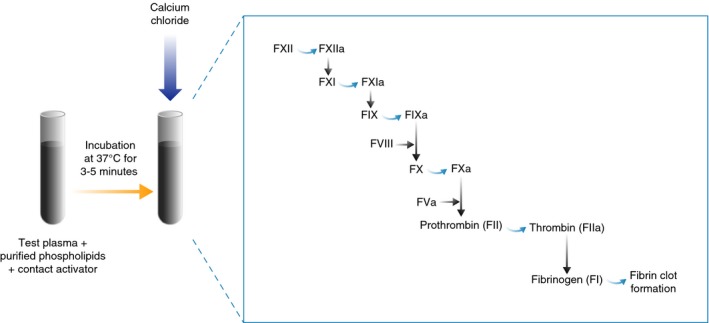
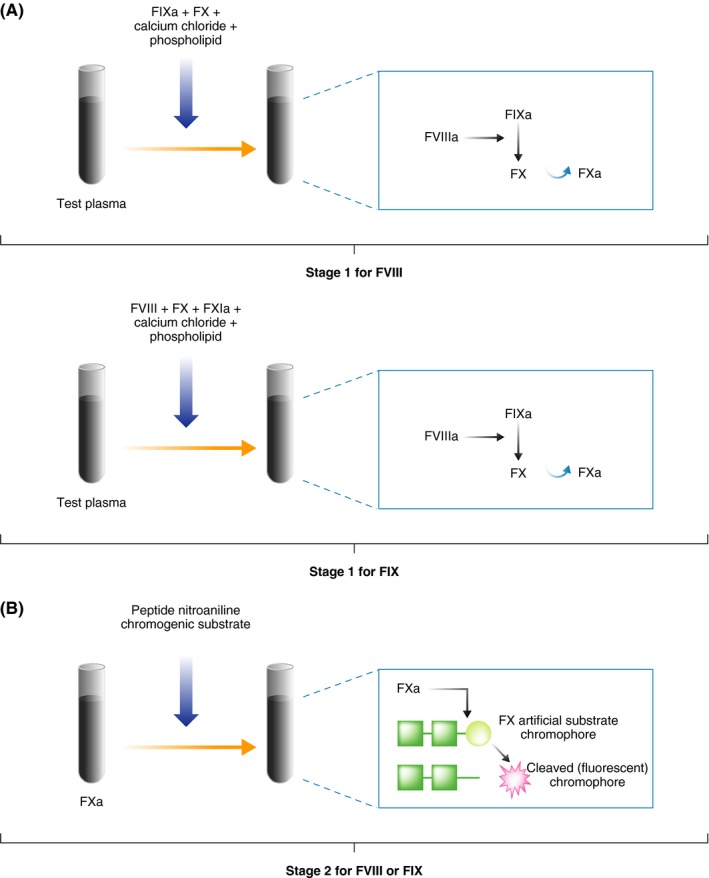
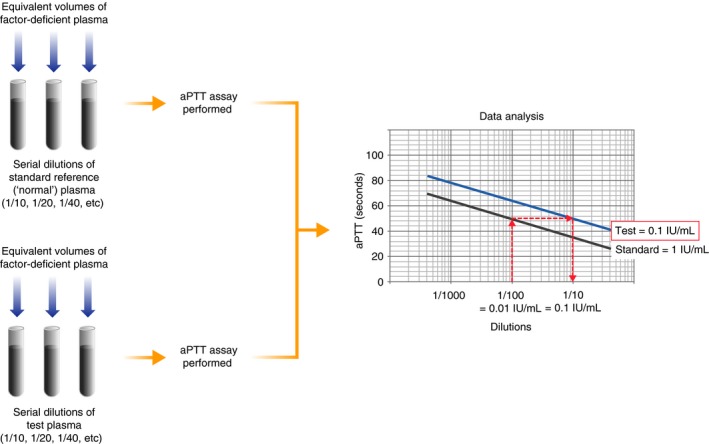
Treatment of haemophilia A/B patients comprises factor VIII (FVIII) or factor IX (FIX) concentrate replacement therapy, respectively. FVIII and FIX activity levels can be measured in clinical laboratories using one-stage activated partial thromboplastin time (aPTT)-based clotting or two-stage chromogenic factor activity assays. We discuss strengths and limitations of these assays, providing examples of clinical scenarios to highlight some of the challenges associated with their current use for diagnostic and monitoring purposes. Substantial inter-laboratory variability has been reported for one-stage assays when measuring the activity of factor replacement products due to the wide range of currently available aPTT reagents, calibration standards, factor-deficient plasmas, assay conditions and instruments. Chromogenic activity assays may avoid some limitations associated with one-stage assays, but their regulatory status, perceived higher cost, and lack of laboratory expertise may influence their use. Haemophilia management guidelines recommend the differential application of one or both assays for initial diagnosis and disease severity characterisation, post-infusion monitoring and replacement factor potency labelling. Efficient communication between clinical and laboratory staff is crucial to ensure application of the most appropriate assay to each clinical situation, correct interpretation of assay results and, ultimately, accurate diagnosis and optimal and safe treatment of haemophilia A or B patients.
A/B 型血友病患者的治疗包括分别使用凝血因子 VIII(FVIII)或凝血因子 IX(FIX)浓缩物替代疗法。FVIII 和 FIX 的活性水平可在临床实验室使用基于一期激活部分凝血活酶时间(aPTT)的凝固或二期显色因子活性测定法进行测量。我们讨论了这些测定法的优缺点,并提供了一些临床情况的例子,以突出当前用于诊断和监测目的时与它们的使用相关的一些挑战。由于目前可用的 aPTT 试剂、校准标准、因子缺乏的血浆、测定条件和仪器种类繁多,因此在测量因子替代产品的活性时,一期测定法的实验室间差异很大。显色活性测定法可能会避免一些与一期测定法相关的限制,但它们的监管状态、被认为的更高成本以及缺乏实验室专业知识可能会影响其使用。血友病管理指南建议在初始诊断和疾病严重程度特征描述、输注后监测和替代因子效价标记方面,分别应用一种或两种测定法。临床和实验室工作人员之间的有效沟通对于确保将最合适的测定法应用于每种临床情况、正确解释测定结果以及最终实现血友病 A 或 B 患者的准确诊断和最佳、安全治疗至关重要。