Sundar Uma Mahgesswary, Ugusman Azizah, Chua Hui Kien, Latip Jalifah, Aminuddin Amilia
Department of Physiology, Faculty of Medicine, Universiti Kebangsaan Malaysia Medical Centre, Kuala Lumpur, Malaysia.
Department of Pharmaceutical Chemistry, School of Chemical Sciences & Food Technology, Faculty of Science and Technology, Universiti Kebangsaan Malaysia, Bangi, Malaysia.
Front Pharmacol. 2019 Sep 17;10:1033. doi: 10.3389/fphar.2019.01033. eCollection 2019.
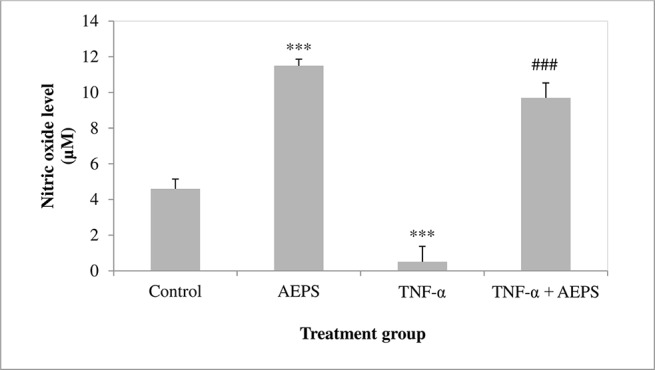
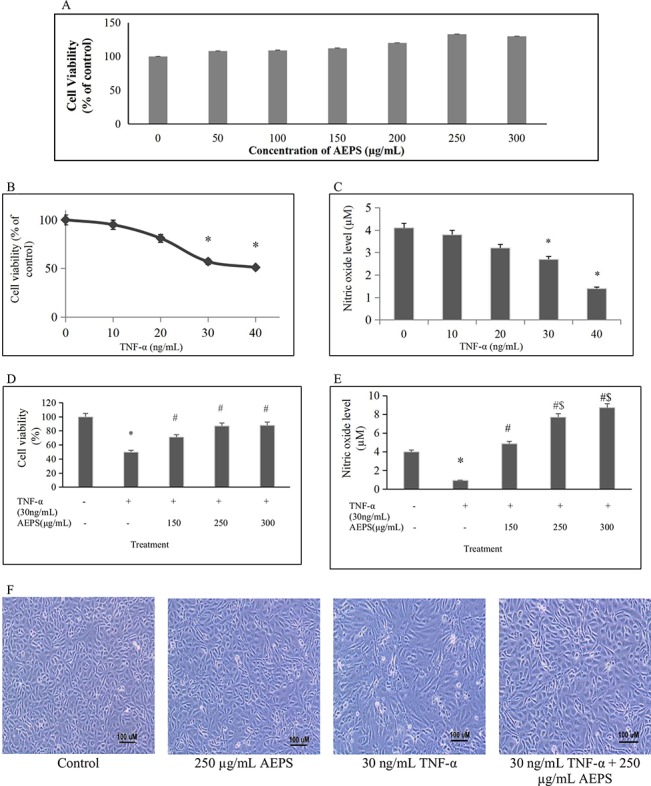
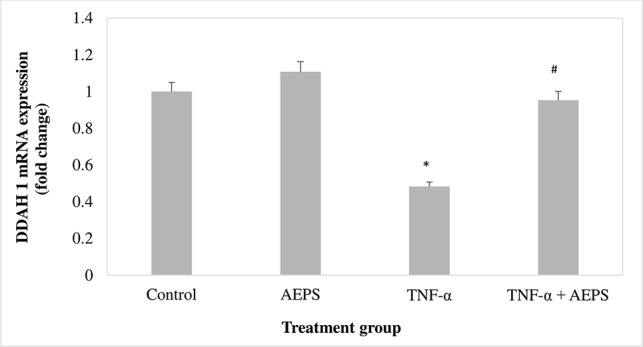
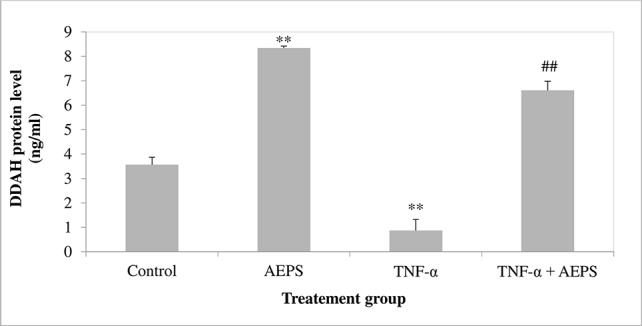
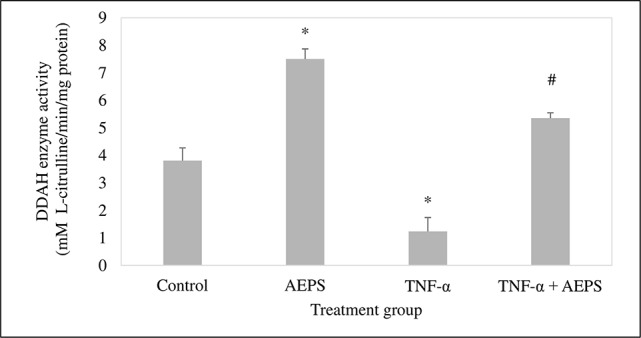
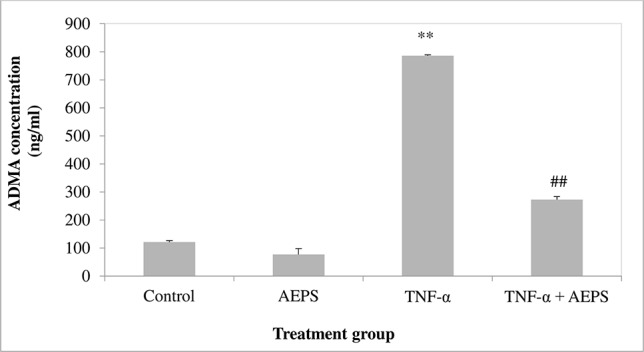
Asymmetric dimethylarginine (ADMA) is an endogenous inhibitor of endothelial nitric oxide synthase (eNOS). ADMA is degraded by dimethylarginine dimethylaminohydrolase (DDAH). Elevated levels of ADMA lead to reduction in nitric oxide (NO) production, which is linked to endothelial dysfunction and atherosclerosis. is an herb that has shown stimulation on endothelial NO production by increasing both expression and activity of eNOS. Thus, this study determined whether the positive effect of on NO production is related to its modulation on the DDAH-ADMA pathway in cultured human umbilical vein endothelial cells (HUVEC) exposed to tumor necrosis factor-α (TNF-α). HUVEC were divided into four groups: control, treatment with 250 µg/ml of aqueous extract of leaves (AEPS), treatment with 30 ng/ml of TNF-α, and concomitant treatment with AEPS and TNF-α for 24 h. After treatments, HUVEC were collected to measure messenger RNA (mRNA) expression using quantitative real-time polymerase chain reaction. DDAH1 protein level was measured using enzyme-linked immunosorbent assay (ELISA), and DDAH enzyme activity was measured using colorimetric assay. ADMA concentration was measured using ELISA, and NO level was measured using Griess assay. Compared to control, TNF-α-treated HUVEC showed reduction in mRNA expression ( < 0.05), DDAH1 protein level ( < 0.01), and DDAH activity ( < 0.05). Treatment with AEPS successfully increased mRNA expression ( < 0.05), DDAH1 protein level ( < 0.01), and DDAH activity ( < 0.05) in TNF-α-treated HUVEC. Treatment with TNF-α caused an increase in ADMA level ( < 0.01) and a decrease in endothelial NO production ( < 0.001). Whereas treatment with AEPS was able to reduce ADMA level ( < 0.01) and restore NO ( < 0.001) in TNF-α-treated HUVEC. The results suggested that AEPS promotes endothelial NO production by stimulating DDAH activity and thus reducing ADMA level in TNF-α-treated HUVEC.
不对称二甲基精氨酸(ADMA)是内皮型一氧化氮合酶(eNOS)的内源性抑制剂。ADMA由二甲基精氨酸二甲胺水解酶(DDAH)降解。ADMA水平升高会导致一氧化氮(NO)生成减少,这与内皮功能障碍和动脉粥样硬化有关。[某种草药名称]是一种已显示出通过增加eNOS的表达和活性来刺激内皮NO生成的草药。因此,本研究确定了[某种草药名称]对NO生成的积极作用是否与其对暴露于肿瘤坏死因子-α(TNF-α)的培养人脐静脉内皮细胞(HUVEC)中DDAH-ADMA途径的调节有关。将HUVEC分为四组:对照组、用250μg/ml的[某种草药名称]叶水提取物(AEPS)处理组、用30ng/ml TNF-α处理组以及AEPS和TNF-α联合处理24小时组。处理后,收集HUVEC,使用定量实时聚合酶链反应测量[相关基因名称]信使核糖核酸(mRNA)表达。使用酶联免疫吸附测定(ELISA)测量DDAH1蛋白水平,使用比色法测量DDAH酶活性。使用ELISA测量ADMA浓度,使用格里斯试剂法测量NO水平。与对照组相比,TNF-α处理的HUVEC显示[相关基因名称]mRNA表达降低(P<(此处原文缺失比较值)0.05)、DDAH1蛋白水平降低(P<(此处原文缺失比较值)0.01)和DDAH活性降低(P<(此处原文缺失比较值)0.05)。在TNF-α处理的HUVEC中,用AEPS处理成功增加了[相关基因名称]mRNA表达(P<(此处原文缺失比较值)0.05)、DDAH-1蛋白水平(P<(此处原文缺失比较值)0.01)和DDAH活性(P<(此处原文缺失比较值)0.05)。用TNF-α处理导致ADMA水平升高(P<(此处原文缺失比较值)0.01)和内皮NO生成减少(P<(此处原文缺失比较值)0.001)。而用AEPS处理能够降低TNF-α处理的HUVEC中的ADMA水平(P<(此处原文缺失比较值)0.01)并恢复NO生成(P<(此处原文缺失比较值)0.001)。结果表明,AEPS通过刺激DDAH活性从而降低TNF-α处理的HUVEC中的ADMA水平来促进内皮NO生成。