Department of Infectious Diseases, Zhongnan Hospital of Wuhan University, Wuhan, China.
Wuhan Institute of Virology, Chinese Academy of Sciences, Wuhan, China.
Front Immunol. 2019 Sep 24;10:2308. doi: 10.3389/fimmu.2019.02308. eCollection 2019.
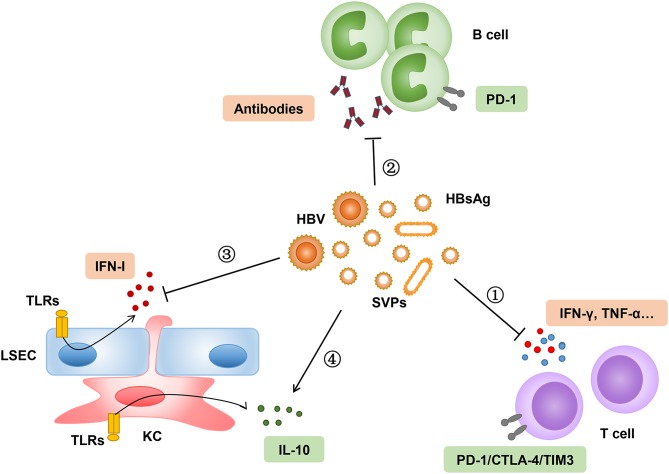
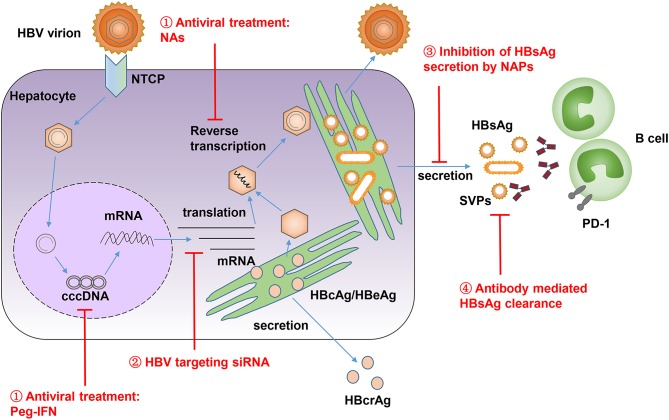
The central role of the cellular immune response in the control and clearance of the hepatitis B virus (HBV) infection has been well-established. The contribution of humoral immunity, including B cell and antibody responses against HBV, has been investigated for a long time but has attracted increasing attention again in recent years. The anti-HBs antibody was first recognized as a marker of protective immunity after the acute resolution of the HBV infection (or vaccination) and is now defined as a biomarker for the functional cure of chronic hepatitis B (CHB). In this way, therapies targeting HBV-specific B cells and the induction of an anti-HBs antibody response are essential elements of a rational strategy to terminate chronic HBV infection. However, a high load of HBsAg in the blood, which has been proposed to induce antigen-specific immune tolerance, represents a major obstacle to curing CHB. Long-term antiviral treatment by nucleoside analogs, by targeting viral translation by siRNA, by inhibiting HBsAg release via nucleic acid polymers, or by neutralizing HBsAg via specific antibodies could potentially reduce the HBsAg load in CHB patients. A combined strategy including a reduction of the HBsAg load via the above treatments and the therapeutic targeting of B cells by vaccination may induce the appearance of anti-HBs antibodies and lead to a functional cure of CHB.
细胞免疫应答在乙型肝炎病毒 (HBV) 感染的控制和清除中起着核心作用,这一点已得到充分证实。体液免疫的作用,包括针对 HBV 的 B 细胞和抗体反应,长期以来一直受到研究,但近年来再次引起了越来越多的关注。抗 -HBs 抗体在 HBV 感染的急性缓解(或接种疫苗)后首次被认为是保护性免疫的标志物,现在被定义为慢性乙型肝炎 (CHB) 功能性治愈的生物标志物。通过针对 HBV 特异性 B 细胞的治疗并诱导抗 -HBs 抗体反应,这是终止慢性 HBV 感染的合理策略的重要组成部分。然而,血液中 HBsAg 的高负荷,这被认为会诱导抗原特异性免疫耐受,是治愈 CHB 的主要障碍。通过核苷类似物进行长期抗病毒治疗、通过 siRNA 靶向病毒翻译、通过核酸聚合物抑制 HBsAg 释放或通过特异性抗体中和 HBsAg,可能会降低 CHB 患者的 HBsAg 负荷。通过上述治疗降低 HBsAg 负荷与通过疫苗接种靶向 B 细胞的联合治疗策略可能会诱导抗 -HBs 抗体的出现,并导致 CHB 的功能性治愈。