Division of Metabolism and Biosystemic Science, Department of Internal Medicine, Asahikawa Medical University, 2-1-1-1 Midorigaoka Higashi, Asahikawa, 078-8510, Japan.
Sci Rep. 2019 Oct 14;9(1):14754. doi: 10.1038/s41598-019-51343-1.
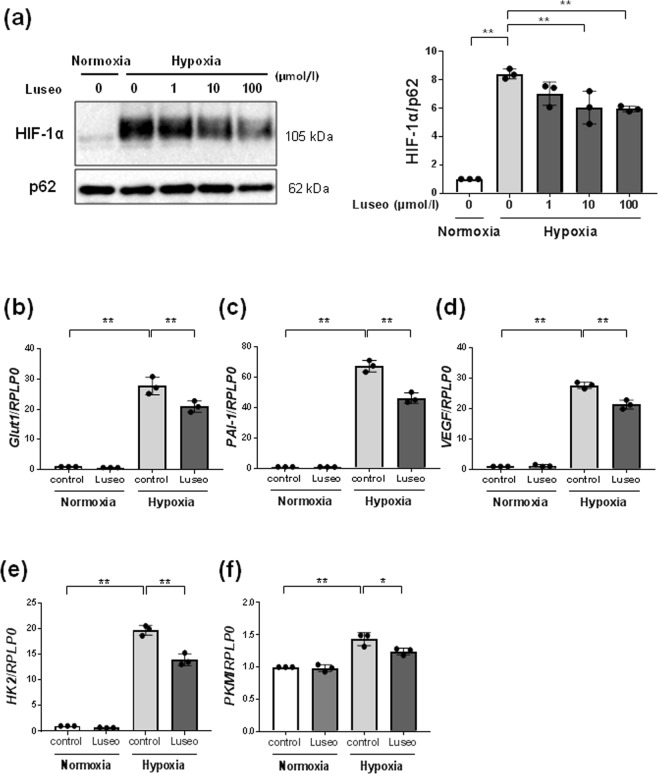
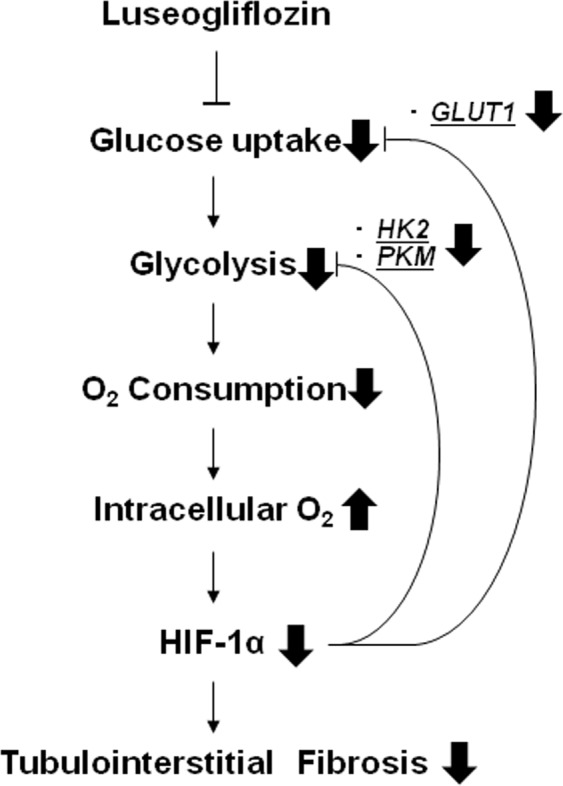
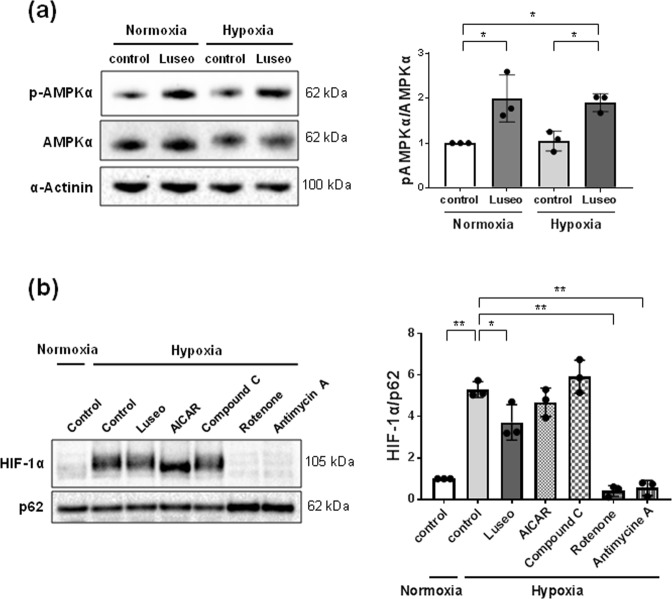
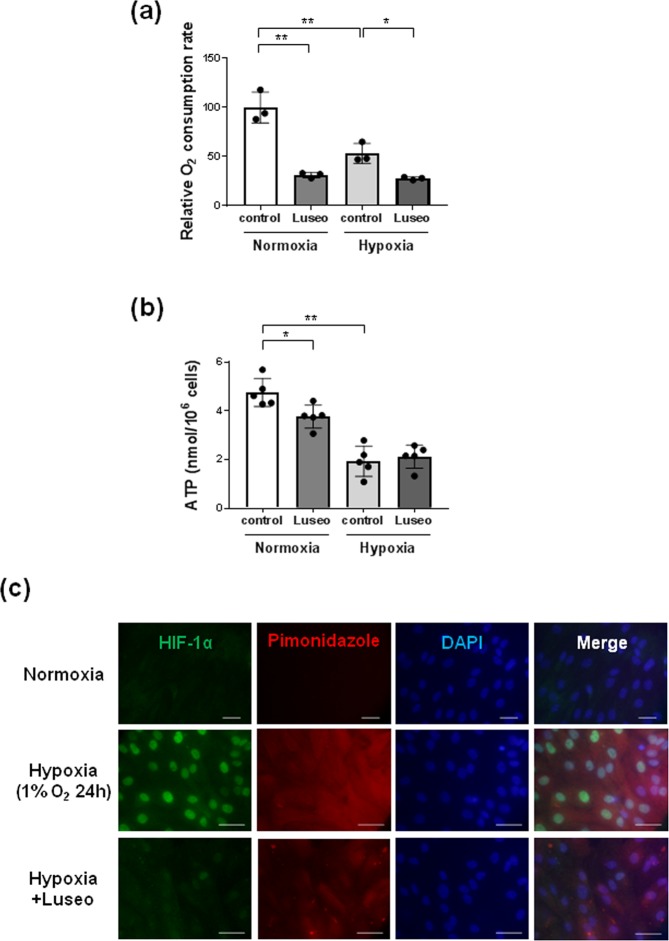
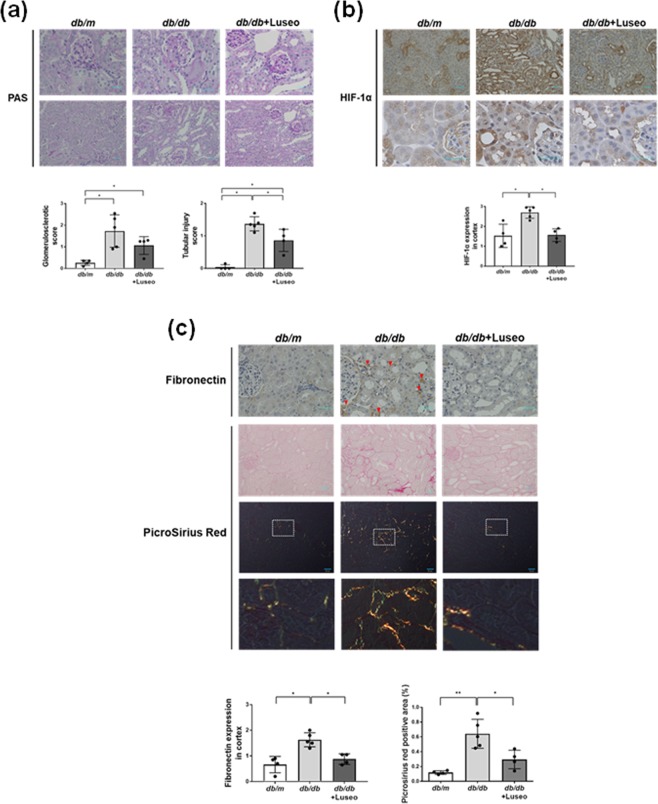
Previous studies have demonstrated intrarenal hypoxia in patients with diabetes. Hypoxia-inducible factor (HIF)-1 plays an important role in hypoxia-induced tubulointerstitial fibrosis. Recent clinical trials have confirmed the renoprotective action of SGLT2 inhibitors in diabetic nephropathy. We explored the effects of an SGLT2 inhibitor, luseogliflozin on HIF-1α expression in human renal proximal tubular epithelial cells (HRPTECs). Luseogliflozin significantly inhibited hypoxia-induced HIF-1α protein expression in HRPTECs. In addition, luseogliflozin inhibited hypoxia-induced the expression of the HIF-1α target genes PAI-1, VEGF, GLUT1, HK2 and PKM. Although luseogliflozin increased phosphorylated-AMP-activated protein kinase α (p-AMPKα) levels, the AMPK activator AICAR did not changed hypoxia-induced HIF-1α expression. Luseogliflozin suppressed the oxygen consumption rate in HRPTECs, and subsequently decreased hypoxia-sensitive dye, pimonidazole staining under hypoxia, suggesting that luseogliflozin promoted the degradation of HIF-1α protein by redistribution of intracellular oxygen. To confirm the inhibitory effect of luseogliflozin on hypoxia-induced HIF-1α protein in vivo, we treated male diabetic db/db mice with luseogliflozin for 8 to 16 weeks. Luseogliflozin attenuated cortical tubular HIF-1α expression, tubular injury and interstitial fibronectin in db/db mice. Together, luseogliflozin inhibits hypoxia-induced HIF-1α accumulation by suppressing mitochondrial oxygen consumption. The SGLT2 inhibitors may protect diabetic kidneys by therapeutically targeting HIF-1α protein.
先前的研究已经证明糖尿病患者存在肾内缺氧。缺氧诱导因子 (HIF)-1 在缺氧诱导的肾小管间质纤维化中发挥重要作用。最近的临床试验已经证实 SGLT2 抑制剂在糖尿病肾病中的肾脏保护作用。我们探讨了 SGLT2 抑制剂 luseogliflozin 对人近端肾小管上皮细胞 (HRPTEC) 中 HIF-1α 表达的影响。luseogliflozin 显著抑制 HRPTEC 中缺氧诱导的 HIF-1α 蛋白表达。此外,luseogliflozin 抑制缺氧诱导的 HIF-1α 靶基因 PAI-1、VEGF、GLUT1、HK2 和 PKM 的表达。尽管 luseogliflozin 增加了磷酸化 AMP 激活蛋白激酶 α (p-AMPKα) 的水平,但 AMPK 激活剂 AICAR 并未改变缺氧诱导的 HIF-1α 表达。luseogliflozin 抑制 HRPTEC 中的耗氧量,随后降低缺氧敏感染料 pimonidazole 在缺氧下的染色,表明 luseogliflozin 通过重新分布细胞内氧气促进 HIF-1α 蛋白的降解。为了确认 luseogliflozin 对体内缺氧诱导的 HIF-1α 蛋白的抑制作用,我们用 luseogliflozin 治疗雄性糖尿病 db/db 小鼠 8 至 16 周。luseogliflozin 减轻 db/db 小鼠皮质管状 HIF-1α 表达、管状损伤和间质纤维连接蛋白。总之,luseogliflozin 通过抑制线粒体耗氧量抑制缺氧诱导的 HIF-1α 积累。SGLT2 抑制剂通过靶向 HIF-1α 蛋白可能保护糖尿病肾脏。