Centre des Sciences du Go û t et de l'Alimentation, AgroSup, UMR6265 CNRS, UMR1324 INRA, Université de Bourgogne Franche-Comté, 6, Bd Gabriel, 21000, Dijon, France.
Laboratoire de Biologie Fonctionnelle et Adaptative, UMR8251, Université Paris Diderot - Paris 7/CNRS Equipe Processus Dégénératifs, Stress et Vieillissement Bâtiment Buffon, 4, rue Marie Andrée Lagroua Weill Halle, 75013, Paris, France.
Sci Rep. 2019 Oct 18;9(1):14947. doi: 10.1038/s41598-019-51351-1.
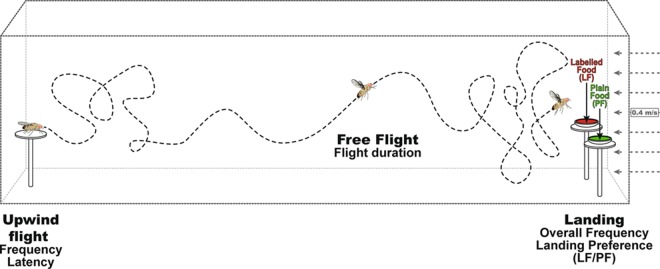
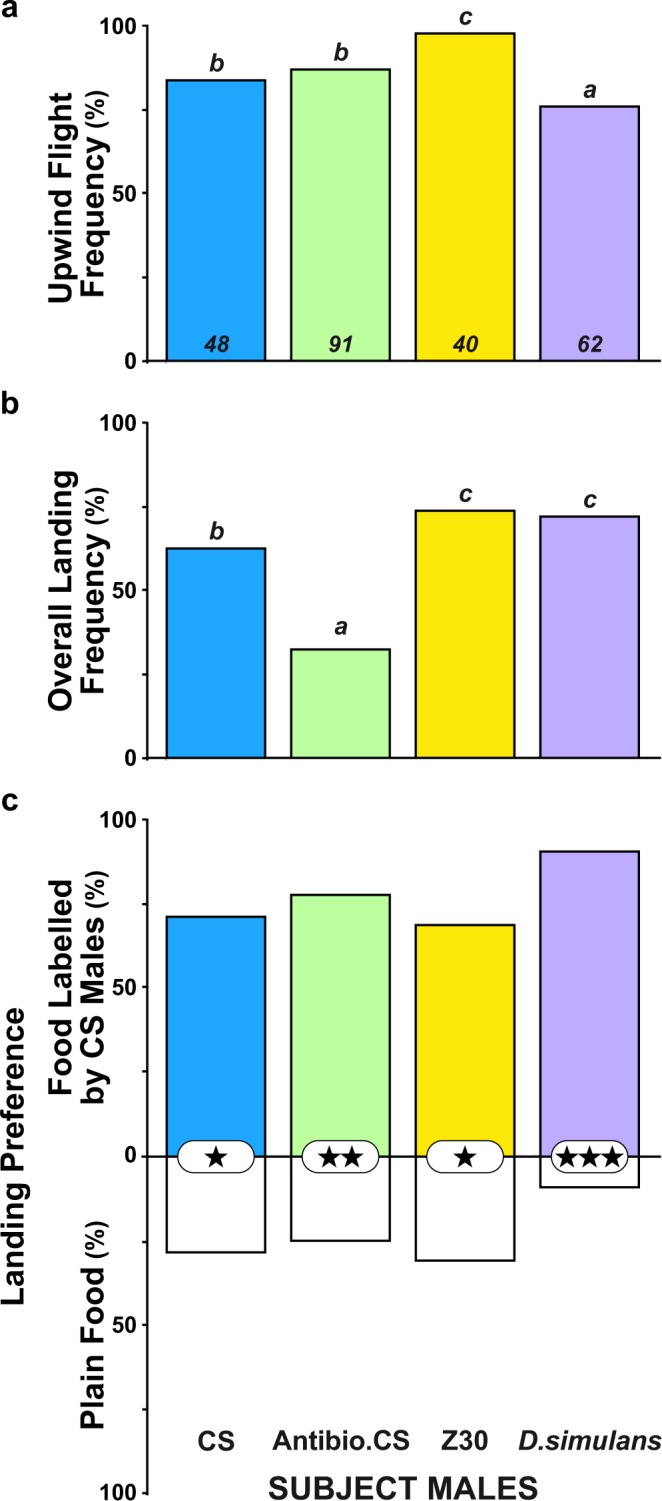
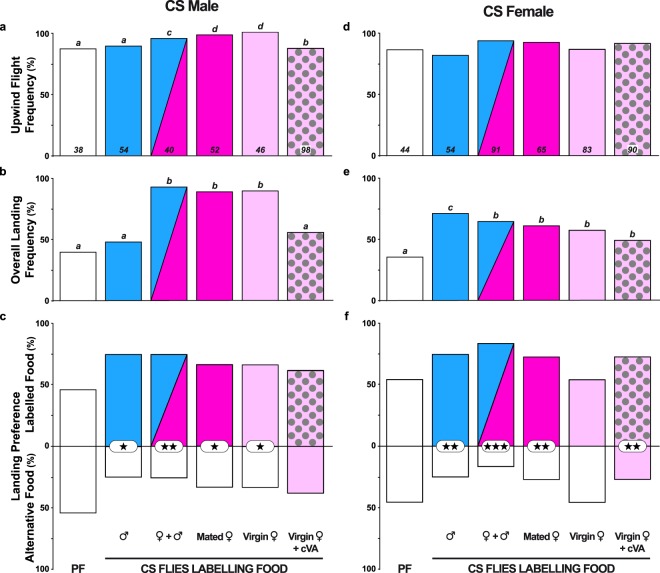
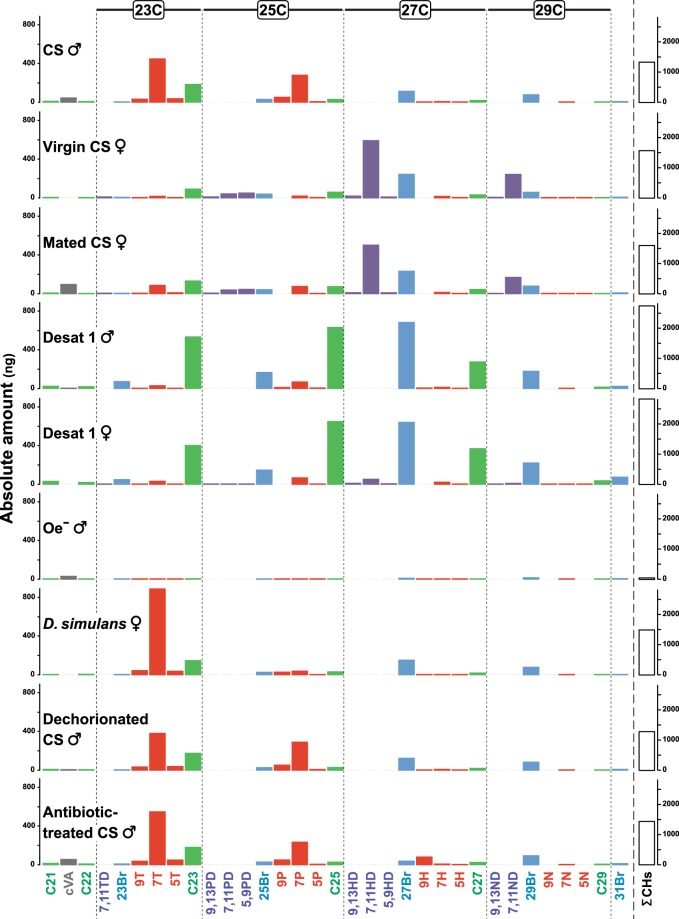
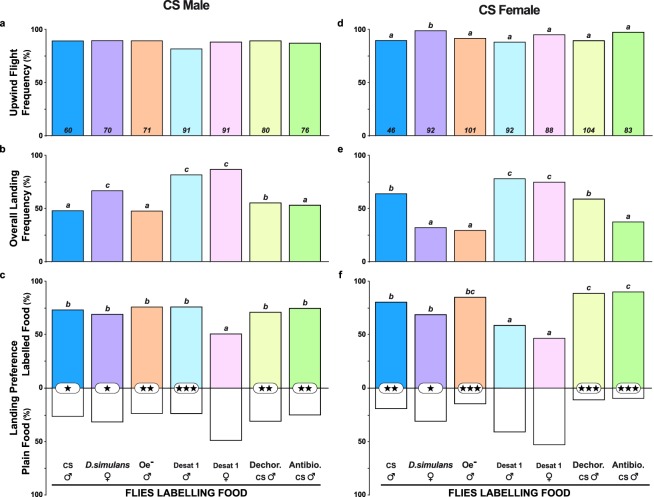
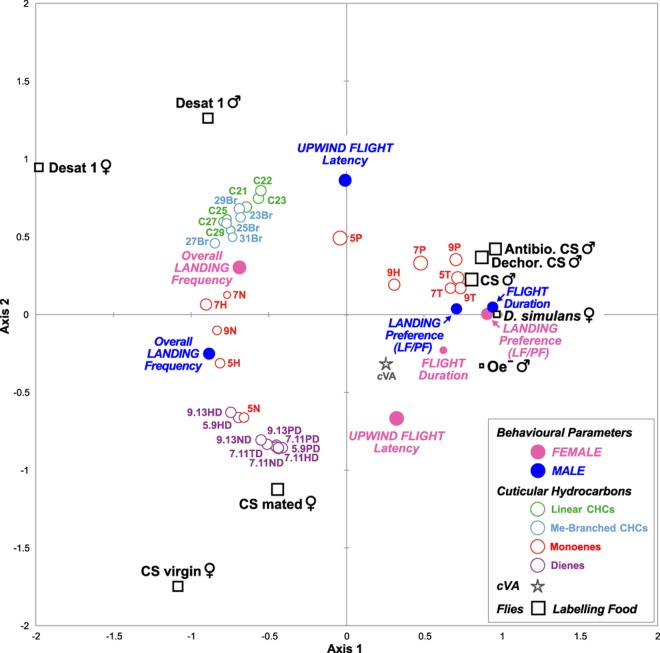
Animals searching for food and sexual partners often use odourant mixtures combining food-derived molecules and pheromones. For orientation, the vinegar fly Drosophila melanogaster uses three types of chemical cues: (i) the male volatile pheromone 11-cis-vaccenyl acetate (cVA), (ii) sex-specific cuticular hydrocarbons (CHs; and CH-derived compounds), and (iii) food-derived molecules resulting from microbiota activity. To evaluate the effects of these chemicals on odour-tracking behaviour, we tested Drosophila individuals in a wind tunnel. Upwind flight and food preference were measured in individual control males and females presented with a choice of two food sources labelled by fly lines producing varying amounts of CHs and/or cVA. The flies originated from different species or strains, or their microbiota was manipulated. We found that (i) fly-labelled food could attract-but never repel-flies; (ii) the landing frequency on fly-labelled food was positively correlated with an increased flight duration; (iii) male-but not female or non-sex-specific-CHs tended to increase the landing frequency on fly-labelled food; (iv) cVA increased female-but not male-preference for cVA-rich food; and (v) microbiota-derived compounds only affected male upwind flight latency. Therefore, sex pheromones interact with food volatile chemicals to induce sex-specific flight responses in Drosophila.
动物在寻找食物和性伴侣时,通常会利用混合了食物源分子和信息素的气味混合物。为了定位,醋蝇黑腹果蝇使用三种类型的化学线索:(i)雄挥发信息素 11-顺-十一碳烯基乙酸酯(cVA),(ii)性别特异性表皮烃(CHs;和 CH 衍生化合物),和(iii)由微生物群活动产生的食物源分子。为了评估这些化学物质对气味追踪行为的影响,我们在风洞中测试了果蝇个体。在个体对照雄性和雌性个体中测量了顺风飞行和食物偏好,这些个体被提供了两种带有标签的食物来源选择,这些标签由产生不同量 CHs 和/或 cVA 的果蝇系产生。这些果蝇来自不同的物种或品系,或者它们的微生物群被操纵。我们发现:(i)果蝇标记的食物可以吸引——但从不排斥——果蝇;(ii)在果蝇标记的食物上的降落频率与飞行持续时间的增加呈正相关;(iii)雄 CHs——但不是雌 CHs 或非性别特异性 CHs——往往会增加在果蝇标记食物上的降落频率;(iv)cVA 增加了雌蝇对富含 cVA 食物的偏好,但不增加雄蝇的偏好;(v)微生物群衍生的化合物仅影响雄蝇顺风飞行潜伏期。因此,性信息素与食物挥发性化学物质相互作用,在果蝇中诱导性别特异性的飞行反应。