Division of Immunology, Boston Children's Hospital, and the Department of Pediatrics, Harvard Medical School, Boston, Mass.
Necmettin Erbakan University, Meram Medical Faculty, Division of Pediatric Allergy and Immunology, Konya, Turkey.
J Allergy Clin Immunol. 2020 Jan;145(1):391-401.e8. doi: 10.1016/j.jaci.2019.10.004. Epub 2019 Oct 16.
Mutations affecting DNA polymerases have been implicated in genomic instability and cancer development, but the mechanisms by which they can affect the immune system remain largely unexplored.
We sought to establish the role of DNA polymerase δ1 catalytic subunit (POLD1) as the cause of a primary immunodeficiency in an extended kindred.
We performed whole-exome and targeted gene sequencing, lymphocyte characterization, molecular and functional analyses of the DNA polymerase δ (Polδ) complex, and T- and B-cell antigen receptor repertoire analysis.
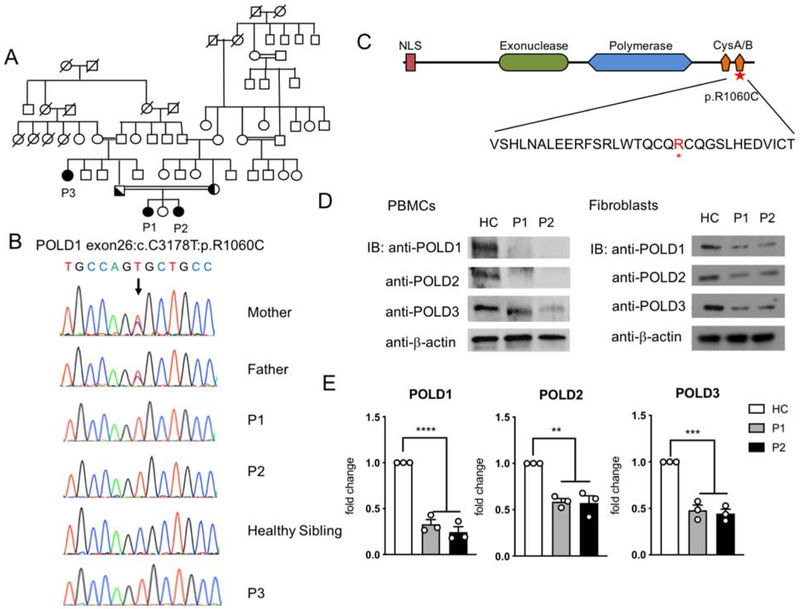
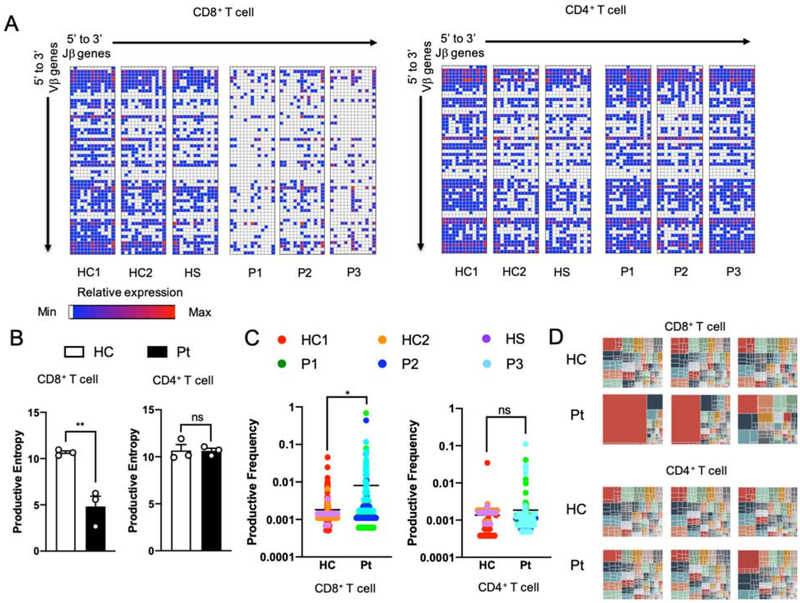
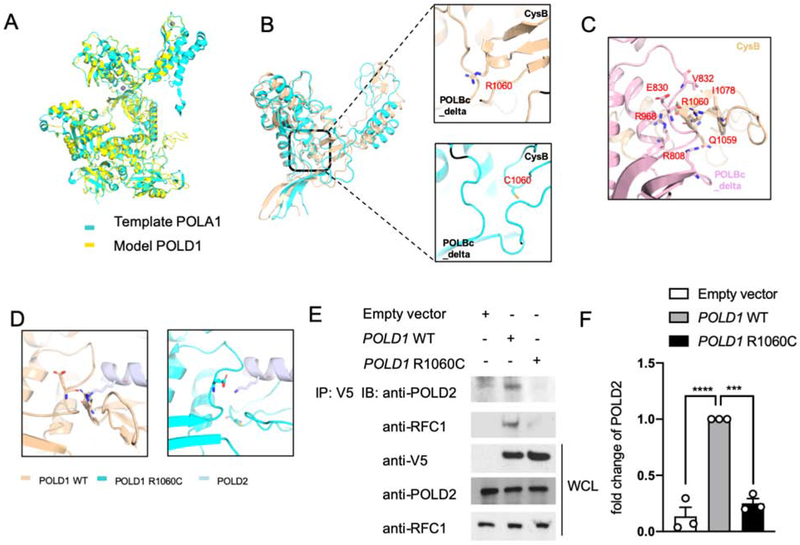
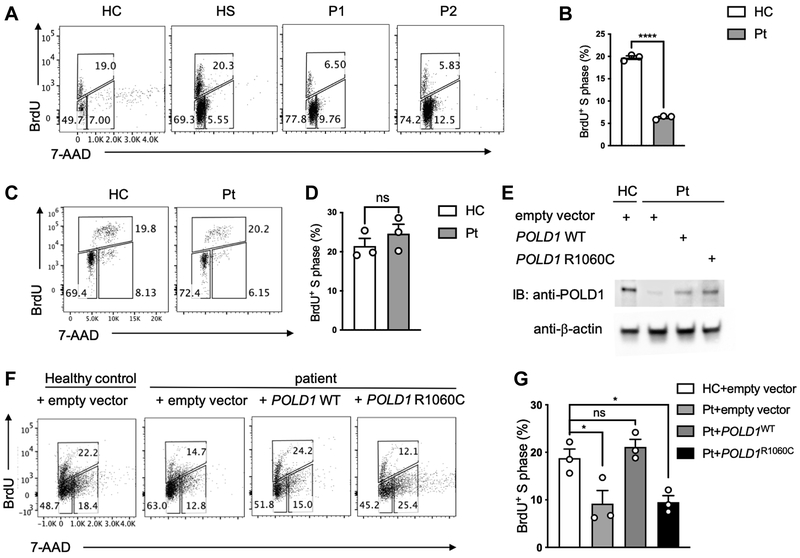
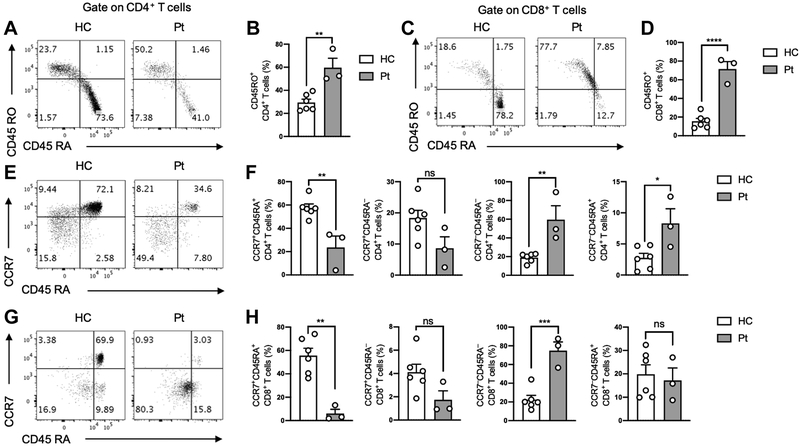
We identified a missense mutation (c. 3178C>T; p.R1060C) in POLD1 in 3 related subjects who presented with recurrent, especially herpetic, infections and T-cell lymphopenia with impaired T-cell but not B-cell proliferation. The mutation destabilizes the Polδ complex, leading to ineffective recruitment of replication factor C to initiate DNA replication. Molecular dynamics simulation revealed that the R1060C mutation disrupts the intramolecular interaction between the POLD1 CysB motif and the catalytic domain and also between POLD1 and the Polδ subunit POLD2. The patients exhibited decreased numbers of naive CD4 and especially CD8 T cells in favor of effector memory subpopulations. This skewing was associated with oligoclonality and restricted T-cell receptor β-chain V-J pairing in CD8 but not CD4 T cells, suggesting that POLD1 differentially affects peripheral CD8 T-cell expansion and possibly thymic selection.
These results identify gene defects in POLD1 as a novel cause of T-cell immunodeficiency.
影响 DNA 聚合酶的突变与基因组不稳定性和癌症发展有关,但它们影响免疫系统的机制在很大程度上仍未得到探索。
我们试图确定 DNA 聚合酶 δ1 催化亚基(POLD1)突变作为一个扩展家族中原发性免疫缺陷的原因。
我们进行了全外显子组和靶向基因测序、淋巴细胞特征分析、DNA 聚合酶 δ(Polδ)复合物的分子和功能分析以及 T 和 B 细胞抗原受体库分析。
我们在 3 位有亲缘关系的患者中发现了 POLD1 中的错义突变(c.3178C>T;p.R1060C),他们表现出复发性、特别是疱疹性感染和 T 细胞淋巴细胞减少症,伴有 T 细胞而非 B 细胞增殖受损。该突变使 Polδ 复合物不稳定,导致复制因子 C 无法有效募集以启动 DNA 复制。分子动力学模拟表明,R1060C 突变破坏了 POLD1 CysB 基序与催化结构域之间以及 POLD1 与 Polδ 亚基 POLD2 之间的分子内相互作用。患者表现出幼稚 CD4 和特别是 CD8 T 细胞数量减少,有利于效应记忆亚群。这种偏倚与 CD8 T 细胞而非 CD4 T 细胞中寡克隆性和受限的 T 细胞受体β链 V-J 配对有关,表明 POLD1 对外周 CD8 T 细胞扩增和可能的胸腺选择有不同的影响。
这些结果确定了 POLD1 中的基因缺陷是 T 细胞免疫缺陷的一个新原因。