Yunnan Provincial Key Laboratory of Molecular Biology for Sinomedicine, School of Basic Medical, Yunnan University of Chinese Medicine, Kunming, Yunnan 650500, People's Republic of China.
Department of Biochemistry and Molecular Biology, College of Basic Medicine, Kunming Medical University, Kunming, Yunnan 650500, People's Republic of China.
Int J Nanomedicine. 2019 Oct 4;14:8059-8072. doi: 10.2147/IJN.S220936. eCollection 2019.
Compared with random copolymers, block copolymerization is easier to prepare for nanoparticles with core-shell structure, and they will have better glucose sensitivity and higher insulin loading.
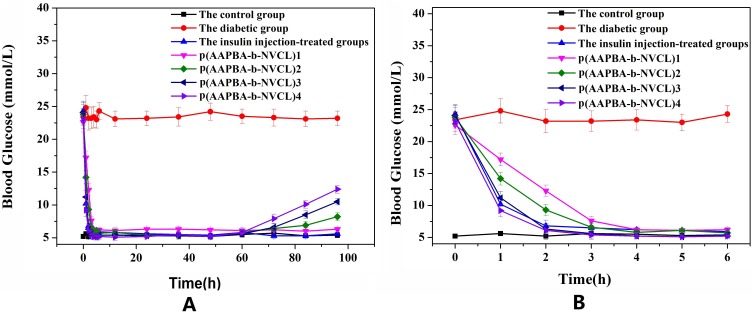
In our study, insulin-loaded poly (3-acrylamidophenylboronic acid-block-N-vinyl caprolactam) p(AAPBA-b-NVCL) nanoparticles were successfully prepared and were glucose-sensitive, which could effectively lower the blood sugar levels within 72 hrs.
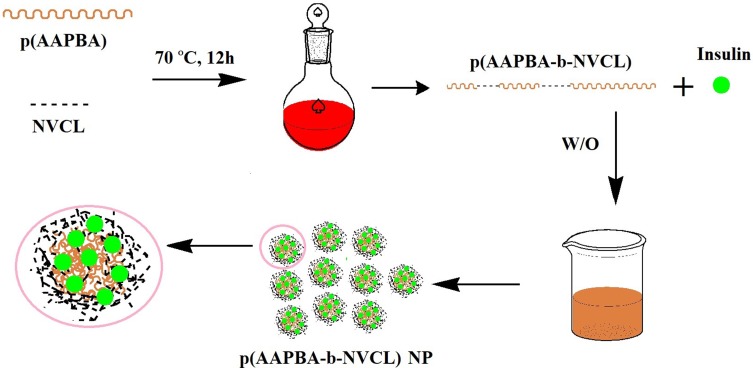
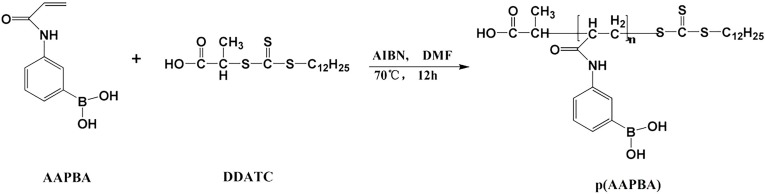
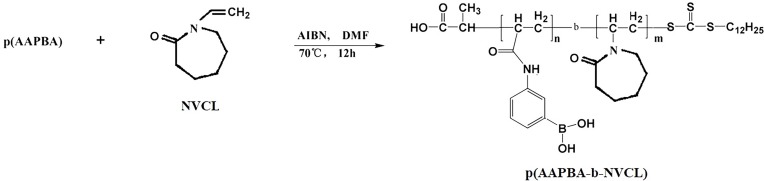
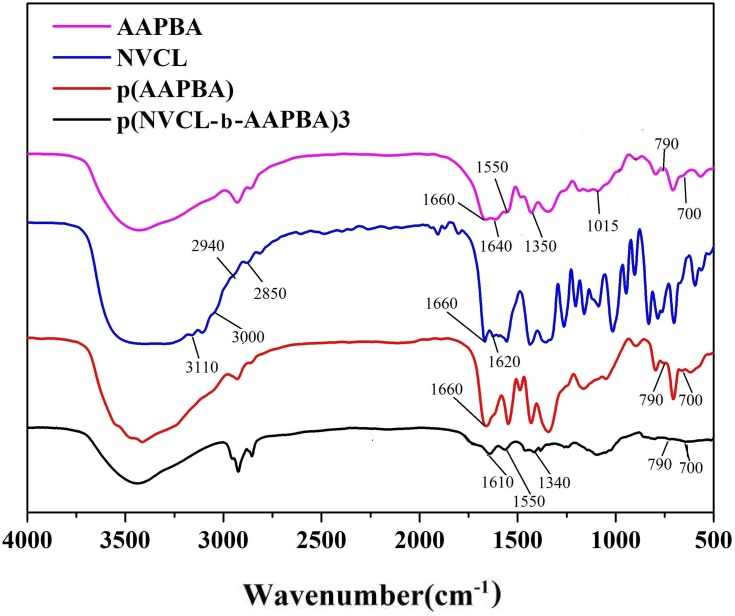
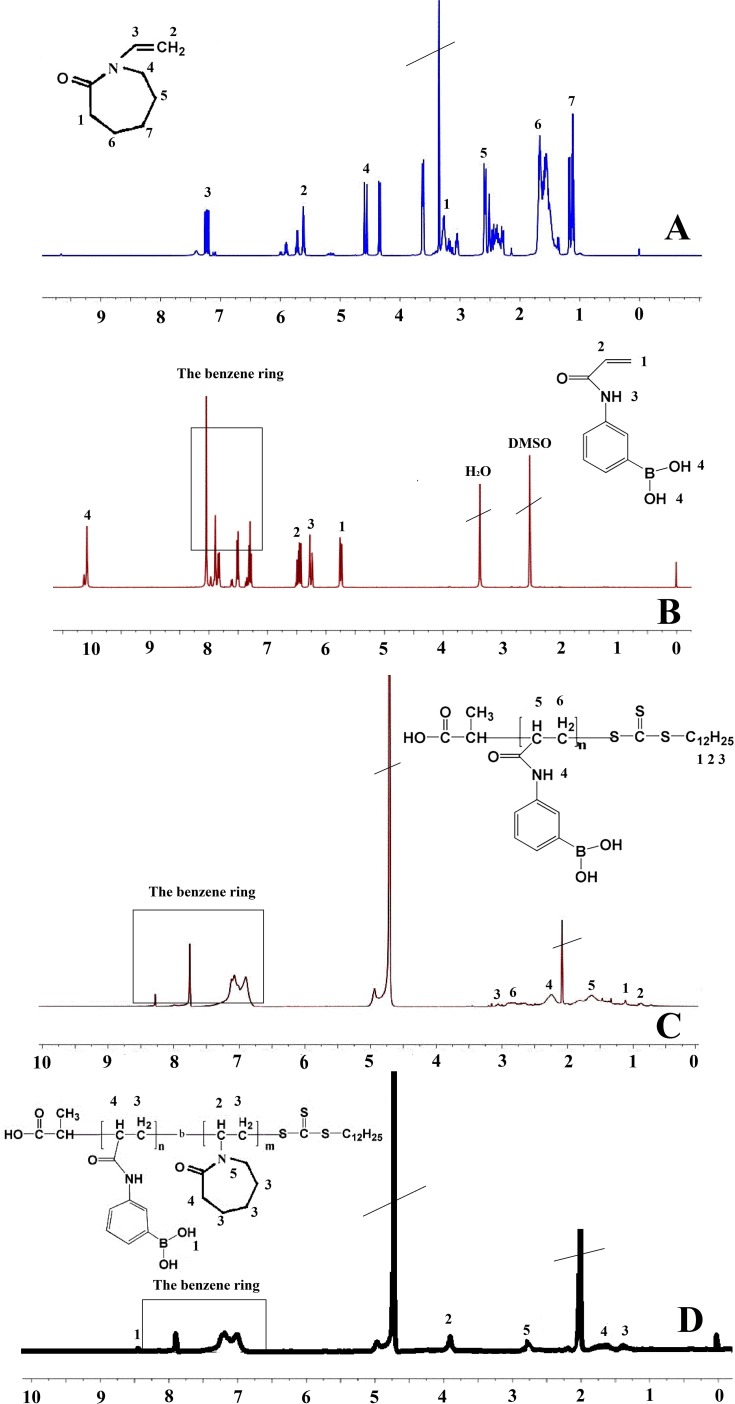
The polymer of p(AAPBA-b-NVCL) was produced by reversible addition-fragmentation chain transfer polymerization based on different ratios of 3-acrylamidophenylboronic acid (AAPBA) and N-vinylcaprolactam (NVCL), and its structure was discussed by Fourier transform infrared spectroscopy and 1H-nuclear magnetic resonance . Next, the polymer was manufactured into the nanoparticles, and the characteristics of nanoparticles were detected by dynamic light scattering, lower critical solution temperature, and transmission electron microscopy. After that, the cell and animal toxicity of nanoparticles were also investigated.
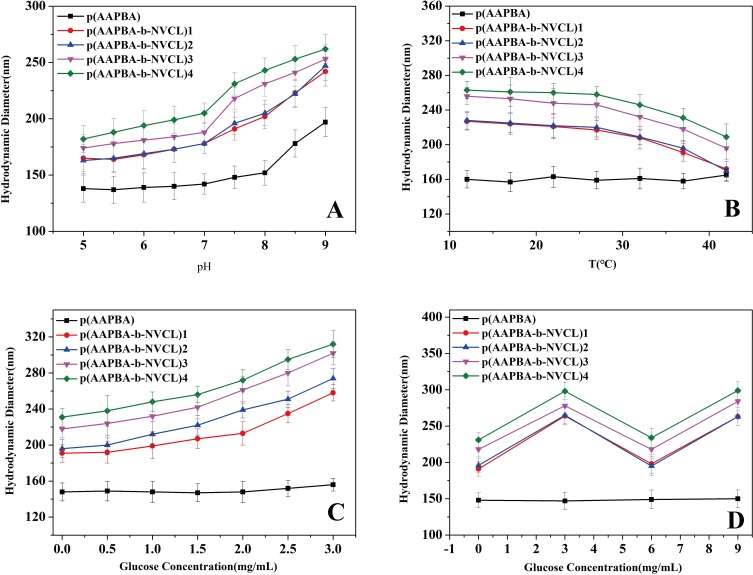
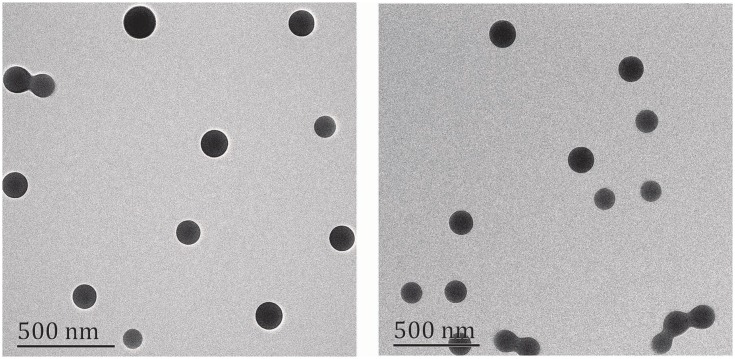
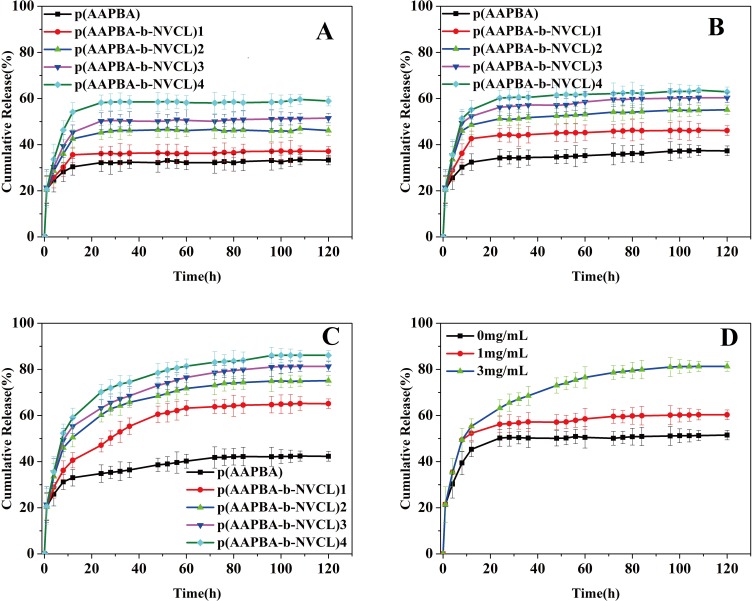
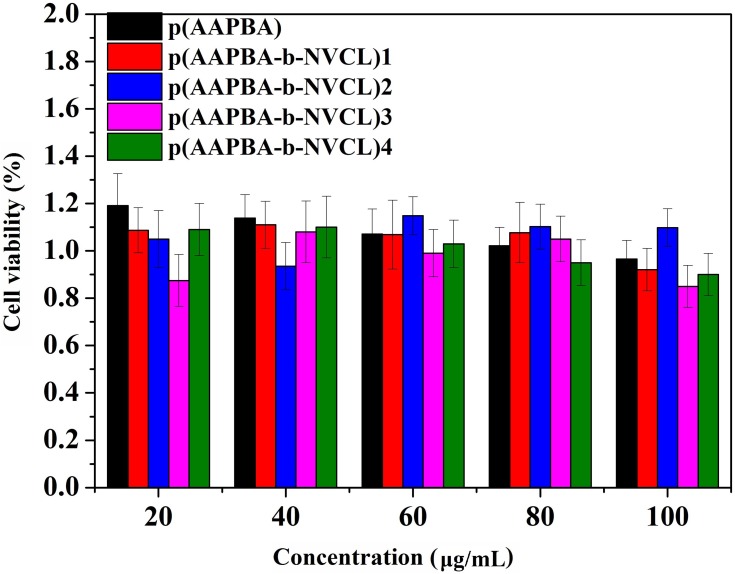
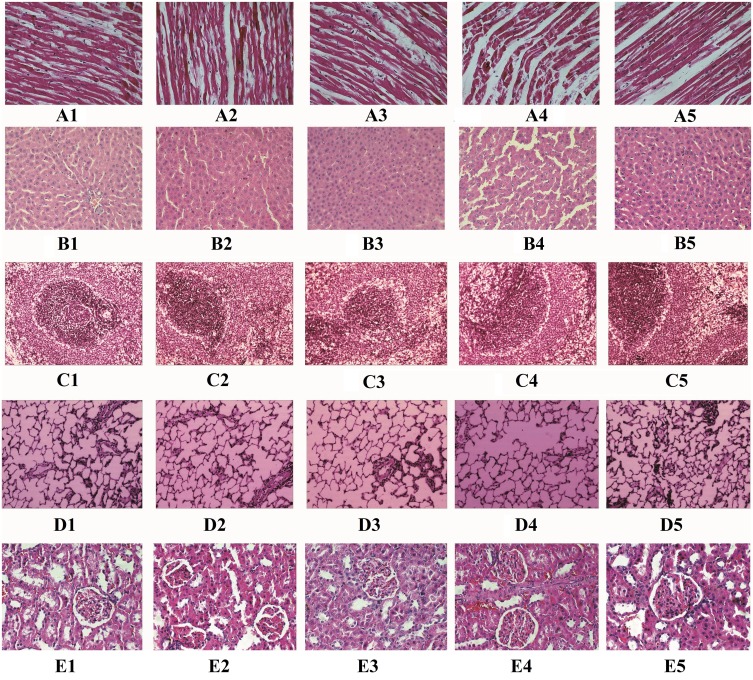
The results demonstrated that p(AAPBA-b-NVCL) was successfully synthesized, and can be easily self-assembled to form nanoparticles. The new nanoparticles included monodisperse submicron particles, with the size of the nanoparticle ranged between 150 and 300nm and are glucose- and temperature-sensitive. Meanwhile, insulin can be easily loaded by p(AAPBA-b-NVCL) nanoparticles and an effective sustained release of insulin was observed when the nanoparticles were placed in physiological saline. Besides, MTT assay revealed that cell viability was more than 80%, and mice demonstrated no negative impact on blood biochemistry and heart, liver, spleen, lung, and kidney after intraperitoneal injection of 10 mg/kg/d of nanoparticles. This suggested that the nanoparticles were low-toxic to both cells and animals. Moreover, they could lower the blood sugar level within 72h.
Our research suggested that these p(AAPBA-b-NVCL) nanoparticles might have the potential to be applied in a delivery system for insulin or other hypoglycemic proteins.
与随机共聚物相比,嵌段共聚更容易制备具有核壳结构的纳米粒子,并且它们将具有更好的葡萄糖敏感性和更高的胰岛素载量。
在本研究中,成功制备了负载胰岛素的聚(3-丙烯酰胺基苯硼酸嵌段-N-乙烯基己内酰胺)p(AAPBA-b-NVCL)纳米粒子,该纳米粒子具有葡萄糖敏感性,可在 72 小时内有效降低血糖水平。
基于 3-丙烯酰胺基苯硼酸(AAPBA)和 N-乙烯基己内酰胺(NVCL)的不同比例,通过可逆加成-断裂链转移聚合合成 p(AAPBA-b-NVCL)聚合物,并通过傅里叶变换红外光谱和 1H-核磁共振对其结构进行了讨论。然后,将聚合物制成纳米粒子,并通过动态光散射、低临界溶液温度和透射电子显微镜检测纳米粒子的特性。之后,还研究了纳米粒子的细胞毒性和动物毒性。
结果表明,成功合成了 p(AAPBA-b-NVCL),可以很容易地自组装形成纳米粒子。新纳米粒子包括单分散亚微米颗粒,纳米颗粒的粒径在 150nm 到 300nm 之间,具有葡萄糖和温度敏感性。同时,p(AAPBA-b-NVCL)纳米粒子可以很容易地负载胰岛素,并且当纳米粒子置于生理盐水中时,可以观察到胰岛素的有效持续释放。此外,MTT 试验表明细胞活力超过 80%,并且小鼠在腹腔注射 10mg/kg/d 的纳米粒子后,血液生化和心、肝、脾、肺、肾均无不良影响。这表明纳米粒子对细胞和动物的毒性较低。此外,它们可以在 72 小时内降低血糖水平。
我们的研究表明,这些 p(AAPBA-b-NVCL)纳米粒子可能具有作为胰岛素或其他降血糖蛋白的递送系统的应用潜力。