Department of Internal Medicine, University of Michigan, Ann Arbor, Michigan.
Department of Pathology, University of Michigan, Ann Arbor, Michigan.
Clin Cancer Res. 2020 Feb 1;26(3):690-703. doi: 10.1158/1078-0432.CCR-19-1486. Epub 2019 Oct 21.
Peripheral T-cell lymphomas are clinically aggressive and usually fatal, as few complete or durable remissions are achieved with currently available therapies. Recent evidence supports a critical role for lymphoma-associated macrophages during T-cell lymphoma progression, but the specific signals involved in the cross-talk between malignant T cells and their microenvironment are poorly understood. Colony-stimulator factor 1 receptor (CSF1R, CD115) is required for the homeostatic survival of tissue-resident macrophages. Interestingly, its aberrant expression has been reported in a subset of tumors. In this article, we evaluated its expression and oncogenic role in T-cell lymphomas.
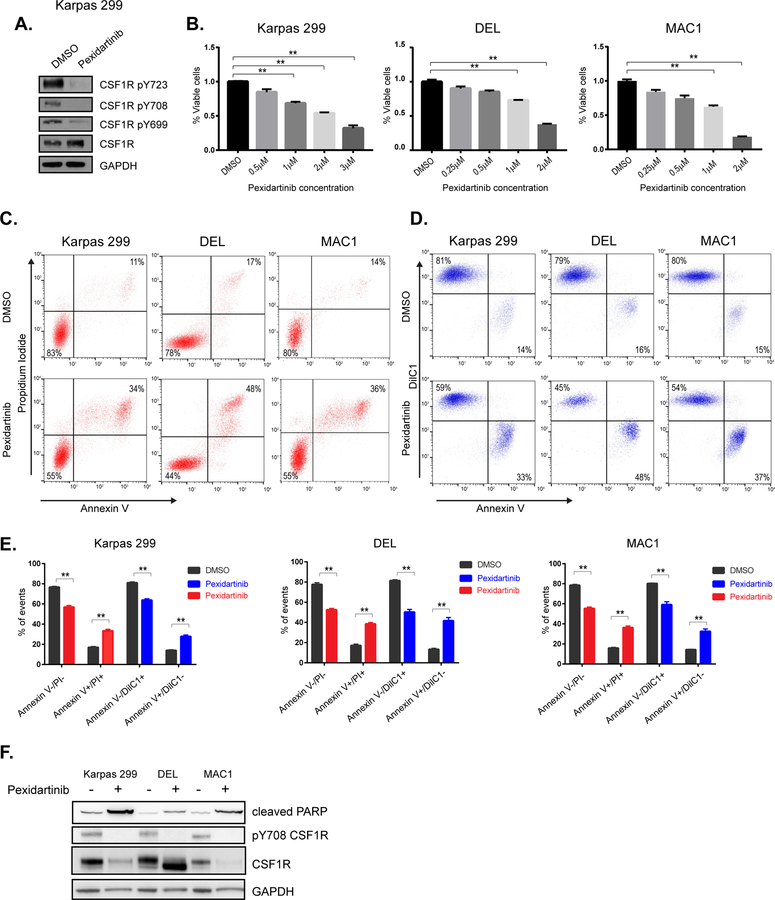
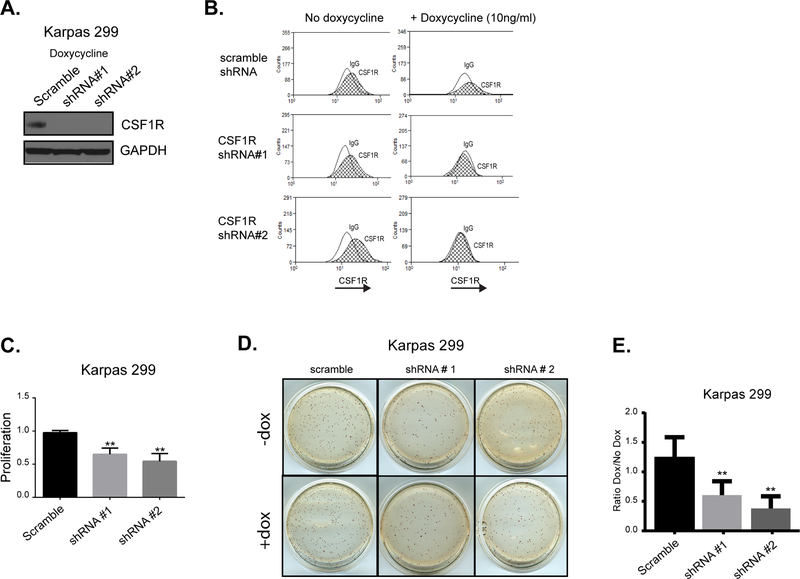
Loss-of-function studies, including pharmacologic inhibition with a clinically available tyrosine kinase inhibitor, pexidartinib, were performed in multiple and models. In addition, proteomic and genomic screenings were performed to discover signaling pathways that are activated downstream of CSF1R signaling.
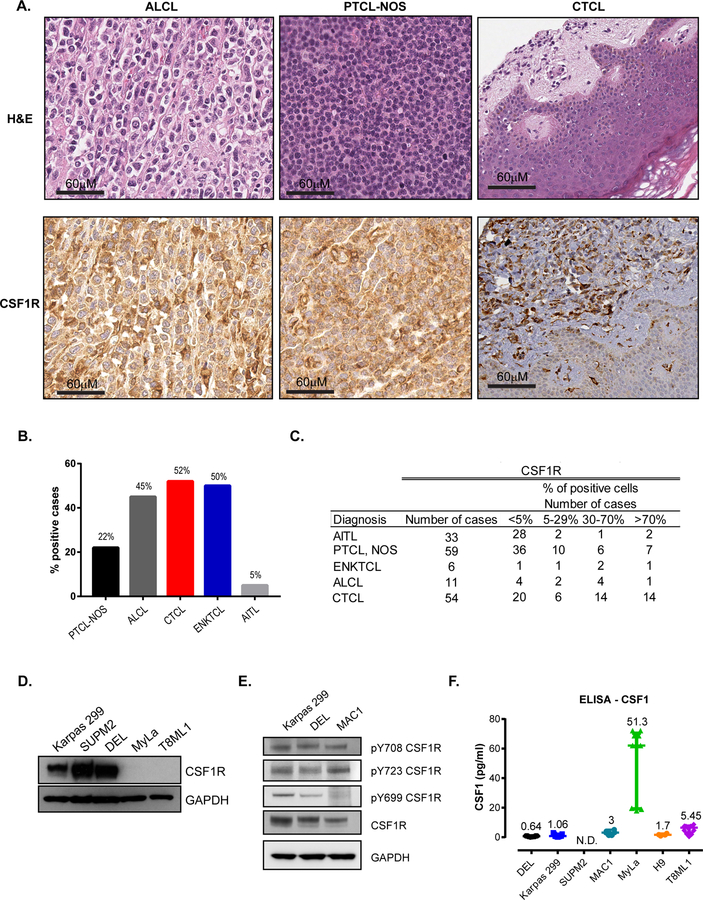
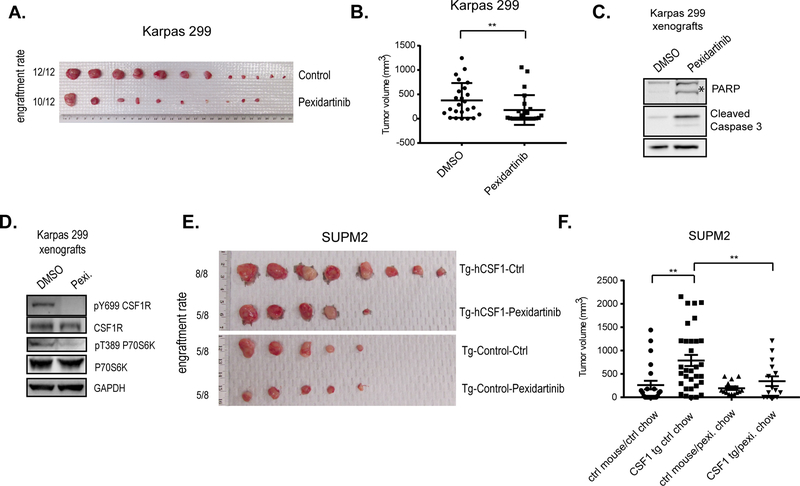
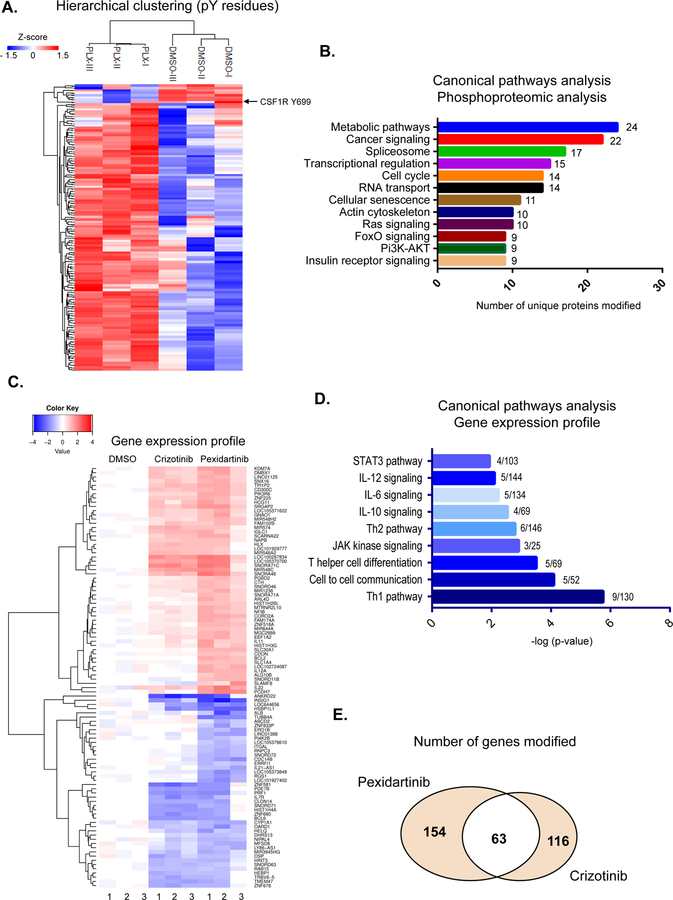
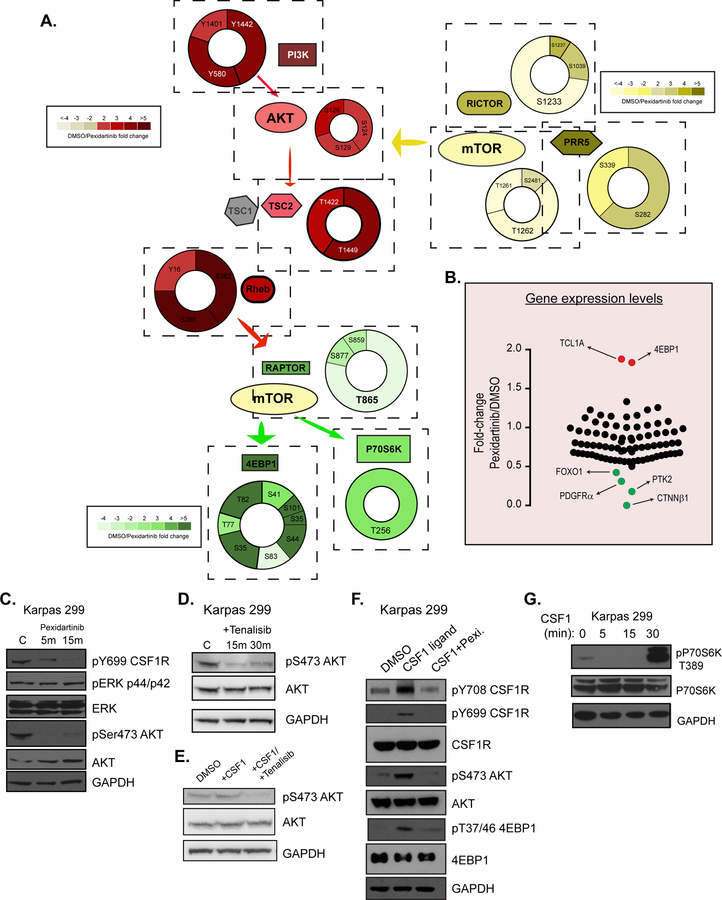
We observed that CSF1R is aberrantly expressed in many T-cell lymphomas, including a significant number of peripheral and cutaneous T-cell lymphomas. Colony-stimulating factor 1 (CSF1), in an autocrine or paracrine-dependent manner, leads to CSF1R autophosphorylation and activation in malignant T cells. Furthermore, CSF1R signaling was associated with significant changes in gene expression and in the phosphoproteome, implicating PI3K/AKT/mTOR in CSF1R-mediated T-cell lymphoma growth. We also demonstrated that inhibition of CSF1R and models is associated with decreased T-cell lymphoma growth.
Collectively, these findings implicate CSF1R in T-cell lymphomagenesis and have significant therapeutic implications.
外周 T 细胞淋巴瘤具有侵袭性且通常致命,因为目前可用的治疗方法很少能实现完全或持久缓解。最近的证据支持淋巴瘤相关巨噬细胞在 T 细胞淋巴瘤进展过程中发挥关键作用,但恶性 T 细胞与其微环境之间相互作用涉及的特定信号仍知之甚少。集落刺激因子 1 受体(CSF1R,CD115)是组织驻留巨噬细胞稳态存活所必需的。有趣的是,其异常表达已在一些肿瘤中报道。在本文中,我们评估了它在外周 T 细胞淋巴瘤中的表达和致癌作用。
进行了包括用临床可用的酪氨酸激酶抑制剂培昔替尼进行药理学抑制在内的失活研究,在多个 和 模型中进行了这些研究。此外,还进行了蛋白质组学和基因组筛选,以发现激活 CSF1R 信号下游的信号通路。
我们观察到 CSF1R 在许多 T 细胞淋巴瘤中异常表达,包括大量外周和皮肤 T 细胞淋巴瘤。集落刺激因子 1(CSF1)以自分泌或旁分泌依赖的方式导致恶性 T 细胞中的 CSF1R 自动磷酸化和激活。此外,CSF1R 信号与基因表达和磷酸蛋白质组的显著变化相关,表明 PI3K/AKT/mTOR 参与 CSF1R 介导的 T 细胞淋巴瘤生长。我们还证明,抑制 CSF1R 可导致 和 模型中的 T 细胞淋巴瘤生长减少。
这些发现共同表明 CSF1R 在外周 T 细胞淋巴瘤的发生中起作用,并具有重要的治疗意义。