Broaddus-Shea Elena T, Kobeissi Loulou, Ummer Osama, Say Lale
Horizons Global Health Consulting, Eagle, CO USA.
2Department of Reproductive Health and Research, World Health Organization, Geneva, Switzerland.
Confl Health. 2019 Oct 14;13:43. doi: 10.1186/s13031-019-0221-1. eCollection 2019.
To conduct a comprehensive mapping of published indicators for monitoring and evaluation (M&E) of sexual and reproductive health (SRH) services and outcomes in humanitarian settings.
A systematic search of the peer-reviewed and grey literature published between January 2008 and May 2018 was conducted to identify all references describing indicator sets for M&E of SRH services and outcomes in humanitarian settings. The databases MEDLINE, Web of Science, and Global Health, as well as 85 websites of relevant organizations involved in humanitarian response were searched. Characteristics of identified indicator sets and data from individual indicators was extracted.
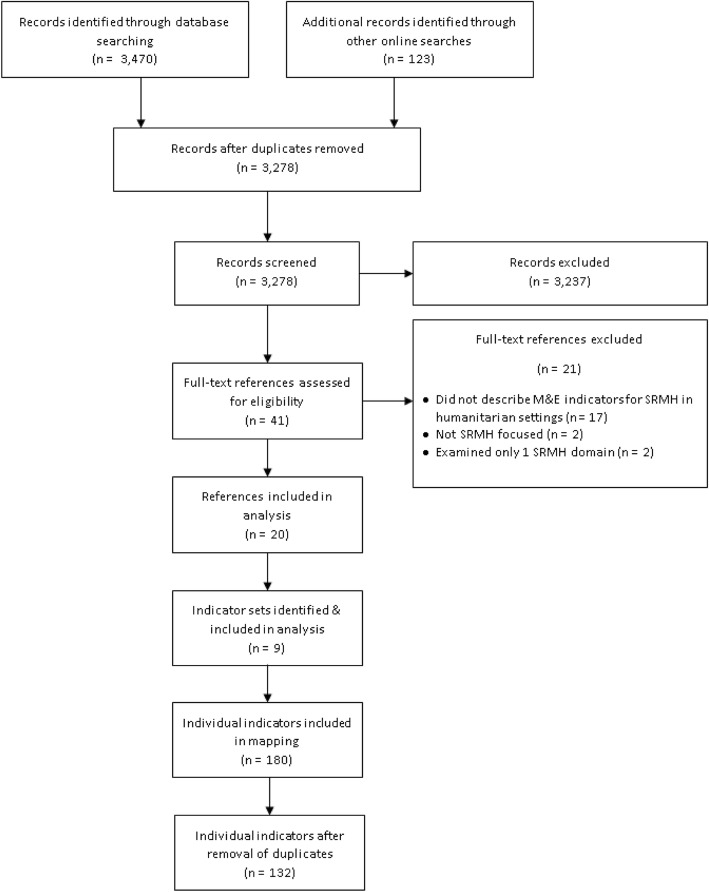
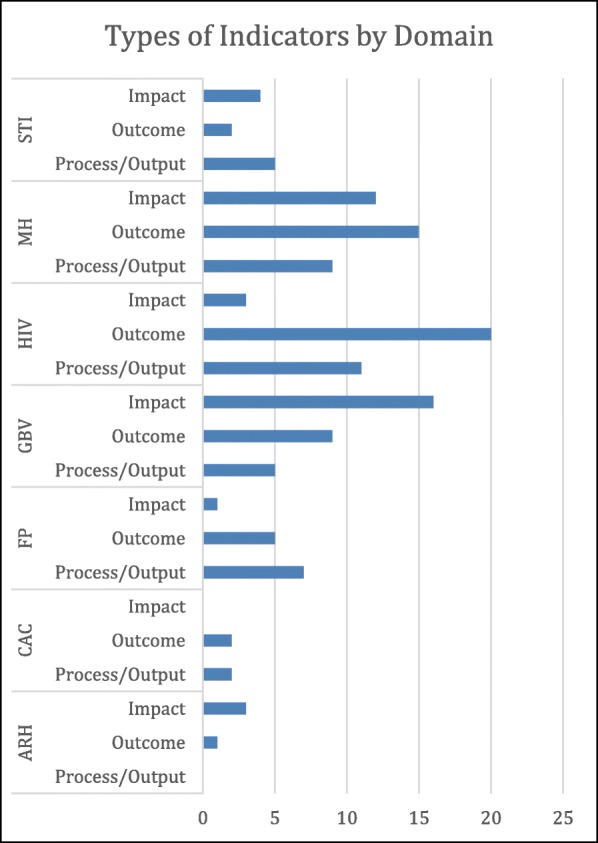
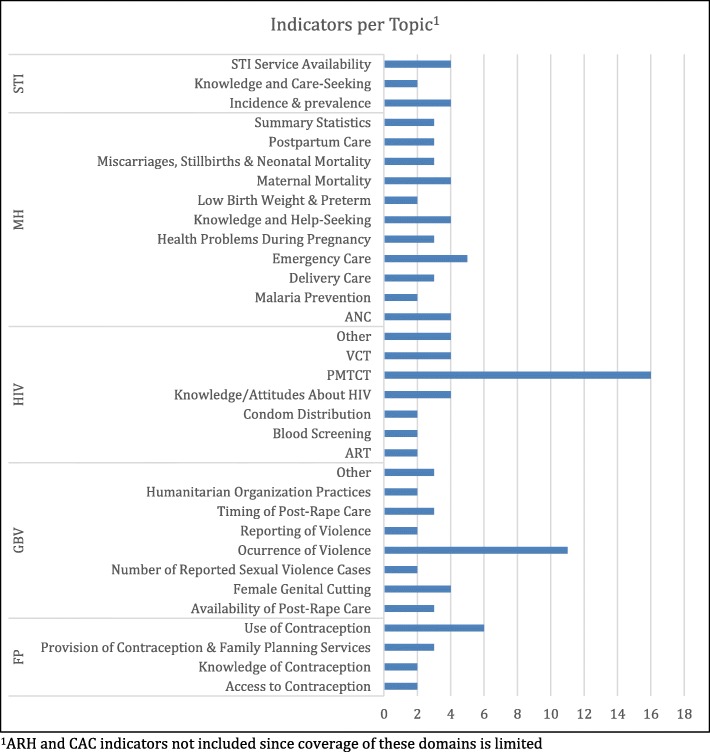
Of records identified, met the review's inclusion criteria and existing indicator sets were identified. A total of relevant indicators were included in the mapping, and removal of duplicates yielded unique indicators. Twenty-seven percent fell within the maternal health domain, followed by the HIV/AIDS domain (26%) and the gender-based violence domain (23%). The distribution of indicators by type (process/output, outcome, impact) was balanced overall but varied substantially across domains. The most commonly used data collection platforms were facility-based systems or population-based surveys. Domains covered and indicator definitions were inconsistent across indicator sets.
Results demonstrate the need to standardize data collection efforts for M&E of SRH services and outcomes in humanitarian settings and to critically appraise the extent to which different domains should be covered. A core list of indicators is essential for assessing response status over time as well as across countries.
全面梳理已发表的用于监测和评估人道主义环境下性与生殖健康(SRH)服务及成果的指标。
对2008年1月至2018年5月期间发表的同行评审文献和灰色文献进行系统检索,以识别所有描述人道主义环境下SRH服务及成果监测与评估指标集的参考文献。检索了MEDLINE、科学网和全球健康数据库,以及参与人道主义应对的85个相关组织的网站。提取了已识别指标集的特征以及单个指标的数据。
在识别出的记录中, 符合综述的纳入标准,并识别出 个现有的指标集。共有 个相关指标被纳入梳理,去除重复项后得到 个独特指标。27%的指标属于孕产妇健康领域,其次是艾滋病毒/艾滋病领域(26%)和基于性别的暴力领域(23%)。按类型(过程/产出、成果、影响)划分的指标分布总体上较为均衡,但各领域差异很大。最常用的数据收集平台是基于机构的系统或基于人群的调查。各指标集涵盖的领域和指标定义不一致。
结果表明,有必要规范人道主义环境下SRH服务及成果监测与评估的数据收集工作,并严格评估应涵盖不同领域的程度。一份核心指标清单对于评估不同时间以及不同国家的应对状况至关重要。