Finch Brian Karl, Thomas Kyla, Beck Audrey N
University of Southern California, USA.
San Diego State University, USA.
SSM Popul Health. 2019 Aug 18;9:100470. doi: 10.1016/j.ssmph.2019.100470. eCollection 2019 Dec.
Prior studies of the health effects of recessions have shown mixed results. Ecological studies often report a positive relationship between economic downturns and population health while individual-level studies often show that conditions related to recessions are deleterious. Our study examines the spatially and temporally heterogenous effects of the Great Recession (TGR) on adverse birth outcomes, a contemporaneous measure of population health that is highly responsive to changing social conditions.
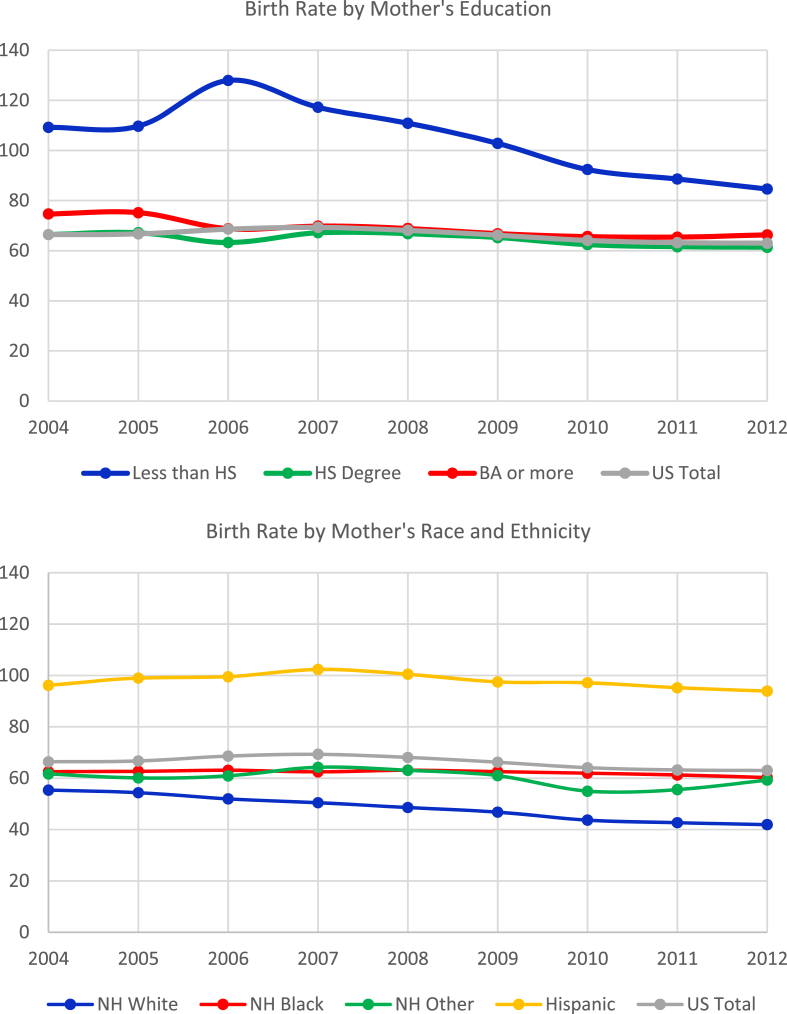
We use restricted birth cohort data from California (2004-2012) merged with both county- and tract-level socio-demographic data, to explore birth selectivity and temporal and unemployment effects during TGR on adverse birth outcomes.
We find that gestational exposure - more specifically, second trimester exposure - during or adjacent to the months of TGR was generally deleterious for birth outcomes, more so, in some cases, for mothers with lower levels of education, and that increases in county-level unemployment were generally deleterious for birth outcomes.
Although recessionary effects on population health are problematic and may have far-reaching effects, it appears that these effects may be largely universal, even given potential selective fertility favoring advantaged groups.
先前关于经济衰退对健康影响的研究结果不一。生态研究常常报告经济衰退与人口健康之间存在正相关关系,而个体层面的研究则往往表明与经济衰退相关的状况是有害的。我们的研究考察了大衰退(TGR)对不良出生结局的时空异质性影响,不良出生结局是一种对不断变化的社会状况高度敏感的同期人口健康指标。
我们使用来自加利福尼亚州(2004 - 2012年)的受限出生队列数据,并与县级和普查区层面的社会人口数据相结合,以探究大衰退期间的出生选择性以及时间和失业对不良出生结局的影响。
我们发现,在大衰退期间或临近月份的孕期暴露——更具体地说,孕中期暴露——通常对出生结局有害,在某些情况下,对教育程度较低的母亲更是如此,而且县级失业率的上升通常对出生结局有害。
尽管经济衰退对人口健康的影响存在问题且可能具有深远影响,但即便存在有利于优势群体的潜在选择性生育,这些影响似乎在很大程度上是普遍存在的。