Department of Pharmacology, School of Pharmacy, Universidad de Granada, 18071 Granada, Spain.
Ciber Enfermedades Cardiovasculares (CiberCV), 28029 Madrid, Spain.
Nutrients. 2019 Oct 24;11(11):2564. doi: 10.3390/nu11112564.
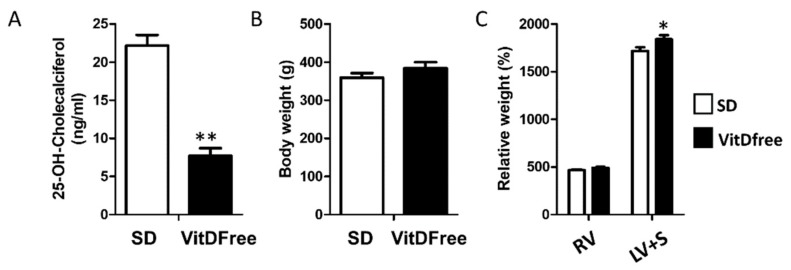
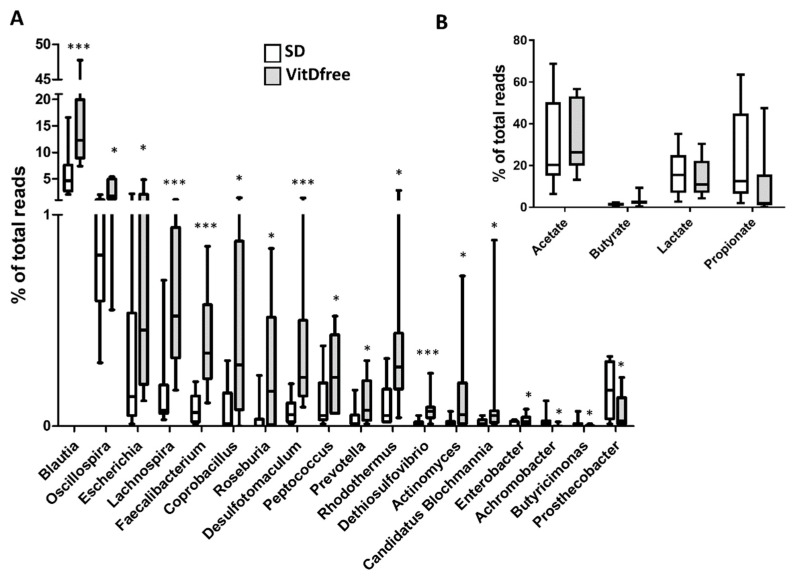
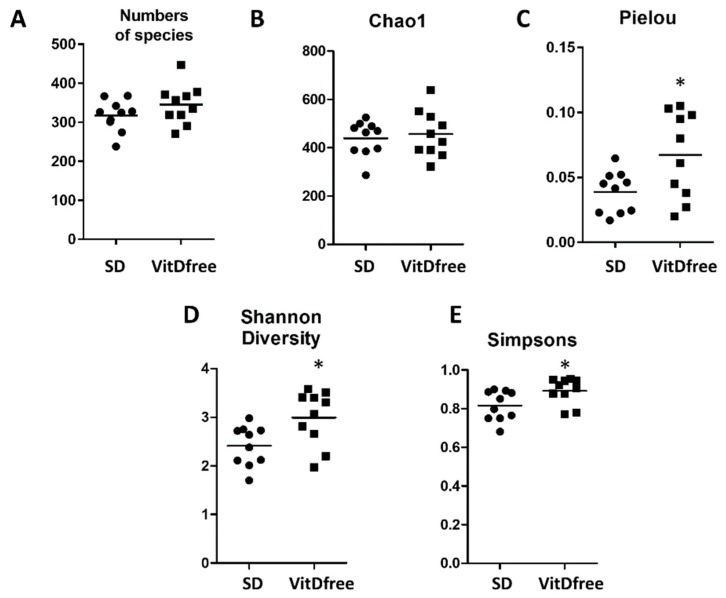
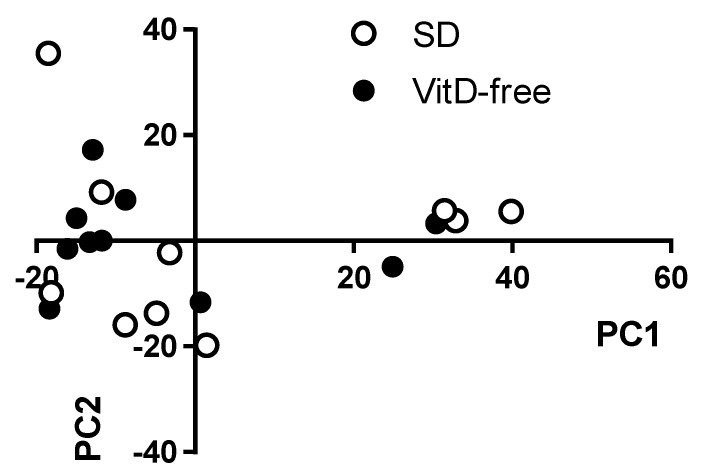
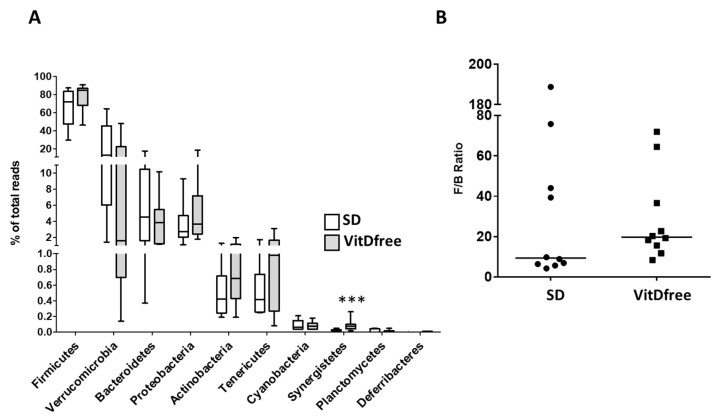
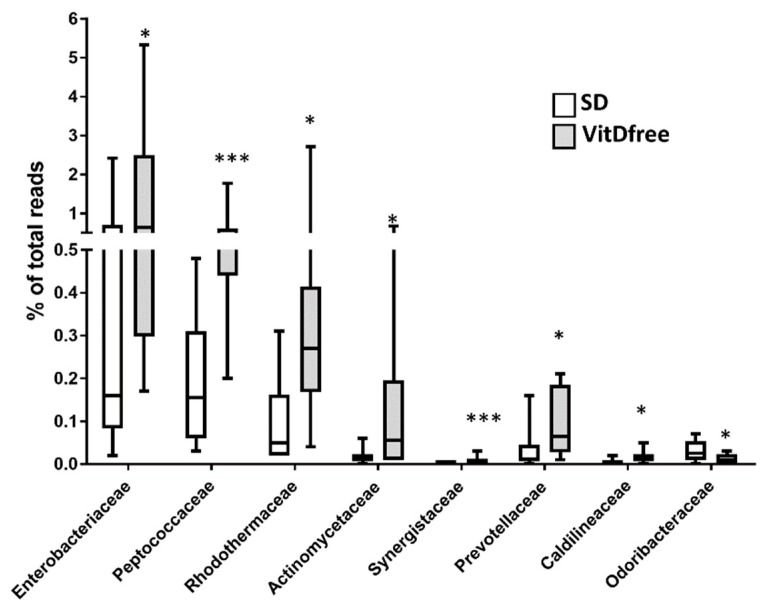
Inadequate immunologic, metabolic and cardiovascular homeostasis has been related to either an alteration of the gut microbiota or to vitamin D deficiency. We analyzed whether vitamin D deficiency alters rat gut microbiota. Male Wistar rats were fed a standard or a vitamin D-free diet for seven weeks. The microbiome composition was determined in fecal samples by 16S rRNA gene sequencing. The vitamin D-free diet produced mild changes on α- diversity but no effect on β-diversity in the global microbiome. Markers of gut dysbiosis like -to- ratio or the short chain fatty acid producing bacterial genera were not significantly affected by vitamin D deficiency. Notably, there was an increase in the relative abundance of the , with significant rises in its associated genera , and in vitamin D deficient rats. and were also increased and and its genus were decreased in rats with vitamin D-free diet. In conclusion, vitamin D deficit does not induce gut dysbiosis but produces some specific changes in bacterial taxa, which may play a pathophysiological role in the immunologic dysregulation associated with this hypovitaminosis.
免疫、代谢和心血管稳态不足与肠道微生物群的改变或维生素 D 缺乏有关。我们分析了维生素 D 缺乏是否会改变大鼠的肠道微生物群。雄性 Wistar 大鼠喂食标准或无维生素 D 饮食 7 周。通过 16S rRNA 基因测序确定粪便样本中的微生物组组成。无维生素 D 饮食对 α-多样性产生轻微影响,但对全球微生物组的 β-多样性没有影响。肠道微生物失调的标志物,如 -to- 比值或产生短链脂肪酸的细菌属,不受维生素 D 缺乏的显著影响。值得注意的是, 相对丰度增加,其相关属 、 和 在维生素 D 缺乏的大鼠中显著增加。 和 也增加,而 及其属 减少在无维生素 D 饮食的大鼠中。总之,维生素 D 缺乏不会引起肠道微生物失调,但会导致某些细菌分类群发生特定变化,这些变化可能在与这种低维生素血症相关的免疫失调的病理生理学中发挥作用。