Department of Tumor Immunology, Radboud Institute for Molecular Life Sciences, Radboud university medical center, Nijmegen, The Netherlands.
Department of Radiology and Nuclear Medicine, Radboud university medical center, Nijmegen, The Netherlands.
Theranostics. 2019 Oct 16;9(25):7924-7947. doi: 10.7150/thno.37924.
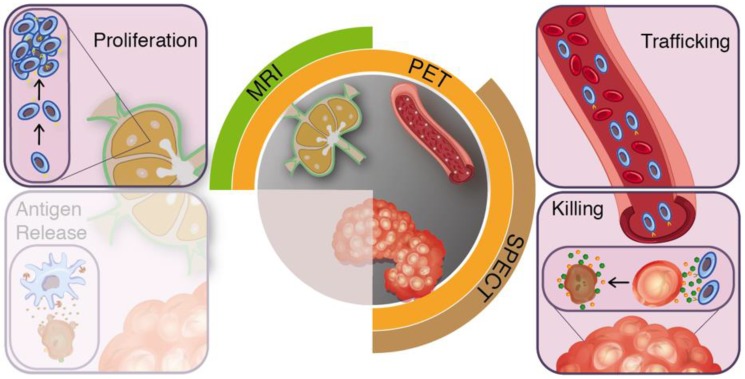
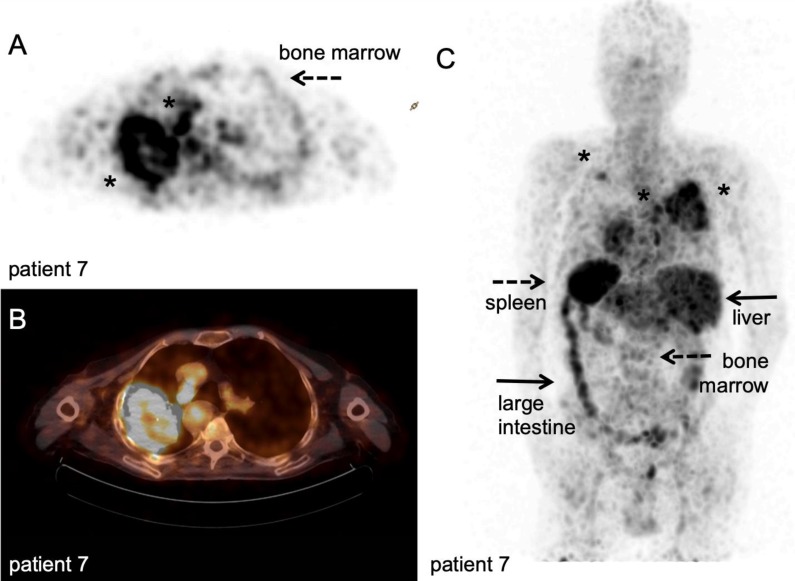
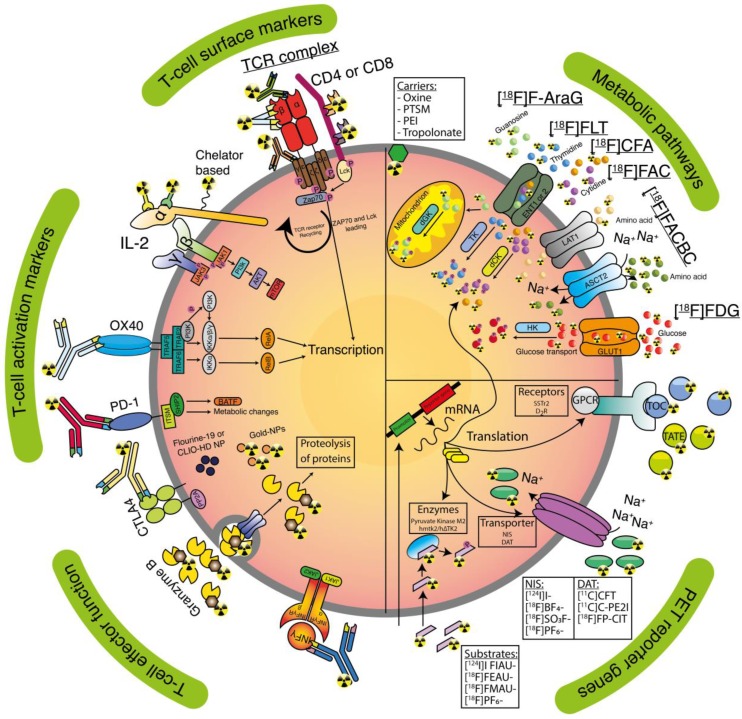
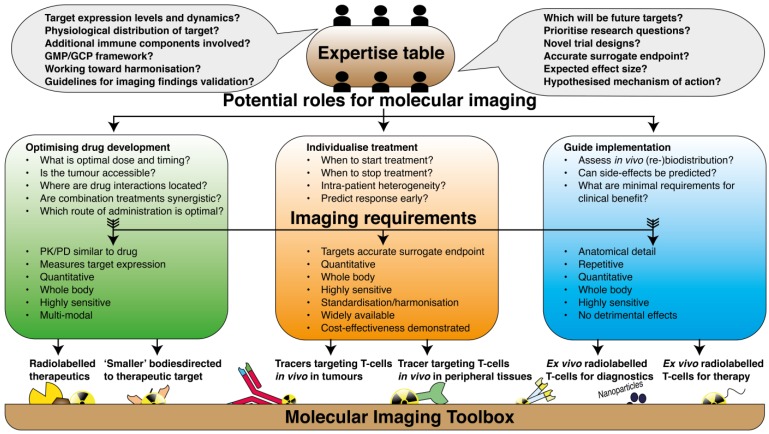
Immunotherapy has proven to be an effective approach in a growing number of cancers. Despite durable clinical responses achieved with antibodies targeting immune checkpoint molecules, many patients do not respond. The common denominator for immunotherapies that have successfully been introduced in the clinic is their potential to induce or enhance infiltration of cytotoxic T-cells into the tumour. However, in clinical research the molecules, cells and processes involved in effective responses during immunotherapy remain largely obscure. Therefore, imaging technologies that interrogate T-cell responses in patients represent a powerful tool to boost further development of immunotherapy. This review comprises a comprehensive analysis of the imaging technologies that allow the characterisation of T-cell responses induced by anti-cancer immunotherapy, with emphasis on technologies that are clinically available or have high translational potential. Throughout we discuss their respective strengths and weaknesses, providing arguments for selecting the optimal imaging options for future research and patient management.
免疫疗法已被证明在越来越多的癌症中是一种有效的治疗方法。尽管针对免疫检查点分子的抗体已取得持久的临床应答,但仍有许多患者没有应答。在临床上成功引入的免疫疗法的共同点是它们具有诱导或增强细胞毒性 T 细胞浸润肿瘤的潜力。然而,在临床研究中,免疫治疗中有效应答涉及的分子、细胞和过程在很大程度上仍不清楚。因此,能够检测患者 T 细胞应答的成像技术是促进免疫疗法进一步发展的有力工具。这篇综述全面分析了可用于描述抗癌免疫疗法诱导的 T 细胞应答的成像技术,重点介绍了具有临床应用或高转化潜力的技术。我们在讨论中阐述了它们各自的优缺点,为未来的研究和患者管理选择最佳的成像选择提供了依据。