Departamento de Botânica, Instituto de Biociências, Universidade de São Paulo, São Paulo, Brazil.
Departamento de Genética e Biologia Evolutiva, Instituto de Biociências, Universidade de São Paulo, São Paulo, Brazil.
PLoS One. 2019 Oct 29;14(10):e0224429. doi: 10.1371/journal.pone.0224429. eCollection 2019.
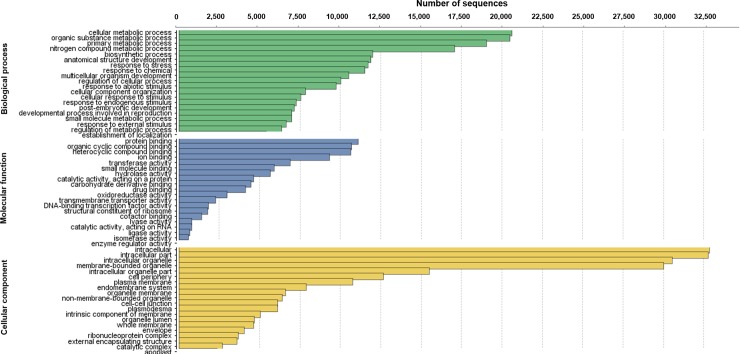
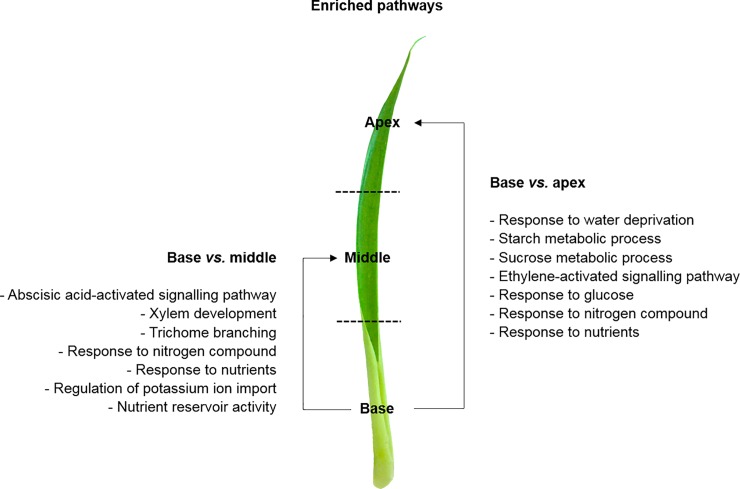
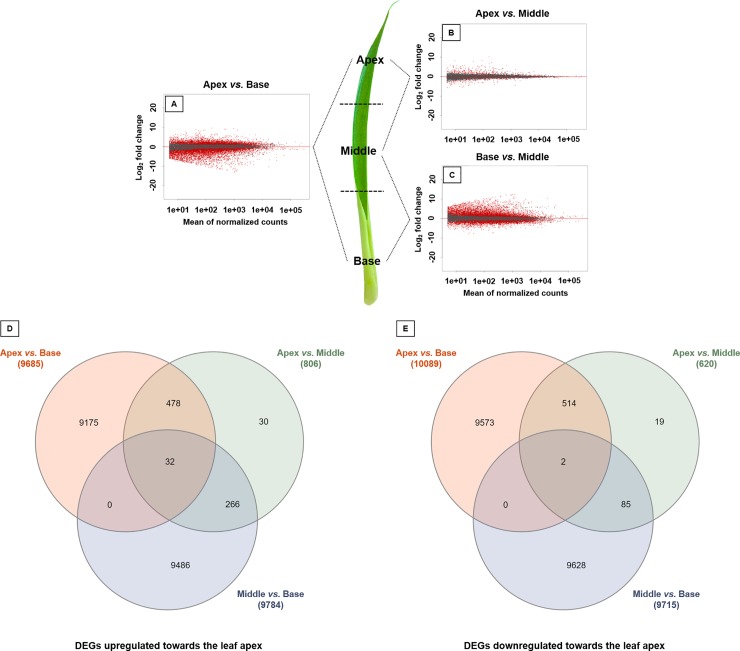
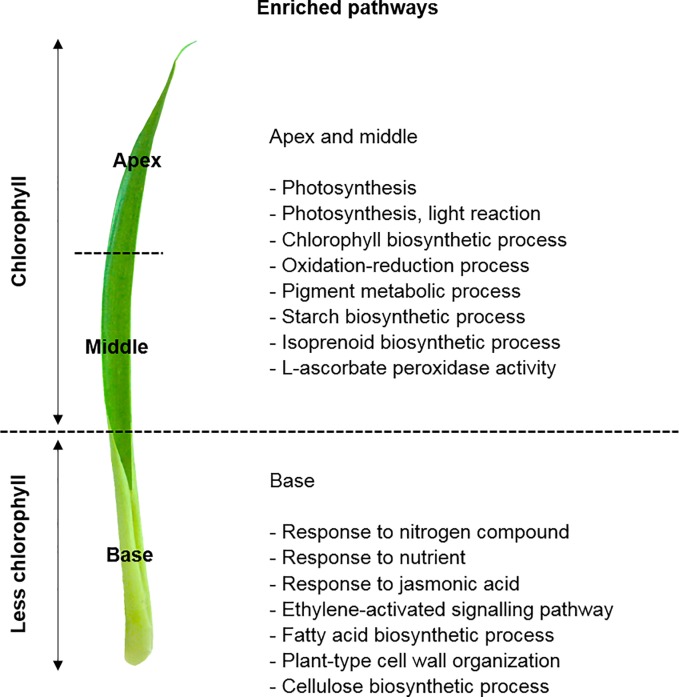
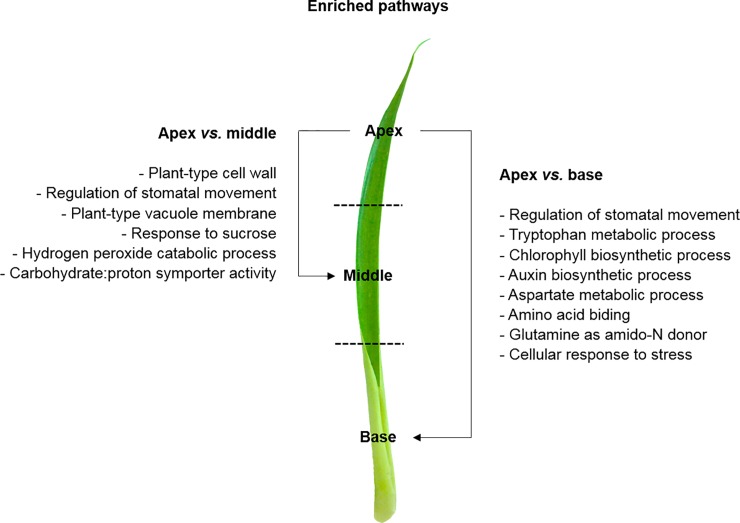
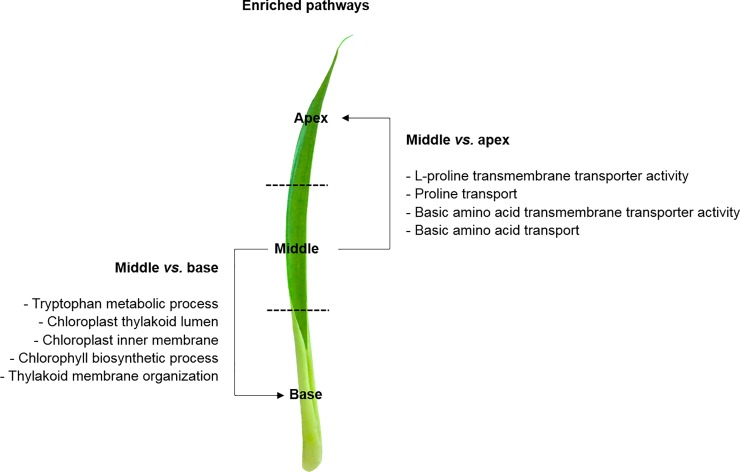
Guzmania monostachia is an epiphytic tank bromeliad that displays the inducible CAM photosynthesis under stressful conditions and had the highest stomata density in the leaf apex, while the base portion has the highest density of trichomes, which are specialized structures used to acquire water and nutrients from the tank solution. In order to correlate the genetic factors behind these morpho-physiological characteristics along the leaf blade of G. monostachia, a comparative transcriptome analysis was performed to identify the functional enriched pathways and unigenes that could play a role in the apical, middle and basal leaf portions. A total of 653 million reads were used for de novo transcriptome assembly, resulting in 48,051 annotated unigenes. Analysis of differentially expressed genes (DEGs) among distinct leaf regions revealed that 806 DEGs were upregulated in the apex compared to the middle portion, while 9685 DEGs were upregulated in the apex and 9784 DEGs were upregulated in the middle portions compared to the base. Our outcomes correlated some DEGs and identified unigenes with their physiological functions, mainly suggesting that the leaf apex was related to the regulation of stomatal movement, production of chlorophyll, cellular response to stress, and H2O2 catabolic process. In contrast, the middle portion showed DEGs associated with the transport of amino acids. Furthermore, DEGs from the leaf base were mainly correlated with responses to nutrients and nitrogen compounds, regulation of potassium ion import, response to water deprivation, and trichome branching, indicating that, at least in part, this leaf portion can replace some of the root functions of terrestrial plants. Therefore, possibly candidate unigenes and enriched pathways presented here could be prospected in future experimental work, opening new possibilities to bioengineer non-inducible CAM plants and/or improve the fertilization use efficiency by increasing leaf nutrient acquisition of crop plants.
孤尾木是一种附生槽状凤梨,在胁迫条件下表现出诱导型 CAM 光合作用,在叶尖具有最高的气孔密度,而基部则具有最高密度的毛状体,这些特殊结构用于从槽液中获取水分和养分。为了关联 G. monostachia 叶片上这些形态生理特征背后的遗传因素,进行了比较转录组分析,以鉴定可能在叶片顶端、中部和基部起作用的功能丰富途径和基因。总共使用了 6.53 亿个读数进行从头转录组组装,产生了 48051 个注释基因。对不同叶片区域之间差异表达基因(DEGs)的分析表明,与中部相比,806 个 DEGs 在叶尖上调表达,而在叶尖和中部分别有 9685 和 9784 个 DEGs 上调表达。我们的结果关联了一些 DEGs 并鉴定了与它们的生理功能相关的基因,主要表明叶尖与气孔运动调节、叶绿素产生、细胞对胁迫的反应以及 H2O2 分解代谢过程有关。相比之下,中部显示出与氨基酸转运有关的 DEGs。此外,来自叶片基部的 DEGs 主要与对营养和氮化合物的响应、钾离子导入的调节、对水分胁迫的响应以及毛状体分枝有关,这表明,至少在一定程度上,该叶片部分可以替代陆地植物的一些根功能。因此,这里呈现的候选基因和富集途径可能在未来的实验工作中得到展望,为生物工程非诱导型 CAM 植物和/或通过增加作物植物叶片养分获取来提高施肥利用效率开辟新的可能性。