Komarov Sergey, Yamamoto Takuya
Graduate School of Environmental Studies, Tohoku University, Miyagi 980-8579, Japan.
Materials (Basel). 2019 Oct 28;12(21):3532. doi: 10.3390/ma12213532.
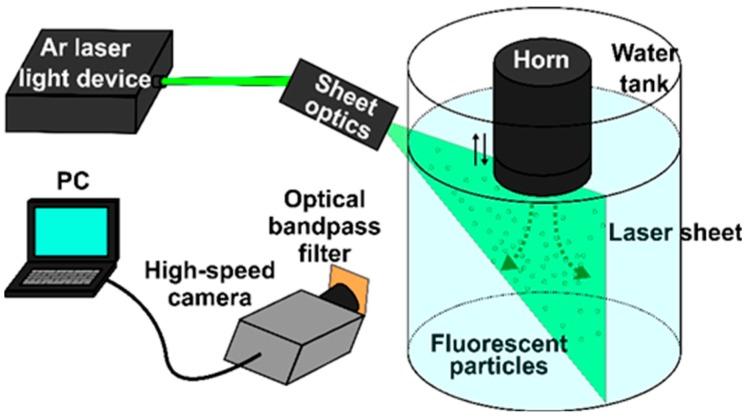
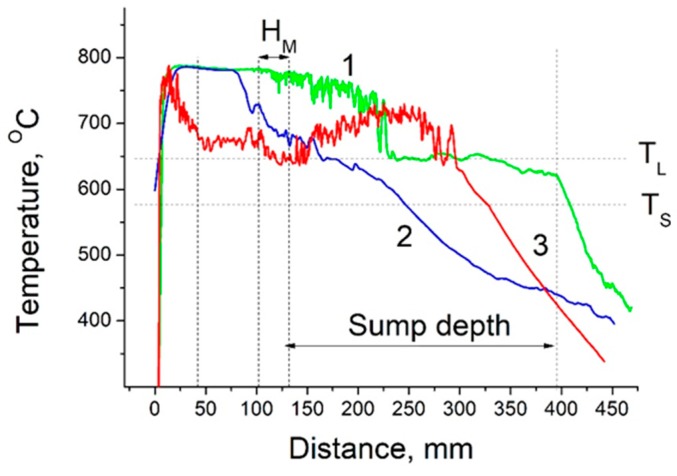
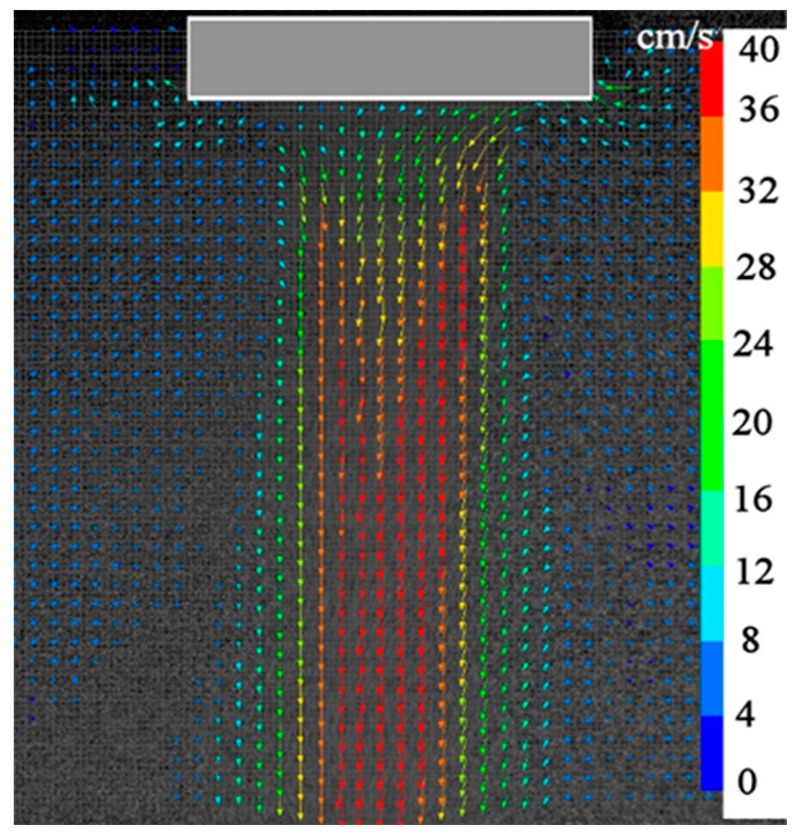
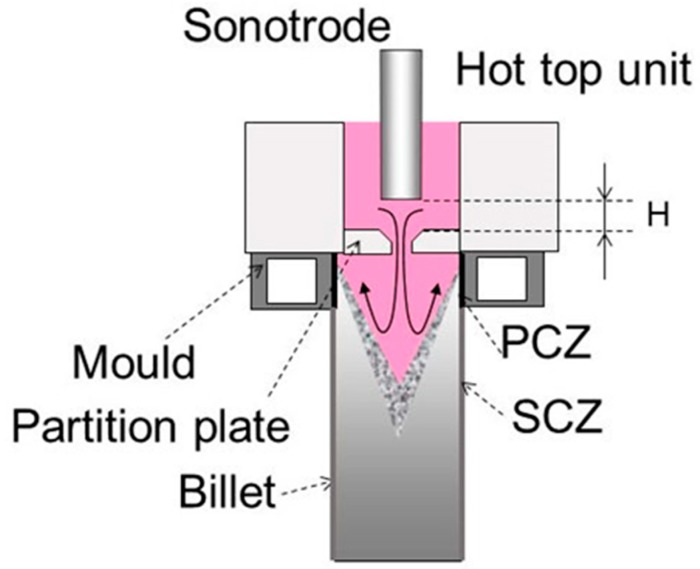
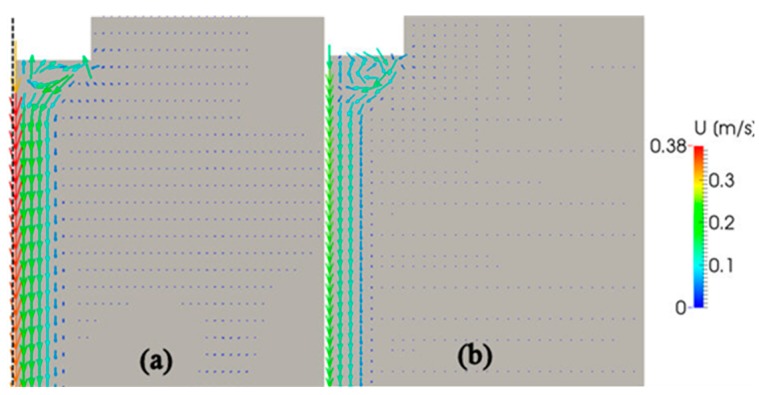
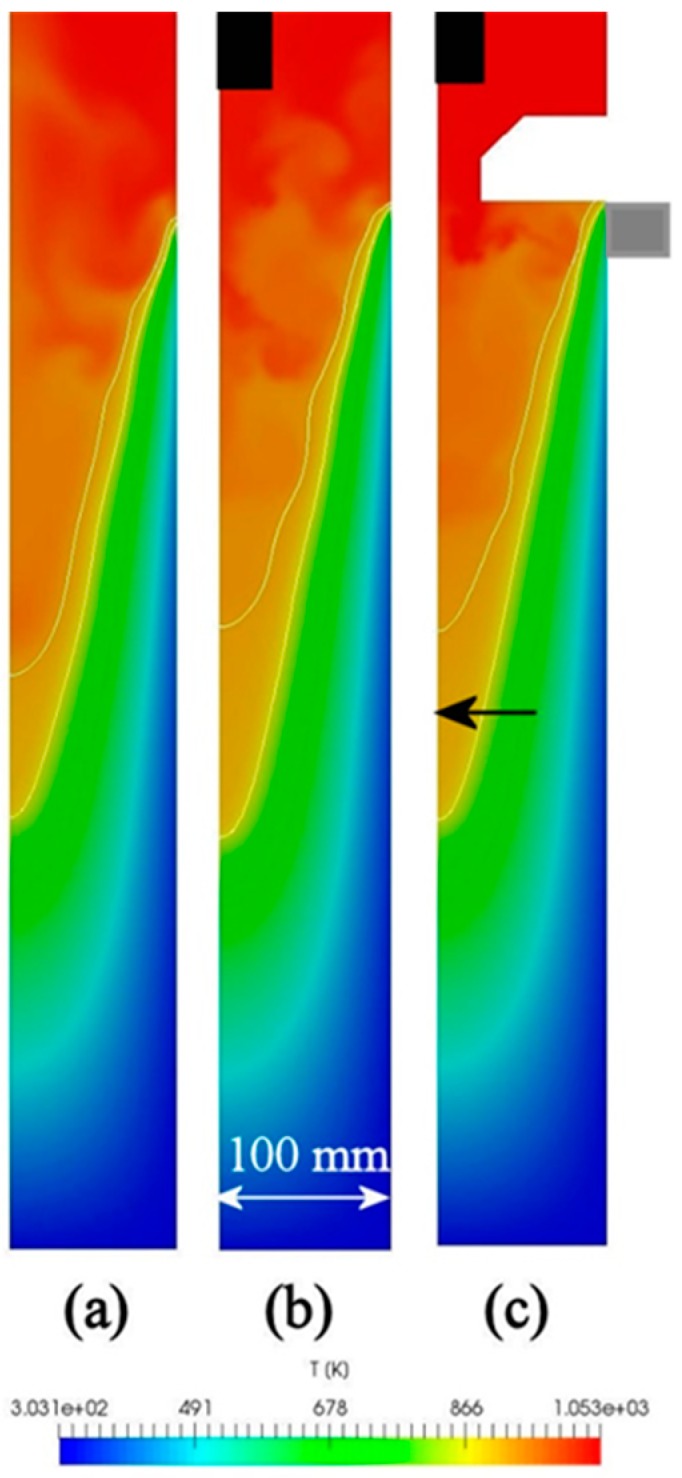
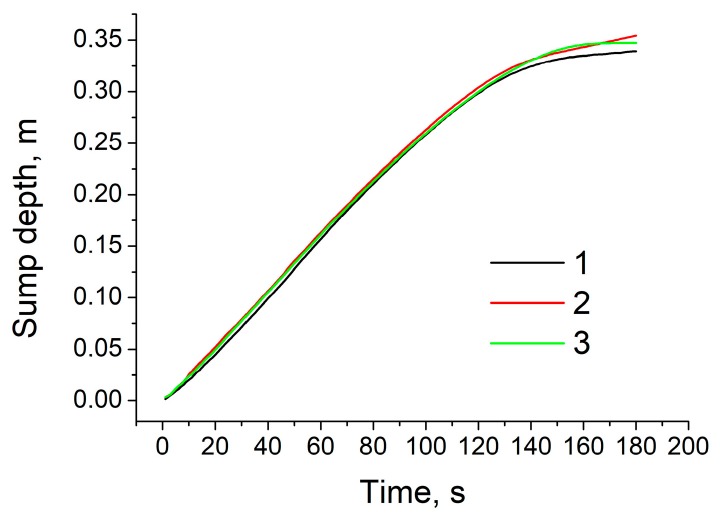
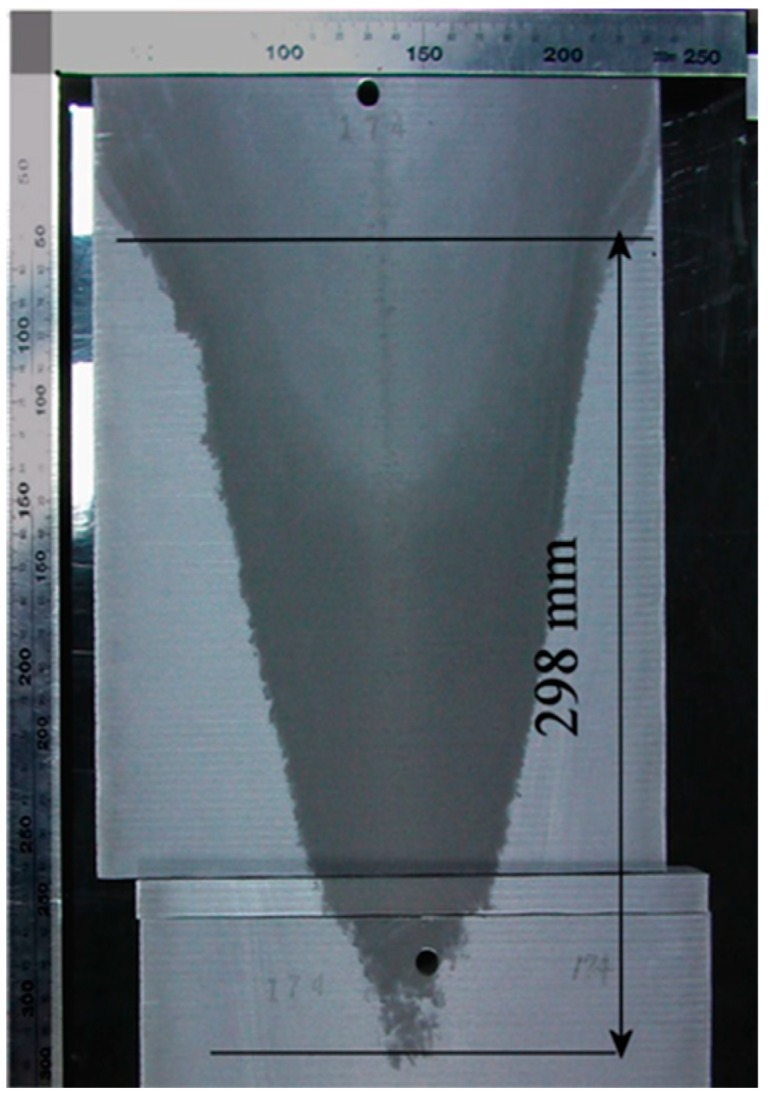
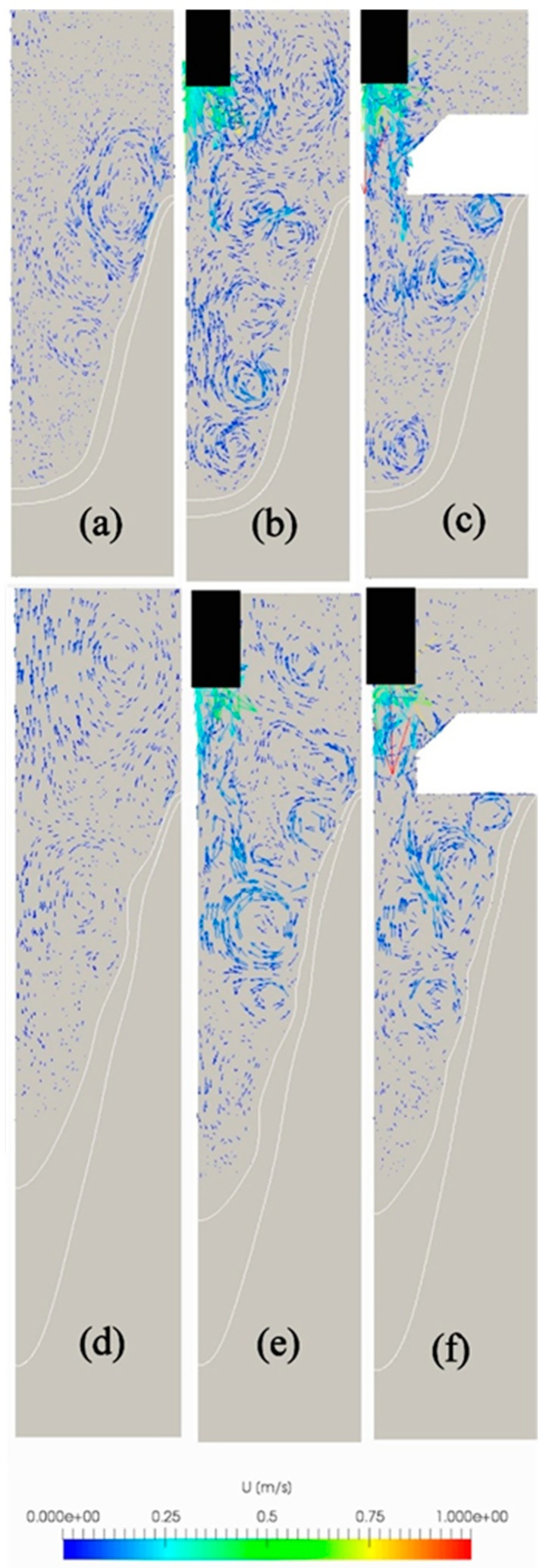
The present work investigated melt flow pattern and temperature distribution in the sump of aluminum billets produced in a hot-top equipped direct chilling (DC) caster conventionally and with ultrasonic irradiation. The main emphasis was placed on clarifying the effects of acoustic streaming and hot-top unit type. Acoustic streaming characteristics were investigated first by using the earlier developed numerical model and water model experiments. Then, the acoustic streaming model was applied to develop a numerical code capable of simulating unsteady flow phenomena in the sump during the DC casting process. The results revealed that the introduction of ultrasonic vibrations into the melt in the hot-top unit had little or no effect on the temperature distribution and sump profile, but had a considerable effect on the melt flow pattern in the sump. Our results showed that ultrasound irradiation makes the flow velocity faster and produces a lot of relatively small eddies in the sump bulk and near the mushy zone. The latter causes frequently repeated thinning of the mushy zone layer. The numerical predictions were verified against measurements performed on a pilot DC caster producing 203 mm billets of Al-17%Si alloy. The verification revealed approximately the same sump depth and shape as those in the numerical simulations, and confirms the frequent and large fluctuations of the melt temperature during ultrasound irradiation. However, the measured temperature distribution in the sump significantly differed from that predicted numerically. This suggests that the present mathematical model should be further improved, particularly in terms of more accurate descriptions of boundary conditions and mushy zone characteristics.
本研究调查了在传统配备热顶的直接激冷(DC)连铸机以及配备超声辐照的DC连铸机中生产的铝坯料熔池中的熔体流动模式和温度分布。主要重点在于阐明声流和热顶单元类型的影响。首先通过使用早期开发的数值模型和水模型实验研究了声流特性。然后,应用声流模型开发了一个能够模拟DC铸造过程中熔池内非稳态流动现象的数值代码。结果表明,在热顶单元中将超声振动引入熔体对温度分布和熔池轮廓几乎没有影响,但对熔池中的熔体流动模式有相当大的影响。我们的结果表明,超声辐照使流速加快,并在熔池主体和糊状区附近产生许多相对较小的涡流。后者导致糊状区层频繁反复变薄。针对在生产203mm Al-17%Si合金坯料的中试DC连铸机上进行的测量对数值预测进行了验证。验证结果显示熔池深度和形状与数值模拟中的大致相同,并证实了超声辐照期间熔体温度的频繁大幅波动。然而,熔池中测量的温度分布与数值预测的有显著差异。这表明当前的数学模型应进一步改进,特别是在更准确描述边界条件和糊状区特性方面。